

Select Page
Zebra: Facts, Classification, Reproduction, Habitat, Diet and More
The Zebra Introduction
Your first close look at a Zebra can feel almost surprisingly strong. The Zebra stands in the light, black and white bands glowing against the grass, and for a second you may wonder why such a bold pattern makes sense in the wild. The Zebra name becomes more than a word from picture books; it becomes a living animal breathing a few steps from your vehicle.
If you are visiting Africa for the first time, maybe from a busy American or European city, the Zebra often becomes one of the animals you recognize quickest. You grew up seeing photos and cartoon versions, so your mind snaps to the pattern before you notice anything else. Then, slowly, you realise there is more here than stripes. There is the way they stand close together, the way foals squeeze between adults, and the way the whole group seems to move as one.
What makes the Zebra special is the mix of beauty and toughness. The coat looks almost too clean for a dusty plain, yet the body under that pattern is solid and built for long walking. You watch a Zebra turn its head, and the bands shift with the muscles, not like paint on a flat page. In that moment, the animal stops feeling like a symbol and starts feeling like a real neighbour in a big open world.
Many travelers later admit that Zebra comforted them in the early safari days. Lions and hyenas feel intense and a little unreal at first. Zebra feel approachable, almost familiar, yet still wild enough to remind you that you are far from home. By the time you leave, those black and white shapes standing in golden grass may be the image you picture when someone simply says “Africa.”
Where to See Zebras
If you are planning a trip, it helps to know where you have the best chance of meeting Zebra. You find different Zebra species across many African national parks, from wide grass plains to lighter woodlands and rocky slopes. Seeing the names of actual parks makes it easier to picture yourself on the ground, not only dreaming from a distance.
Some of the best known parks and reserves where you can see Zebras include:
-
Tanzania: Serengeti National Park, Ngorongoro Conservation Area, Tarangire National Park, Lake Manyara National Park
-
Kenya: Maasai Mara National Reserve, Amboseli National Park, Tsavo East and Tsavo West National Parks, Lake Nakuru National Park
-
Uganda and Rwanda: Lake Mburo National Park in Uganda, Akagera National Park in Rwanda
-
Namibia: Etosha National Park, Namib Naukluft Park, and other protected areas for Mountain Zebra
-
Botswana: Chobe National Park, Moremi Game Reserve in the Okavango region
-
South Africa: Kruger National Park, Addo Elephant National Park, Mountain Zebra National Park
-
Zimbabwe and Zambia: Hwange National Park in Zimbabwe, South Luangwa National Park in Zambia
Knowing these names lets you imagine your vehicle rolling along a track, dust rising, and a line of Zebras lifting their heads as you approach. The parks differ in scenery and feel, yet wherever you go, the sight of stripes in the grass pulls the whole scene together in a way that feels strangely complete.
Recommended Safaris

14 Days
Private
14-Day Uganda, Congo & Rwanda Gorilla Trekking & Wildlife Safari
from
$ 4900
per personThe Zebra Classifications
Class: Mammalia
Order: Perissodactyla
Family: Equidae
Genus: Equus
Species: Equus quagga (plains zebra), Equus zebra (mountain zebra), Equus grevyi (Grevy’s zebra)
The Zebra Behaviour
When you stop beside a Zebra herd, you meet a community rather than a single animal. Heads lower to graze, tails flick, foals press close to their mothers, and every few moments a few Zebras lift their heads together to scan the air. It feels like a gentle routine, yet underneath that calm picture is careful attention to everything around them.
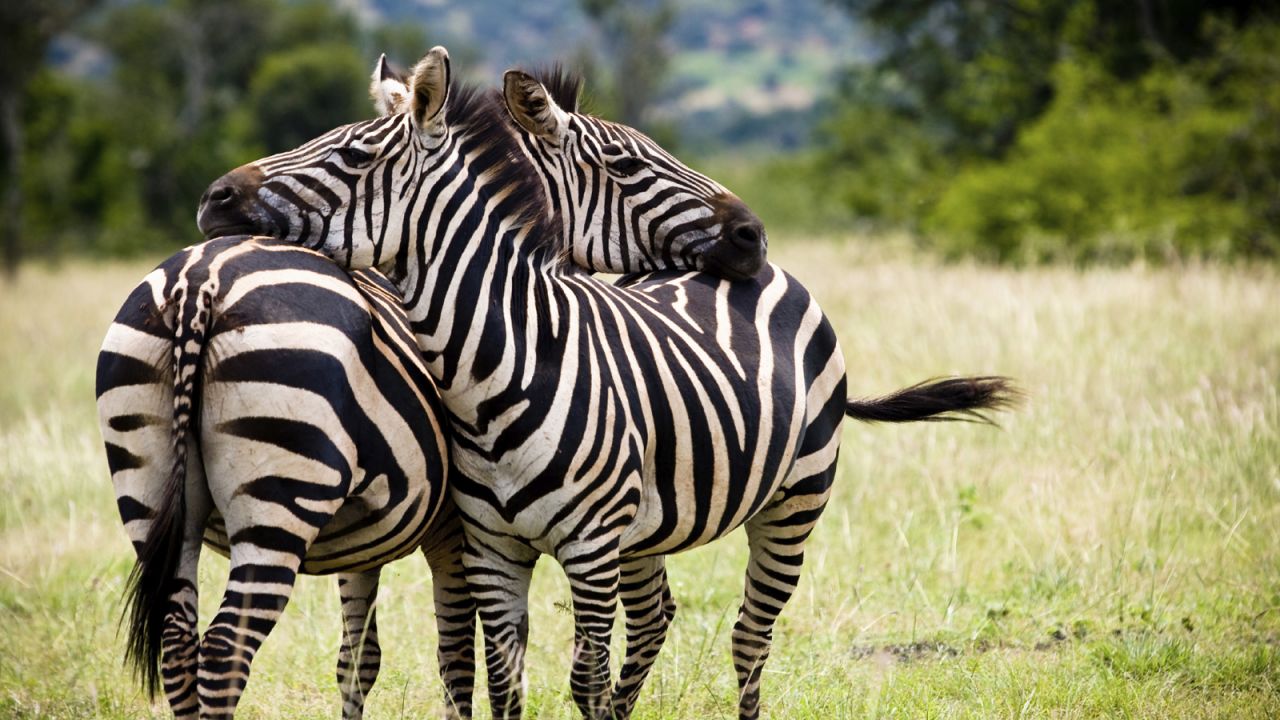
Zebras are strongly social. Many plains Zebras live in small family groups called harems, where one male, several females, and their young stay together for long periods. These family units then gather with others, forming larger herds that cover wide stretches of grassland. You see bodies standing shoulder to shoulder, sometimes with heads resting on each other’s backs, and you sense that closeness is more than simple habit; it is safety and comfort.
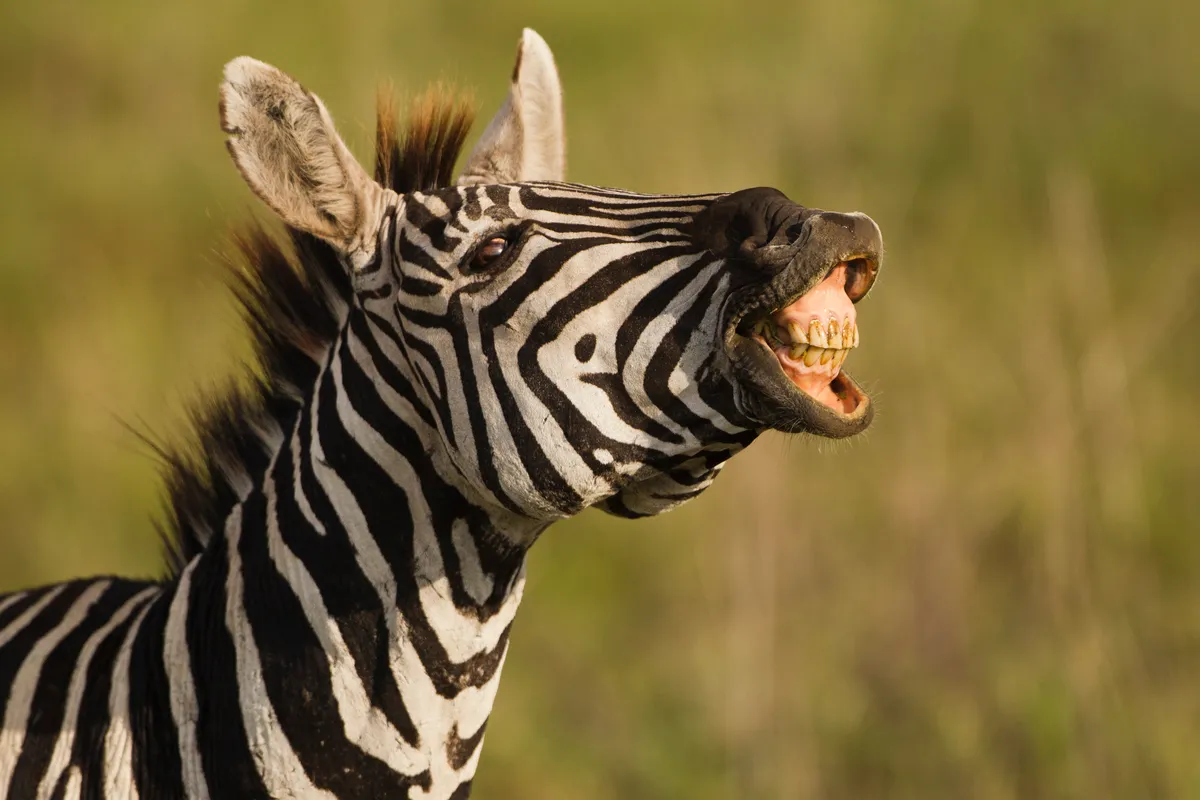
Communication travels in many directions at once. Ears turn like small dishes, faces tighten or relax, tails switch faster when irritation rises. You notice the way one Zebra’s ears flatten when another comes too close, and the way they snap forward when something interesting appears in the distance. Soft snorts, brays, and high calls roll between African Wild animals, telling stories you cannot fully translate yet still feel in the air.
When danger appears, behaviour shifts quickly. A Zebra that stood quietly a moment before may tense, muscles tight, head high, staring toward a bush line or river bank. If a predator comes too near, the herd can flee in a burst of power, hooves tearing soil, stripes turning into moving patterns that confuse the eye. Some Zebras may wheel around and face the threat together, especially males protecting foals. Watching that switch from calm feeding to sharp alertness gives you a quick sense of how thin the line between peace and risk can be here.
Zebra Gallery
The Zebra Diet
The Zebra diet seems simple at first glance, yet carries more detail than you might expect. Zebras are grazers, so you usually see them with heads down, chewing through grasses that cover the plains. They use strong front teeth to clip plants close to the ground, and broad back teeth to grind the food into something the stomach can handle.
Zebras handle a wider range of grass quality than some other grazers. They can manage tougher stalks as well as shorter, fresher growth, which lets them feed in places where more selective species might struggle. On mixed grasslands, Zebras often take the longer, coarser parts first. This opens the way for animals like Wildebeest to move in behind them and focus on the softer new growth. From your vehicle, you may see both species together, each playing its quiet part in a shared meal.
Water is important for Zebras, and their movements often connect feeding grounds to drinking spots. In drier times, herds may travel carefully planned routes between grass and water holes, arriving in the cool morning or late afternoon. When you watch Zebras lower their heads to drink, taking turns and lifting often to check for danger, you realise how much planning sits behind what looks like a simple day of eating and walking.
The Zebra Reproduction
The Zebra reproductive story is tied strongly to family structure. In many plains Zebra groups, a single dominant male leads a small harem of females and their young. This male protects the group, drives off rivals, and keeps the family together as they move between feeding and drinking sites. When you watch closely, you may see him circle the group, place his body between them and potential danger, or chase another male that comes too near.
Foals usually arrive in seasons when grass and water are more reliable, giving mothers a better chance to feed well while producing milk. A newborn Zebra foal stands on wobbly legs, coat fluffier and stripes more brownish than the adults nearby. Within a short time it must walk and even run, staying close to its mother’s side. You watch the foal bump her flank, search for milk, and press against her whenever the herd slows. Those early days feel both tender and tense, because you know predators are watching from somewhere.
Mares can be patient and firm with their young. A foal that strays too far may receive a quick nip or a push back toward the group. Over time, the youngster learns the rhythm of movement, the meaning of ear positions, and the signals that say “danger” or “all clear.” From your seat, you see an animal grow from a shaky newcomer to a confident herd member, and you realise how much learning happens silently on the plains every day.
Recommended Safaris
8 Days
Private
8 Days Murchison Falls, Gorilla, Chimpanzee & Queen Elizabeth Safari
from
$ 1790
per person
14 Days
Private
14-Day Uganda, Congo & Rwanda Gorilla Trekking & Wildlife Safari
from
$ 4900
per personTop Zebra FAQs
Why stripes here?
The stripes of a Zebra catch your eye first, so this question comes naturally. One common idea is that the pattern helps confuse predators when many Zebras group together. From a distance, the black and white lines blend into a shifting mass, making it harder for a hunting lion to lock onto a single target, especially when dust or low light add extra blur.
Another suggestion is that stripes may help with temperature control or insect avoidance. Dark and light bands absorb and reflect heat differently, which might create small air movements on the coat. Some studies suggest that biting flies may find it harder to land on sharply striped surfaces. For you as a visitor, the practical reasons mix with pure beauty, giving the Zebra a look you do not easily forget.
Are zebras safe?
From the safety of a vehicle, Zebras are generally safe to watch and photograph. They are not interested in attacking cars or people who stay seated and quiet. Most of the time, they either continue feeding or walk slowly away if they feel uneasy, giving you plenty of time to admire them without pressure.
On walking safaris, good guides keep a respectful distance, especially near mares with young foals or herds in tight spots. Zebras can kick hard if they feel trapped or threatened. When you follow your guide’s advice, move calmly, and avoid crowded approaches, you protect both yourself and the animals, turning the encounter into mutual respect instead of a test of strength.
When to see them?
Zebras can often be seen throughout the year in many parks, since they are common grazers on the plains. The best time for you depends on what kind of scenes you want. In drier months, herds may gather near reliable water sources, making them easier to find in open ground, sometimes in large numbers.
During greener months, Zebras spread out more widely, following fresh grass growth after rains. You might see smaller groups spread across bright fields, which creates beautiful photographs of stripes against intense green. Some regions also offer the combined sight of Zebras moving with Wildebeest during migration periods, giving you the chance to see mixed herds that stretch far into the distance.
What do zebras eat?
Zebras feed mainly on grasses, using strong front teeth to clip plants and tough back teeth to grind them. They handle both softer young grass and more mature stalks, which gives them flexibility in where they feed. From your seat in the vehicle, you see heads moving in steady rhythm as they work through patch after patch of ground.
Their feeding choices help shape the wider environment. By taking the taller or rougher grass layers first, Zebras open the way for more selective grazers like Wildebeest. This layered feeding reduces pressure on any single type of plant and helps keep the grassland in balance. When you see several herbivore species feeding together, you are watching a quiet cooperation that helps the whole area stay healthy.
How calves live?
Zebra calves enter a world where they must stand and move quickly. Within a short time after birth, many are already on their feet, testing shaky legs and learning to follow their mothers. Remaining on the ground too long would make them easy targets for predators, so this fast start is crucial. Watching a tiny foal wobble after its mother can be one of the most emotional parts of a safari morning.
Mothers stay very close in those early days, often placing their bodies between the calf and possible danger. The foal learns its mother’s scent and stripe pattern, while the mother learns her baby’s voice. In a busy herd, this bond allows them to find each other even when many bodies stand between them. Over time, the calf grows more confident, joining small play chases with other youngsters and slowly learning the unwritten rules of the group.
Why so many herds?
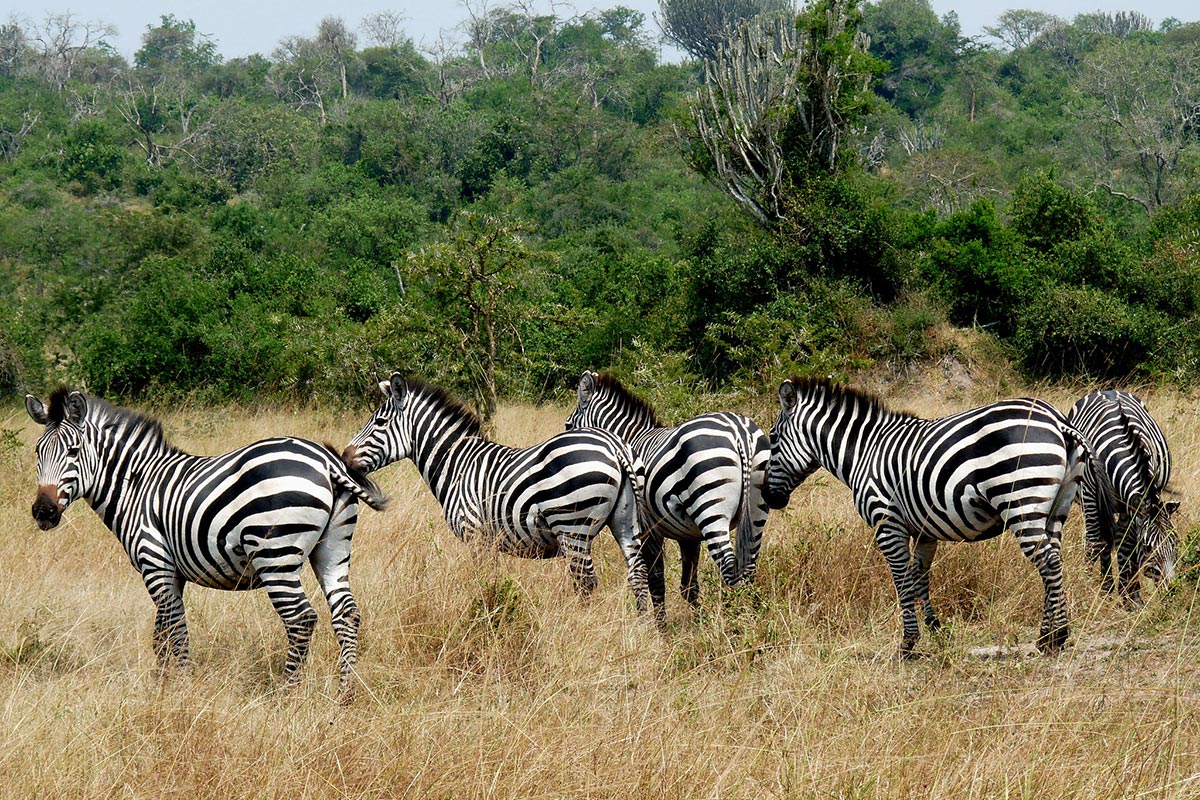
You often see Zebras in multiple herds across a plain, and it can feel like there are Zebras in every direction. Large numbers give them several advantages. More eyes and ears increase the chances of spotting danger early, and more bodies mean each individual is less likely to be the one a predator reaches. The herd acts like a moving shield that spreads risk.
In addition, many herds let Zebras use large areas of grass without exhausting a single patch. Groups can rotate between feeding sites, allowing plants to regrow. For you as a visitor, this creates the classic scenes of open country sprinkled with black and white shapes, each herd following its own path yet all tied together by the need for food and water.
Who helps zebras?
Zebras often share their space with other grazers, and in a way, these neighbours help them. Wildebeest, for example, may follow behind Zebras to use the shorter grass left after Zebra feeding. In return, Zebras gain from the added eyes and noses of the Wildebeest, since more animals watching for danger improves everyone’s safety. The relationship is not formal, yet it works well for all involved.
Birds can also be helpful companions. You may see small birds perched on Zebra backs, picking at insects that bother their hosts. These birds gain food, while the Zebras gain relief from biting pests. Watching these little partnerships helps you see that Zebra life is woven into many quiet connections across the plains, not a story lived in isolation.
What do zebras add?
Zebras add more than beauty to the African plains. Their grazing patterns shape grass height and quality, affecting fire behaviour, plant growth, and feeding opportunities for many other animals. Their bodies support predators and scavengers, forming a key link in the chain of life that stretches across the ecosystem. When you watch a Zebra herd, you are seeing a core piece of the larger puzzle.
They also add something to you as a visitor. Time spent with Zebras often becomes a gentle anchor in your memory. You remember the sound of hooves, the way stripes glow in early light, and the calm feeling of watching families stand close under a wide sky. Those moments quietly change how you picture wild places, long after you return to your normal routines.
Conclusion
Spending time with Zebra herds turns a flat postcard idea into a layered experience. At first you see black and white shapes on yellow grass. Then you start to notice mothers guiding foals, males watching the edges, and friends grooming each other slowly as the sun softens. The more you look, the more the pattern opens into a story.
If you are visiting Africa for the first time, Zebra often become a reassuring presence. They are familiar enough to feel approachable, yet wild enough to remind you that you are standing in a world where survival depends on alertness, cooperation, and movement. As you watch them walk toward distant hills or stand listening in the dark near camp, you may feel a quiet connection that words do not fully cover.
Don’t wait,
book this adventure safari today
Low season
Oct, Nov, Mar, Apr, may
Peak season
Jun, July, Aug, Sept, Dec

Got any questions
about traveling to Uganda?
Get in touch.
