

Select Page
Wildebeest: Facts, Classification, Reproduction, Habitat, Diet and More
The Wildebeest Introduction
Your first close view of a Wildebeest may confuse you slightly. The head looks long, the shoulders high, the beard ragged, and the body almost stitched together from different parts. Then the animal moves, and the shape suddenly makes sense. The Wildebeest was built for distance, not decoration.
If you arrive from a busy city, you probably expect lions, elephants, maybe giraffes to steal the show. On your first game drive, Wildebeest may feel like background creatures. You see them scattered across the plains, heads down, tails flicking, calves following adults. Only when you stop and sit with them for a while do you notice how much of the plains’ daily story belongs to them.
What makes the Wildebeest truly stand out is not a single animal, but the herd. Lines stretch across the horizon, bodies moving in a steady, shared rhythm. Dust hangs above them like a soft veil. Somewhere up front, no one takes a roll call, yet somehow, they all keep going in roughly the same direction, pulled by grass, water, and memory.
Many travelers later realise that Wildebeest quietly shape their whole safari. Predators follow them, vultures circle above them, and your own movements often depend on where the herds have gone. You come to Africa for “big cats” and leave with images of long, dark lines of Wildebeest walking under a wide sky, carrying a story that feels older than any park fence.
Recommended Safaris


5 Days
Private
5 Day Rwanda Gorilla Trekking with Musanze Caves Exploration
from
$ 3299
per personThe Wildebeest Where to See Them
You see Wildebeest across large parts of East and Southern Africa, but some places bring them into focus more strongly than others. They favour open grasslands and lightly wooded areas where grazing is good and movement is easy.
Key parks and reserves include:
Tanzania: Serengeti National Park, Ngorongoro Conservation Area, Tarangire National Park, parts of Ruaha and other savannas
Kenya: Maasai Mara National Reserve, plus surrounding conservancies linked to seasonal movements
Other regions: Some Wildebeest also live in parks in Botswana, Namibia, South Africa, Zambia, and Zimbabwe, including Kruger, Hwange, Chobe, and Etosha
If you picture the classic “Great Migration” scenes, you are usually thinking of Serengeti and Maasai Mara, where enormous Wildebeest herds move seasonally in search of grass and water. Yet even outside migration hotspots, smaller herds in many parks still give you a strong sense of their daily life and importance.
The Wildebeest Classifications
Class: Mammalia
Order: Artiodactyla
Family: Bovidae
Genus: Connochaetes
Species: Connochaetes taurinus (blue or common wildebeest), Connochaetes gnou (black wildebeest)
Wildebeest Gallery

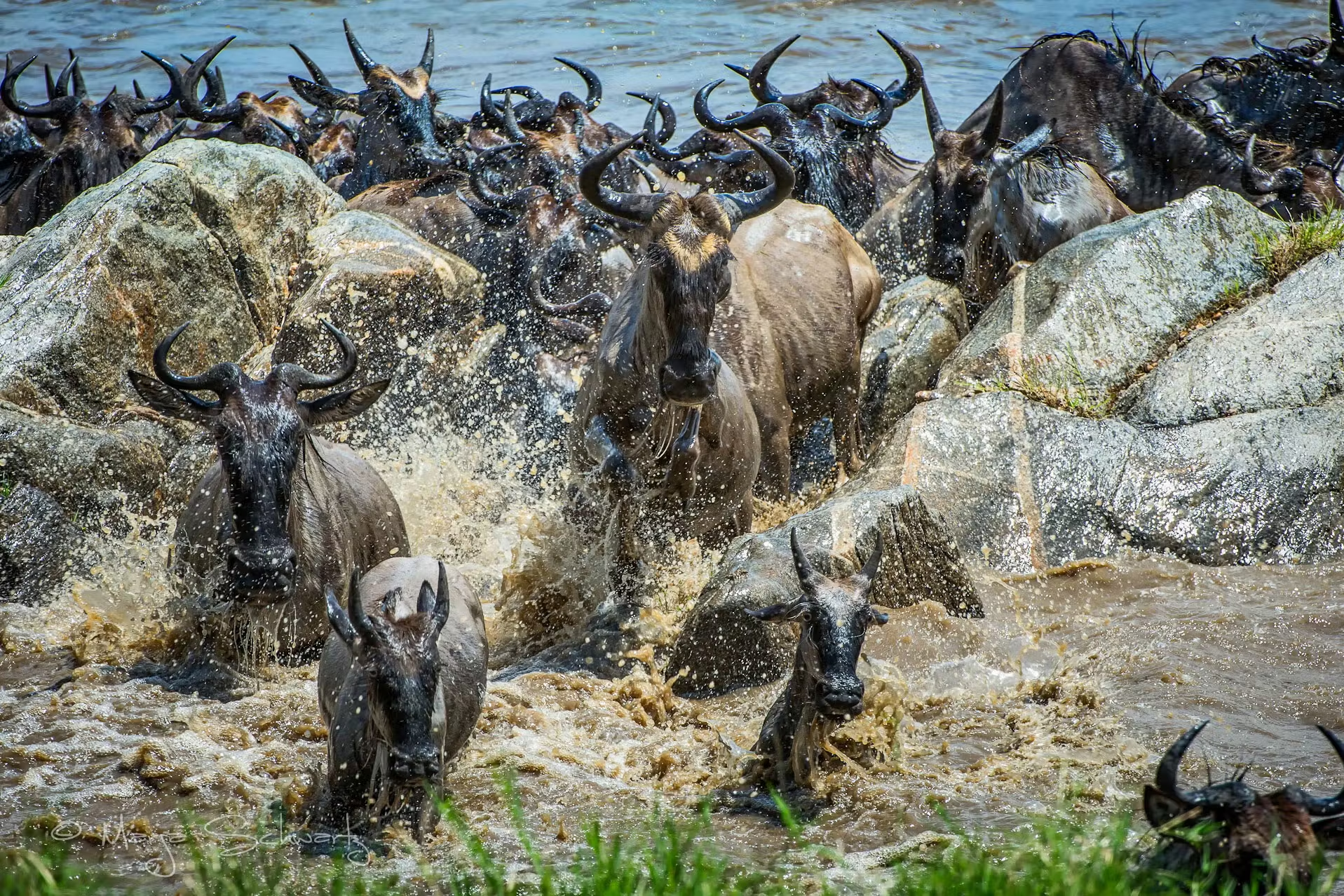
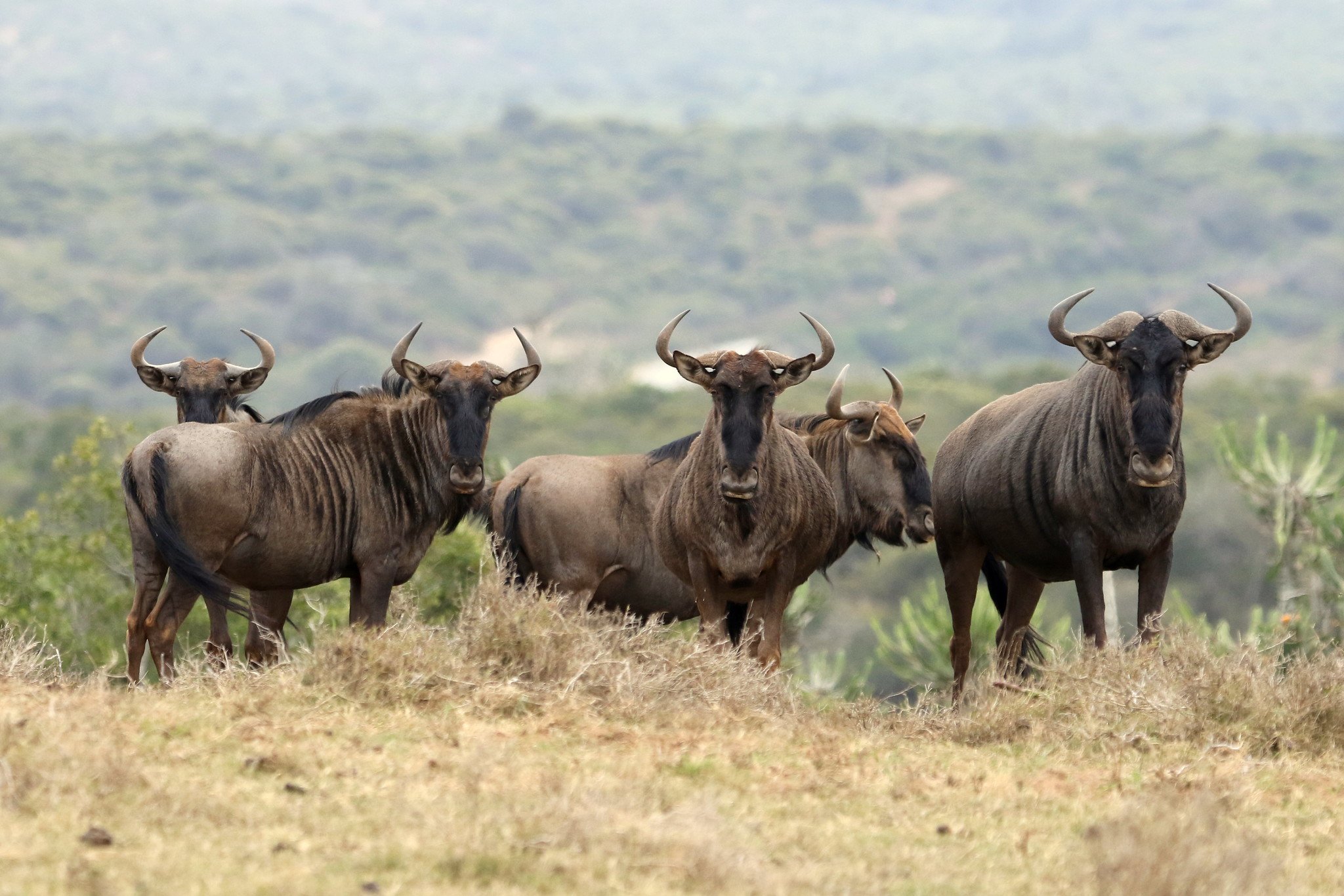
The Wildebeest Behaviour
When you stop near a Wildebeest herd, you feel constant motion. Some animals graze, others walk, calves run in short, clumsy circles, and every few minutes a wave of movement passes through the group for reasons that are not always clear. From the outside it looks messy. The longer you watch, the more the pattern appears.
Wildebeest are social and rely on group life for safety. They feed, travel, and rest in herds where many eyes and ears help detect danger. One animal lifts its head to sniff, then another copies, and within seconds many faces point in the same direction. When they sense risk, the group shifts, bodies turning together, calves pushed closer to the centre. It feels less like panic and more like a firm decision to reposition.
Their communication uses sounds, body language, and group movement. You hear their low grunts and nasal calls across the plains, especially during calm feeding times and at night near camps. These calls help herd members stay in contact. When alarm rises, the noise changes, and you see more heads up, tails raised, and short bursts of running. The whole herd acts as a living network, sharing information without a leader giving orders.
During migration periods, behaviour becomes more focused. Herds stretch into long columns, walking in single file or loose lines toward traditional routes. You see animals covering long distances with steady pace, stopping briefly to graze before moving on again. When they reach good grass or water, the mood loosens into feeding, resting, and play. That cycle of movement and release repeats over weeks and months, tying their behaviour to the shape of the seasons.
The Wildebeest Diet
The Wildebeest diet centres on grasses, especially fresh, short growth that appears soon after rain. They are selective grazers, preferring tender shoots over older, tougher stems. When rains fall in one part of the plains, green patches appear, and herds adjust their routes to find those new feeding grounds.
Wildebeest often share grasslands with zebras and other grazers. Zebras tend to handle tougher, taller grass first, trimming the field. Wildebeest then follow, targeting the softer new growth closer to the ground. From your seat, you might see both species feeding together, each taking slightly different parts of the same patch. This quiet partnership keeps the grass in better condition than if only one type of animal fed there.
Their grazing has wider effects. By cutting grass and moving constantly, Wildebeest influence how plants grow, how fires spread, and where predators hunt. Dung dropped along the way fertilises the soil and feeds insects, which then support birds and other small animals. When you watch Wildebeest eat, you are seeing not only nutrition for them, but also a driving force behind much of the plains’ life.
The Wildebeest Reproduction
Wildebeest breeding is synchronised with seasons to give calves the best chance of survival. In many parts of East Africa, calving happens within a short period once the rains bring fresh grass. You can arrive to find hundreds or thousands of calves born within a few weeks, their lighter coats and uncertain steps transforming the mood of the entire plain.
Calves stand and move quickly, often within minutes. By a few hours old, many already follow their mothers, wobbling but determined. Speed matters because predators are never far away. A calf that cannot keep up risks being left behind when the herd moves or panic spreads. Watching those early steps can be one of the most emotional parts of a Wildebeest encounter.
Males compete for access to females during breeding periods. They defend small territories, chase rivals, and show strength with short charges, loud calls, and raised tail displays. You might see two males facing off in a flurry of dust, then separating to graze as if nothing happened. These contests help decide which males pass on their genes, shaping the strength and resilience of future herds.
Recommended Safaris

11 Days
Private
11 days Uganda Premium Gorilla, Wildlife & River Nile Adventure
from
$ 2900
per person
5 Days
Private
5 Day Rwanda Gorilla Trekking with Musanze Caves Exploration
from
$ 3299
per person
Top Wildebeest FAQs
Why do wildebeest migrate?
Wildebeest migrate mainly to follow fresh grass and reliable water. As seasons shift, rains move across large areas, and the best feeding grounds change with them. Staying in one place would leave the herds feeding on dry, tough plants that offer less strength for long term survival.
Are wildebeest safe?
From a vehicle, Wildebeest are usually safe to watch. They prefer to move away from disturbance rather than toward it, especially when given room. If your guide keeps a gentle distance, the herd often glances over, adjusts slightly, then returns to feeding or walking. You feel close to wild life without forcing it.
When is the best time to visit for wildebeest encounter?
You can see Wildebeest at many times of year, yet the feeling changes with the season. During calving periods, the plains fill with newborns, and your days are full of gentle scenes, soft light, and many small dramas as calves learn to stand and run. The mood feels hopeful and fragile at the same time.
What do wildebeest eat?
Wildebeest feed mainly on grass. They prefer short, green, nutrient rich growth that appears after rain, rather than long, dry stalks. From your vehicle, it can look like they are grazing on any plant available, yet careful watching shows how often they seek the freshest patches. That detail matters for their energy and health.
How do calves cope?
Calves cope by joining the rhythm of the herd almost immediately. Many stand within minutes of birth and start walking shortly afterward. This quick start means they have a better chance of keeping up when the group moves or when danger appears. Watching that first hour of life, you realize there is very little spare time for mistakes.
Why are they so many?
There are many Wildebeest because their whole survival strategy relies on numbers. By moving in large herds, they reduce the risk for each individual, share information about danger, and change the grass in ways that favor their feeding needs. A lone Wildebeest on an open plain would face much higher chances of being caught.
Who are their allies?
Zebras are one of the clearest allies on the plains. They often share feeding grounds with Wildebeest, taking slightly different parts of the same grass layer. Zebras tend to eat longer blades, leaving shorter growth that Wildebeest prefer. The two species can feed together without fighting for every mouthful.
What do wildebeest add?
Wildebeest add energy to the entire system. Their grazing shapes the grass, their movement spreads nutrients, and their bodies support predators and scavengers. Lions, hyenas, crocodiles, vultures, and many other animals rely on Wildebeest at different stages of life and death. You could say that much of what you love about the plains depends partly on them.
Conclusion
Top Wildebeest FAQs
Why do Wildebeest migrate?
Wildebeest migrate to follow fresh grass and reliable water. Rain does not fall evenly, so the best feeding zones shift through the year. Staying still would leave them eating poor, dry plants.
Movement allows herds to match their needs with changing conditions, even if the journey includes rivers, predators, and long distances. The benefits of better food outweigh the dangers along the way.
Are Wildebeest dangerous?
To visitors in vehicles, Wildebeest are not usually dangerous. They prefer to keep distance and move away if they feel pressured, especially when drivers act calmly and avoid chasing.
On foot, guides respect their weight and horns, particularly near calves or stressed herds. Giving them space and clear escape routes keeps encounters peaceful and focused on observation.
When is the best time to see them?
You can see Wildebeest year-round in many parks, but calving seasons and migration peaks offer different feelings. Calving brings soft light, newborns, and a strong sense of new life.
Migration highlights movement and tension, with river crossings and dense gatherings. The “best” time depends on whether you want gentle family scenes, dramatic journeys, or a mixture of both.
What do they eat?
Wildebeest feed mainly on short, green grasses. They time their movements to follow new growth after rain, clipping tender shoots that offer more nutrition than older stalks.
In drier times, they still graze, but may move more often to find enough quality food. Their diet choices push them across large areas, linking many parts of a region together.
Where can I see them?
Large herds gather in Serengeti and Maasai Mara, especially during migration phases. Smaller but meaningful numbers live in Tarangire, Ruaha, Kruger, Chobe, Hwange, and other savanna parks.
Each place offers a different angle. Some focus on calving, some on river crossings, some on quieter daily grazing. Your guide can match your travel dates to likely herd positions.
How do calves survive?
Calves survive by standing quickly, bonding strongly with their mothers, and staying close to the herd. The group offers many eyes, ears, and bodies that dilute individual risk.
Large numbers of calves born together also help. Predators cannot take them all, so many young animals slip through the season and grow into strong adults that continue the cycle.
Why do they mix with zebras?
Wildebeest often share ground with zebras because their feeding styles complement each other. Zebras clip taller grass, while Wildebeest prefer shorter shoots closer to the soil.
They also benefit from shared vigilance. When a zebra spots a lion, Wildebeest notice. When Wildebeest panic, zebras pay attention. Mixed groups create a broader early warning system.
What makes them special?
Wildebeest matter because they are the moving core of many plains systems. Predators, scavengers, insects, and even grasses respond to their presence or absence. They are quiet drivers of change.
For you, they become a constant presence, shaping scenery and memories. Long after lions fade from your mind, you may still see lines of Wildebeest walking across a pale horizon.
Conclusion
Spending time with Wildebeest teaches you to see the plains in motion rather than as still pictures. Tracks in the dust, fresh dung, distant calls, and shifting lines on the horizon all start to feel like sentences in a long, ongoing story. You begin to read where the herds went yesterday and where they might go tomorrow.
For a traveler who arrives with fixed ideas about “big five” checklists, this can feel quietly powerful. You learn that the real centre of many days is not always a single predator, but the steady presence of thousands of grazing animals that hold everything together. Wildebeest remind you that movement itself can be the main event.
Spending time with Wildebeest changes how you read the open plains in front of you. What first looks like a loose collection of animals slowly reveals itself as a moving, breathing community with its own rules and rhythms. You start to see how every line of dust, every cluster of bodies, and every set of tracks tells you something about where the herds have been and where they might go next.
Don’t wait,
book this adventure safari today
Low season
Oct, Nov, Mar, Apr, may
Peak season
Jun, July, Aug, Sept, Dec

Got any questions
about traveling to Uganda?
Get in touch.
