

Select Page
Lowland Gorilla, Facts, Classification, Size, Strength, Habitat, Diet and More
Lowland Gorilla, a quiet hour with a giant
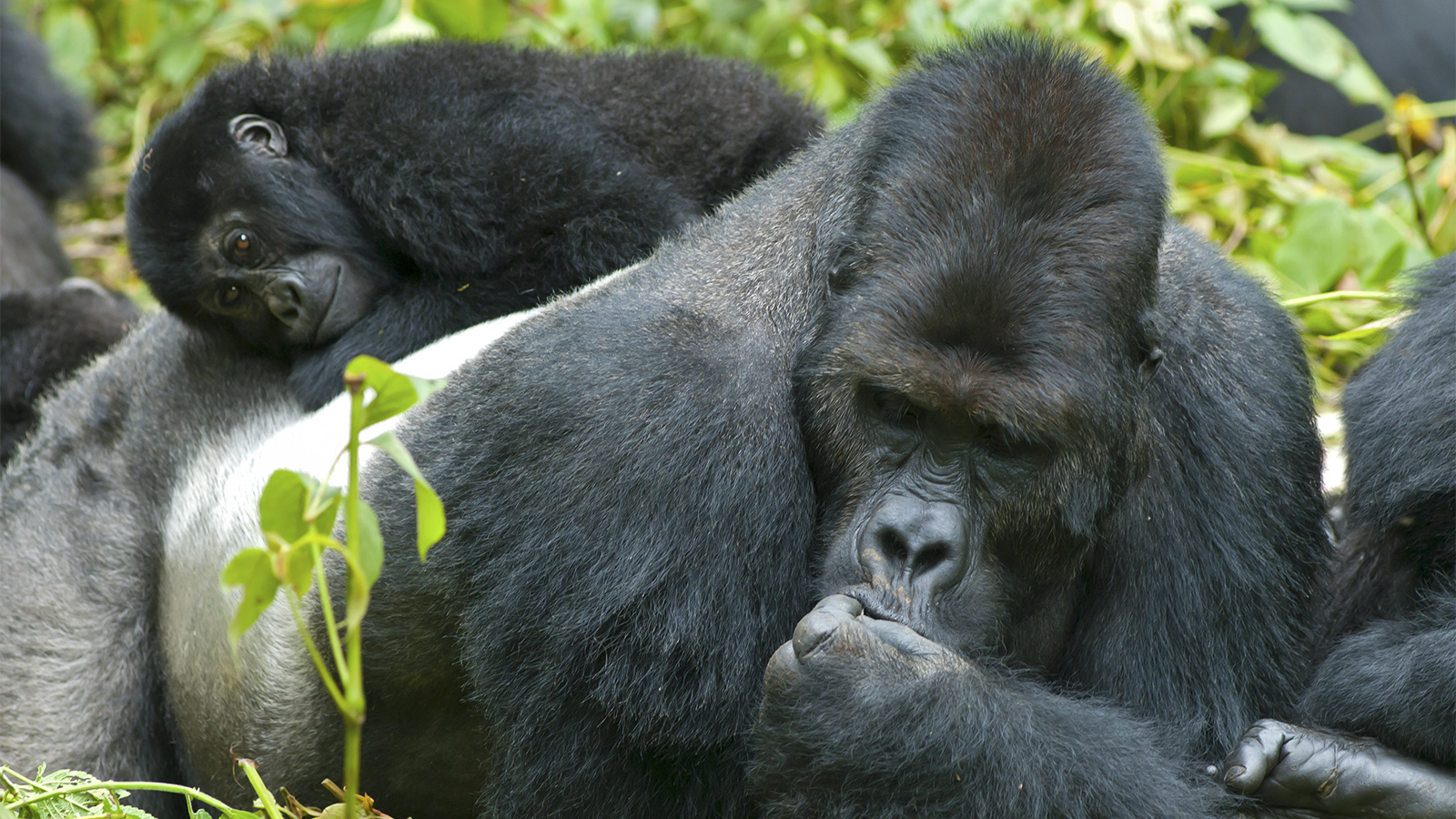
You hear a branch break first. The Lowland Gorilla is close, though the forest hides the truth until a dark shape shifts, stands a little taller, and settles again. A silverback opens a path with one hand, calm as a gardener, then turns his head and looks past you as if checking the weather. A soft burp call rolls through leaves. The family answers in their own time.
A juvenile slide down a vine with more confidence than sense, lands in a heap, and pretends it was part of the plan. An infant rides chest-to-chest, tiny fingers gripping fur with serious focus. The air smells like green things. Your boots press into soil that has a story for everything.
For a while you forget to count minutes. You watch a hand peel pith, a jaw work through stringy stems, and the way a face changes when the silverback gives a quiet note. The Lowland Gorilla does not perform. It lets you stand nearby while real life continues.
Identification, quick cues you can trust
- Massive body with a broad chest and a large head with a short muzzle
- Adult males carry a silver saddle on the back and hips
- Arms longer than legs, knuckle-walking on the ground
- Dark, close-set eyes and a calm, heavy presence
- Nests built daily from leaves, on the ground or in trees
Recommended Safaris


14 Days
Private
14-Day Uganda, Congo & Rwanda Gorilla Trekking & Wildlife Safari
from
$ 4900
per personFast reference table
| Feature | Western lowland gorilla | Eastern lowland gorilla (Grauer’s) |
| Scientific name | Gorilla gorilla gorilla | Gorilla beringei graueri |
| General range | Republic of Congo, CAR, Gabon, Cameroon | Eastern DR Congo |
| Build | Slightly smaller, often more fruit in diet | Larger, more herbaceous diet |
| Status | Critically Endangered | Critically Endangered |
Behavior you can read in minutes
Family is the frame.
One silverback, several adult females, young of different ages, and sometimes a blackback male near the edge. The group spreads out to feed, then regathers on a path you would not notice until you see the same elbows push the same stems in the same way. The silverback holds the center by being sure of himself without waste.
Communication is sound and posture.
Soft grunts keep contact in thick foliage. Burp calls say it is fine here, keep feeding. A chest beat is not only a challenge. It is also a location pin and a statement of size that carries through trees. Watch head angles and the set of shoulders. If the leader raises his head and freezes, everyone listens.
Daily rhythm feels honest.
Feed. Rest. Groom. Move a little. Feed again. By late afternoon they build nests. Leaves bend and fold with fast hands. A juvenile tries a tree bed and learns about balance in real time. You are watching a family make a home for one night.
Diet
Western lowland gorillas lean fruit-heavy when forest trees pay. They add leaves, pith, stems, seeds, and termites when fruit dips. Eastern lowland gorillas in DR Congo take more herbaceous growth, with pith and leaves playing a bigger role. You will see wide lips pull soft pieces with neat accuracy. Slow chewing makes a steady soundtrack. Look for stripped stems and dropped bits that mark a fresh feeding path.
Lowland Gorilla Gallery


Reproduction
After about eight and a half months, a single infant arrives. Early months are all cling and careful carries. You will see chest rides first, then back rides as the infant grows. Females space births by years because raising a young gorilla is long work. The silverback keeps calm space around mothers and infants. Older siblings act like tutors, which is part kindness and part practice for their future.
Where to see lowland gorillas
Western lowland gorilla
- Republic of Congo, Odzala–Kokoua and Nouabalé–Ndoki
- Central African Republic, Dzanga-Sangha
- Gabon, Loango and other forest blocks with habituated groups
Eastern lowland gorilla (Grauer’s)
- DR Congo, Kahuzi-Biega National Park near Bukavu
Dry months make trails firmer and river crossings simpler. Short rains bring fruit and cooler air. Your guide will time the start so you reach the group during a relaxed feed rather than a long move.
Permits, fitness, and simple prep
- Book permits early through a trusted operator
- Expect one to four hours of trekking before contact
- Wear long sleeves and light trousers, gaiters if you have them
- Carry at least two liters of water, snacks, and a light rain shell
- Masks are often required near gorillas to protect them from human illness
Safety and ethics
- Keep the set distance your guide gives you, usually about seven to ten meters
- No touching, no food, no loud talk
- Cough into your sleeve and step back if you feel unwell
- Photos without flash only
- Follow the guide’s line in and out to reduce trampling
Recommended Safaris
5 Days
Private
5-Day Kahuzi Biega Congo Gorilla Trekking & Chimp Safari in Rwanda
from
$ 2500
per personTop 8 FAQs
Where are your best odds of seeing lowland gorillas on a first trip?
For western lowland, look at Odzala–Kokoua in Republic of Congo and Dzanga-Sangha in CAR, both with habituated groups. For eastern lowland, Kahuzi-Biega in DR Congo is the classic choice near Bukavu.
How hard is the trek?
Moderate to tough. Trails can be muddy, with vines and roots. Fitness helps. Porters make a big difference and your fee supports local families.
How much time do you spend with the gorillas?
About one hour from first contact, timed by the guide. It goes fast. Use the first minutes to find a clean angle, then settle and watch behavior.
What should you wear and carry?
Long sleeves, long trousers, sturdy boots, gaiters, thin gloves, a rain shell, water, snacks, and insect repellent for clothes. Pack a mask and keep your pockets quiet.
Are gorillas dangerous?
Wild animals deserve respect. Habituated groups accept quiet visitors who follow rules. Do not stare down the silverback, do not rush, and keep the distance. Your guide reads mood and sets the line.
Can kids go gorilla trekking?
Age limits vary by park, often 15 years and up. Check permit rules before you plan. Everyone needs to follow the same health and distance rules.
What is the best season?
Dry periods make walking easier. Short rains can be cooler and fruit-rich. Your operator will match timing to the region you choose.
Is photographing in the forest difficult?
Light is soft and dim. Start near 1/320 to 1/500, f/2.8 to f/5.6, auto ISO. Focus on eyes and hands. Keep bursts short. Watch for leaves between you and the subject that can pull focus.
Conclusion
You came for big moments and found a quiet one that feels larger. The Lowland Gorilla gives you an hour of steady behavior and small choices that add up. Food sorted. Paths chosen. Nests made. You walk out slower than you walked in. Share your dates and the parks you have in mind. I will shape permits, porters, and a calm approach that lets the family keep its day while you witness it with care.
Browse other sightings
Don’t wait,
book this adventure safari today
Low season
Oct, Nov, Mar, Apr, may
Peak season
Jun, July, Aug, Sept, Dec

Got any questions
about traveling to Uganda?
Get in touch.
