

African Fish Eagle Safari, Facts, Habitat, Size & Diet
Overview
We believe encountering an African fish eagle gives you a soundtrack and a sight in one moment that you will adore for a long. You hear the ringing call first, bright and confident over water.
Then you find the bird, white head shining against deep green papyrus or blue sky, wings folded as it surveys the surface. The scene feels clean, simple, and unmistakable.
The African fish eagle’s hunting style is quick and straightforward. It waits on a waterside perch, tracks movement with sharp eyes, then launches in a smooth, fast arc.
You can watch an entire hunt from start to finish without moving out of your vehicle or boat. That makes this bird a favorite for families, photographers, and first-time safari guests.
You never see a fish eagle far from water. Lakes, wide rivers, and marsh edges form the stage. When the call echoes across morning light, it anchors your memory of Africa in a single, clear note.
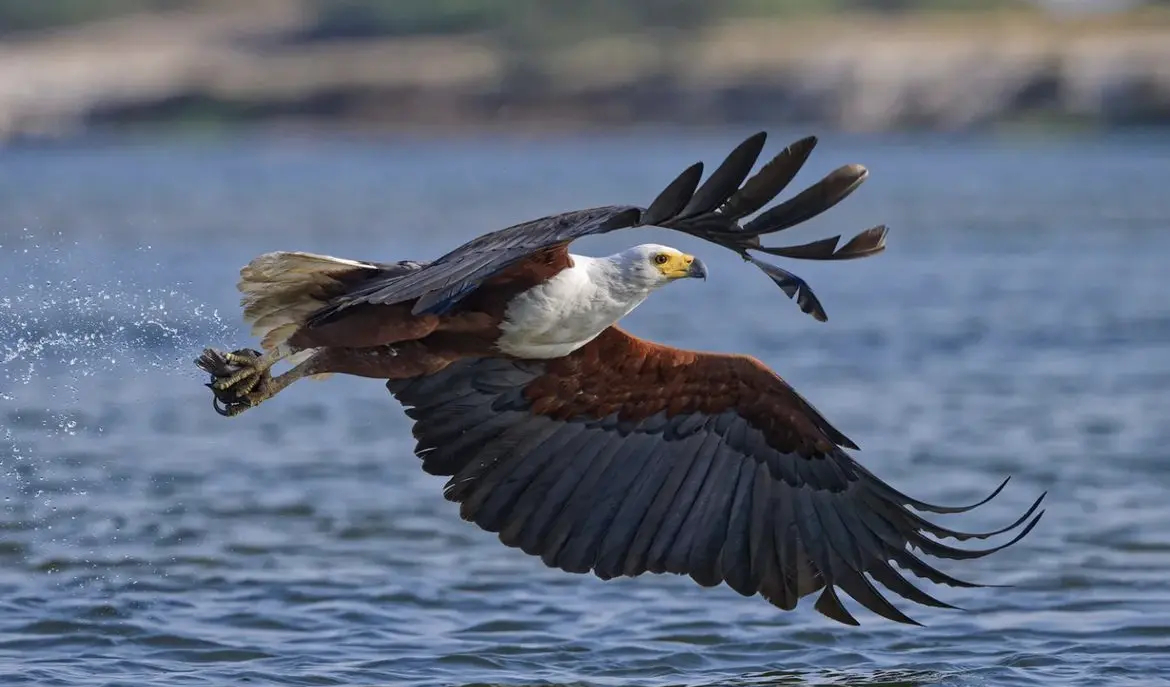
African Fish Eagle Flying over Water
Why you must see the African Fish Eagle
Fish eagles live across much of East and Southern Africa near water, so you can add them to a savanna-heavy route or a primate-focused plan. One early boat ride or a patient stop by a riverbank gives you a high chance of success.
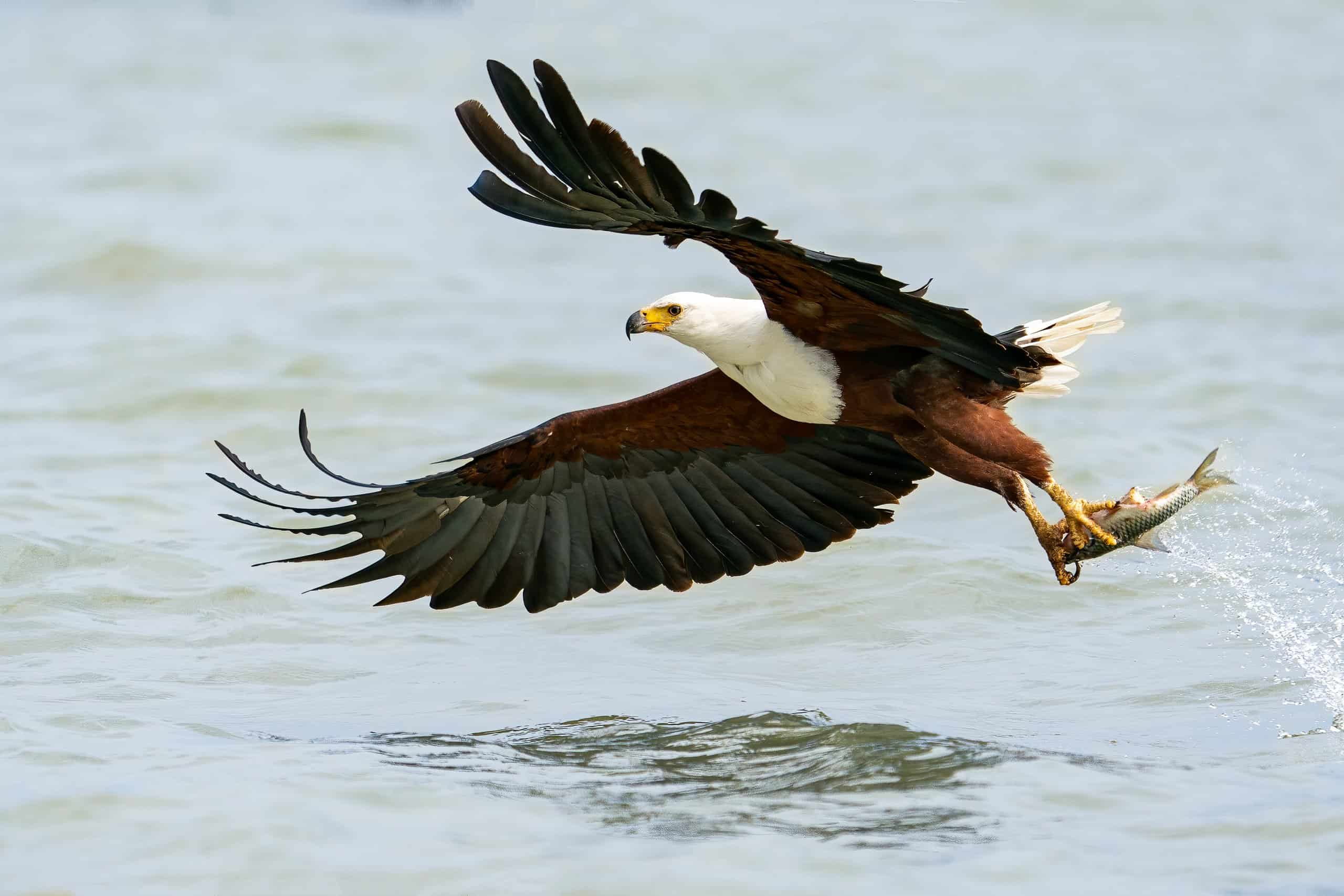
- You also gain a perfect behavior sequence for photos. Perch, scan, launch, strike, and carry. You can plan each frame. A wide shot for context, a mid-range shot for the launch, then a tight shot for the talons on the fish. You leave with a complete story rather than a single lucky image.
- Watching a fish eagle hunt tells you about water quality, prey size, and the health of the wetland. When fish move near the surface, you know oxygen levels and temperatures align.
- When the bird carries a heavy tilapia to a shaded branch, you see how prey and cover interact.
- You connect with communities around water. Fishermen pass in narrow canoes. Kingfishers work the shallows. Crocodiles sit on sandbanks and monitor lizards patrol the edges. The fish eagle sits at the center of this scene. You end up watching more than a bird. You watch a complete system in balance.
- You support parks and conservancies that protect wetlands. Your permits and fees keep channels open, reduce illegal nets, and fund community projects that value clean water. You enjoy an iconic African raptor, and your visit helps keep the long call in the morning air.


African Fish Eagle Behaviors
African Fish eagles hunt by sight. They perch near open water, often on dead trees or tall branches with a clear view. When a fish moves close to the surface, the eagle launches in a shallow dive, legs forward, claws extended. Talons pierce the prey, and special rough pads help hold slippery fish during the climb back to a perch.
You might hear duet calling as they mend their bonds. Nesting happens in large stick platforms placed high in riverside or lakeside trees.
Adults reuse and renovate nests over years, which turns them into sturdy towers. When you find a nest, you can often return later for calm, steady viewing of parental routines.
Physical Appearance
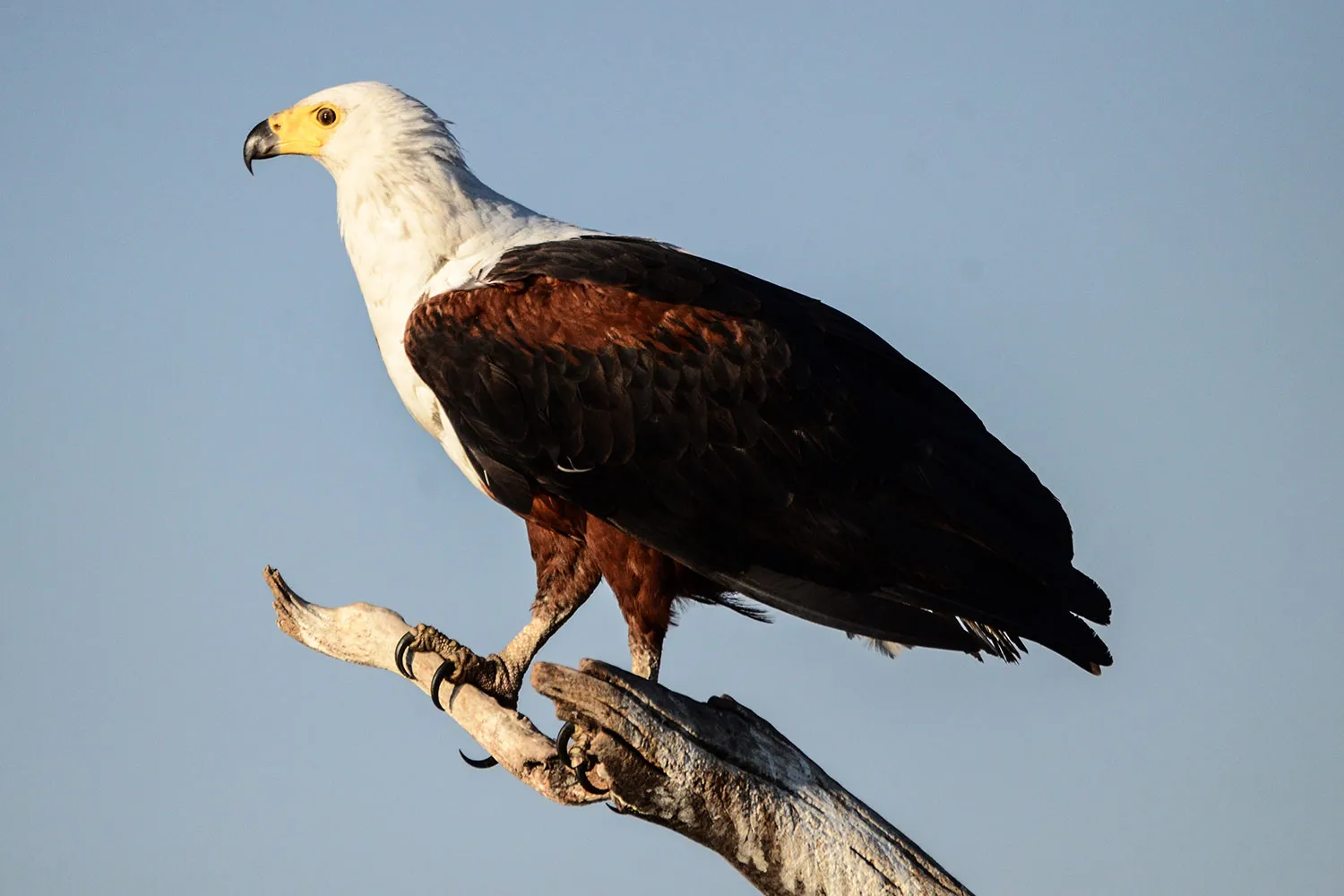
The African fish eagle looks bold and simple. It possesses a bright white head and chest contrast with a rich chestnut body and dark brown to black wings.
It has a yellow face skin around the dark bill adds a clean frame to the eye. Legs are yellow with strong, black talons built to grip wet prey.
Juveniles appear browner and more mottled, with less white on the head and chest and a paler, streaked look through the body but as they mature, the classic white and chestnut pattern emerges.
African fish Eagle Size
Adults measure roughly 63 to 75 centimeters in body length with a wingspan that commonly ranges from one point nine to two point four meters. Females are larger than males, which you will notice when a pair perches together.
Juveniles approach adult size within their first year, yet still show mottled plumage that sets them apart on a branch beside a parent.
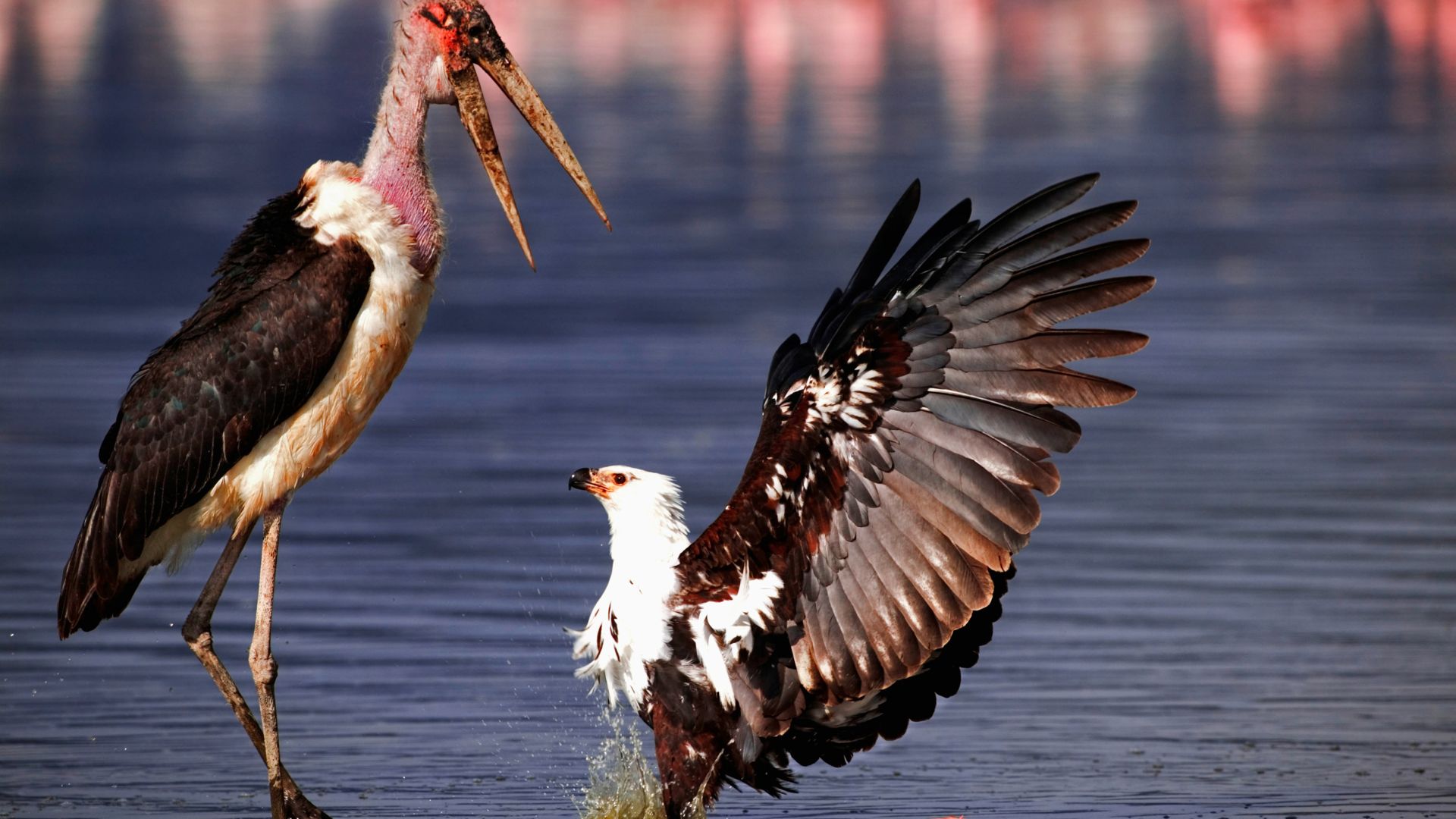
African Fish Eagle Facing off with a Marabou Stork
African Fish Eagle Weight
Females typically weigh 3 to 3.6 kilograms, while males average 2 to 2.8 kilograms.
A heavy fish can equal a sizable fraction of the bird’s weight, which explains why you sometimes see an eagle paddling to shore with wings if a catch is too large to lift cleanly.
Well-fed adults look solid through the chest and thighs, especially in fish rich seasons.
Fish Eagle Habitat
Fish eagles rely on freshwater lakes, broad rivers, flooded plains, and large marshes. They select perches that give open views and quick access to water.
Dry trees in shallow bays, tall fig branches near channels, and exposed snags on sandbanks all work well. The key is visibility. If the bird can see surface movement, it can hunt efficiently.
Diet is typically fish, with tilapia, catfish, and cichlids common in many regions. The eagle will also take waterbirds, small reptiles, or carrion when the opportunity appears.
You might see one steal a fish from a heron or snatch a small barbel dropped by a stork. Flexibility helps the species thrive across many wetlands and seasons.
Seasonal water levels shape behavior. In high water, fish spread into flooded grasses and the eagle follows them to new perches. In dry months, fish concentrate in deeper channels, and birds gather along predictable stretches. Your guide reads these patterns, chooses the right bank or boat route, and sets your viewing at angles that keep light behind you and glare off your lens.

Where to find it
In Uganda, the Kazinga Channel in Queen Elizabeth National Park offers a classic fish eagle encounter from the comfort of your safari boats. The Nile in Murchison Falls National Park is another exciting place to see them in a dramatic backdrop with islands, sandbanks, and falls.
Lake Mburo National Park and Lake Victoria’s fringes near Entebbe produce close, repeatable sightings at dawn and late afternoon.
In Kenya, Lake Naivasha and Lake Baringo are standout sites with easy access and plenty of perches. The Mara and Talek rivers in the Masai Mara show regular activity, especially near broad bends and shallow crossings.
In Tanzania, look to the Rufiji River in Nyerere National Park, the Grumeti and Mara rivers in the Serengeti, Lake Manyara’s shores, and the channels of Katavi during the dry season.
If you are in Rwanda, then Akagera National Park delivers steady sightings along the lake edges framed by rolling hills.
Further south, the Chobe River, Okavango Delta, Zambezi River, and Lake Kariba offer world-class viewing for travelers extending into Southern Africa.
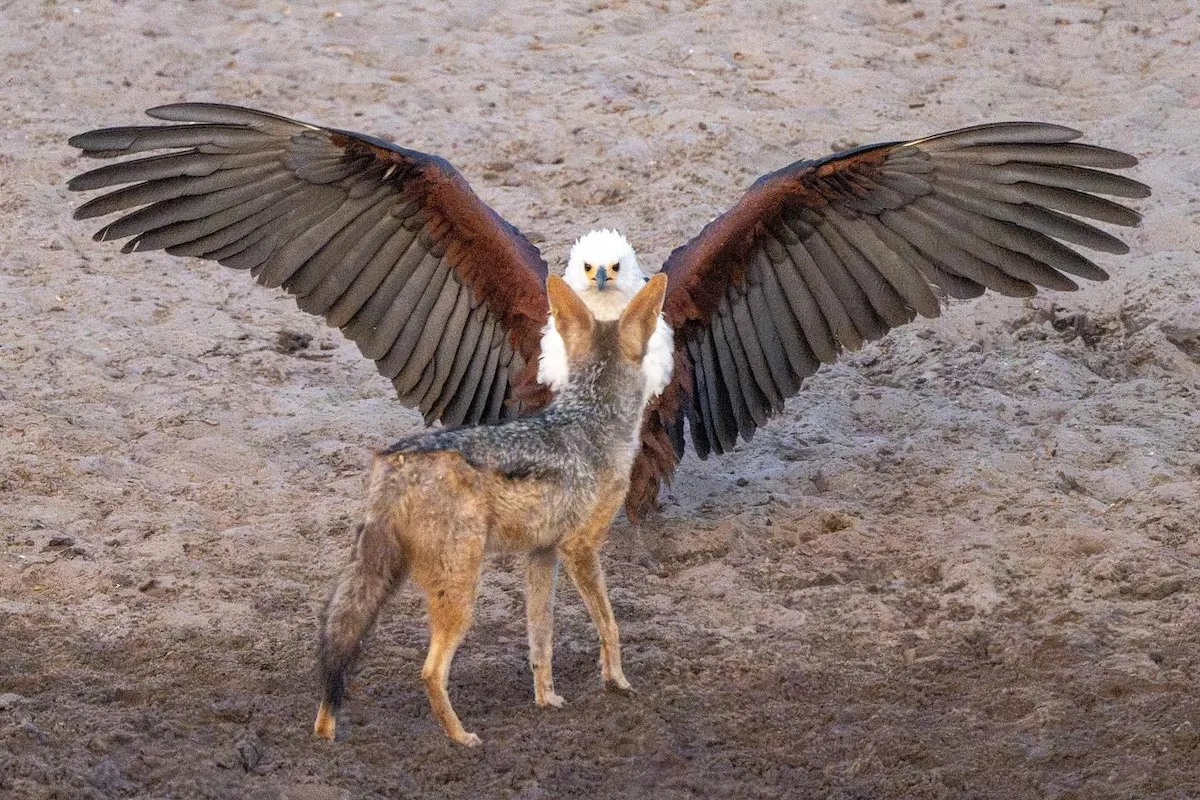
An African Fish Eagle challenging a jackal to a Fight
Top African Eagle Sighting Tips
- Start early or finish late on calm water. Morning and late afternoon light reduce glare, flatten ripples, and bring more hunts. Position the boat upwind so you drift slowly into range, which keeps engine noise low, and the bird relaxed for longer viewing.
- Watch the water, not only the bird. When small tilapia or catfish disturb the surface, a strike often follows. If you track those ripples while keeping the eagle in peripheral view, you react faster and capture the moment when talons touch the water.
- Use a standard zoom for the launch and a longer lens for the grab. Many hunts begin from a predictable perch. Frame a wide context, pre-focus on the water path, then switch to the long lens for the strike. Ask the guide to hold a steady angle and avoid sharp turns.
- Learn the call and look up when you hear it. The two-note whistle carries far and often marks a change in position. If a perched bird calls repeatedly, scan near nests or watch for a partner returning, which sets up a landing shot with open wings.
- Sit still near favored perches instead of chasing boats. Fish eagles prefer certain trees and snags. A patient stops at one bend, beats an hour of restless circling. Your guide will know traditional perches, especially where old nests sit within a short flight of open water.
- Adjust exposure for the white head and chest. Slight negative exposure compensation prevents blown highlights in bright sun. Take a quick test frame on the perch, then focus on tracking the launch. You can lift shadows softly later if needed while keeping the whites intact.
- Respect the distance near nests. Parents feed and shade chicks on a routine. Crowding stresses the pair and shortens your viewing. A calm buffer gives you longer behavior sequences, more calls, and better chances at both adult and juvenile portraits without disturbance.
- Add a second session on a different water body if time allows. Rivers and lakes give different angles, perches, and prey sizes. Two short outings produce a varied portfolio and reduce the risk of wind or glare ruining a single window on your itinerary.


Got any questions
about traveling to Uganda?
Get in touch.
