

Select Page
Topi: Facts, Reproduction, Habitat, Diet and More
Topi Introduction
Your first proper topi sighting often begins with a pause. You notice a shape standing on a small mound, head high, horns curved back, body shining almost purple in the right light. For a moment you forget everything else on the plains.
If you are used to stocky buffalo and nervous gazelles, the topi feels like something in between. The body looks powerful but not heavy, the legs long, the face alert. Dark patches on the upper legs look almost like neat knee socks, and the coat shifts from chestnut to deep brown as clouds pass overhead.
What makes the topi stand out is how proud it seems of any little rise in the grass. One animal claims a termite mound, scans in every direction, then steps down only when another topi takes that post. You feel as if you are watching a rotating lookout system that runs all day.
Later, when you think back on your safari, topi often appear in the same mental frame as big cats. You remember lions resting, and somewhere in that same memory sits a topi on a mound, staring hard into the distance, determined not to become the next story.
Topi Classifications
Class: Mammalia
Order: Artiodactyla
Family: Bovidae
Genus: Damaliscus
Species: Damaliscus lunatus jimela (topi subspecies)
Recommended Safaris

14 Days
Private
14-Day Uganda, Congo & Rwanda Gorilla Trekking & Wildlife Safari
from
$ 4900
per personWhere to See Topis
Topi love open or lightly brushed plains with short to medium grass, often close to seasonal wetlands or floodplains. You usually meet them in East and parts of Central Africa, where big skies and wide views help them spot trouble early.
In Serengeti National Park in Tanzania, you see topi scattered across open grass and around low ridges. Territorial males stand on termite mounds, while herds feed quietly on the flats below, weaving between Wildebeest and zebra.
In the Maasai Mara in Kenya, topi often hold the higher ground. You find them on small hilltops and along gentle ridgelines, their bodies outlined against the sky while Wildebeest gather on lower ground during the migration.
Around Nairobi National Park, topi share city edge grasslands with gazelles and buffalo. You can watch a topi scanning from a mound while, far behind it, office towers and planes remind you how close the city sits.
In Queen Elizabeth National Park in Uganda, topi live mostly in the Ishasha and Kasenyi sectors. They feed on open plains near the Kazinga Channel and use small rises above the lake shore to keep an eye on lions.
In Kidepo Valley National Park, Uganda, topi stand out as dark shapes against golden valley floors. They often choose slightly raised spots near seasonal streams, with wide empty space around them in every direction.
In Akagera National Park, Rwanda, you find them on rolling savanna and wet floodplains. Here they share ground with waterbuck and zebra, often forming mixed scenes beside lakes and papyrus fringes.
Further south, in parts of Ruaha and other Tanzanian savanna parks, smaller populations move between river benches and open plains. The light there can be harsh, which makes their dark legs and glossy coats stand out even more.
Wherever you go, you improve your chances if you slow down near open plains, scan termite mounds and small rises, and look for that unmistakable dark-legged antelope that insists on standing a little higher than everyone else.
Topi Gallery

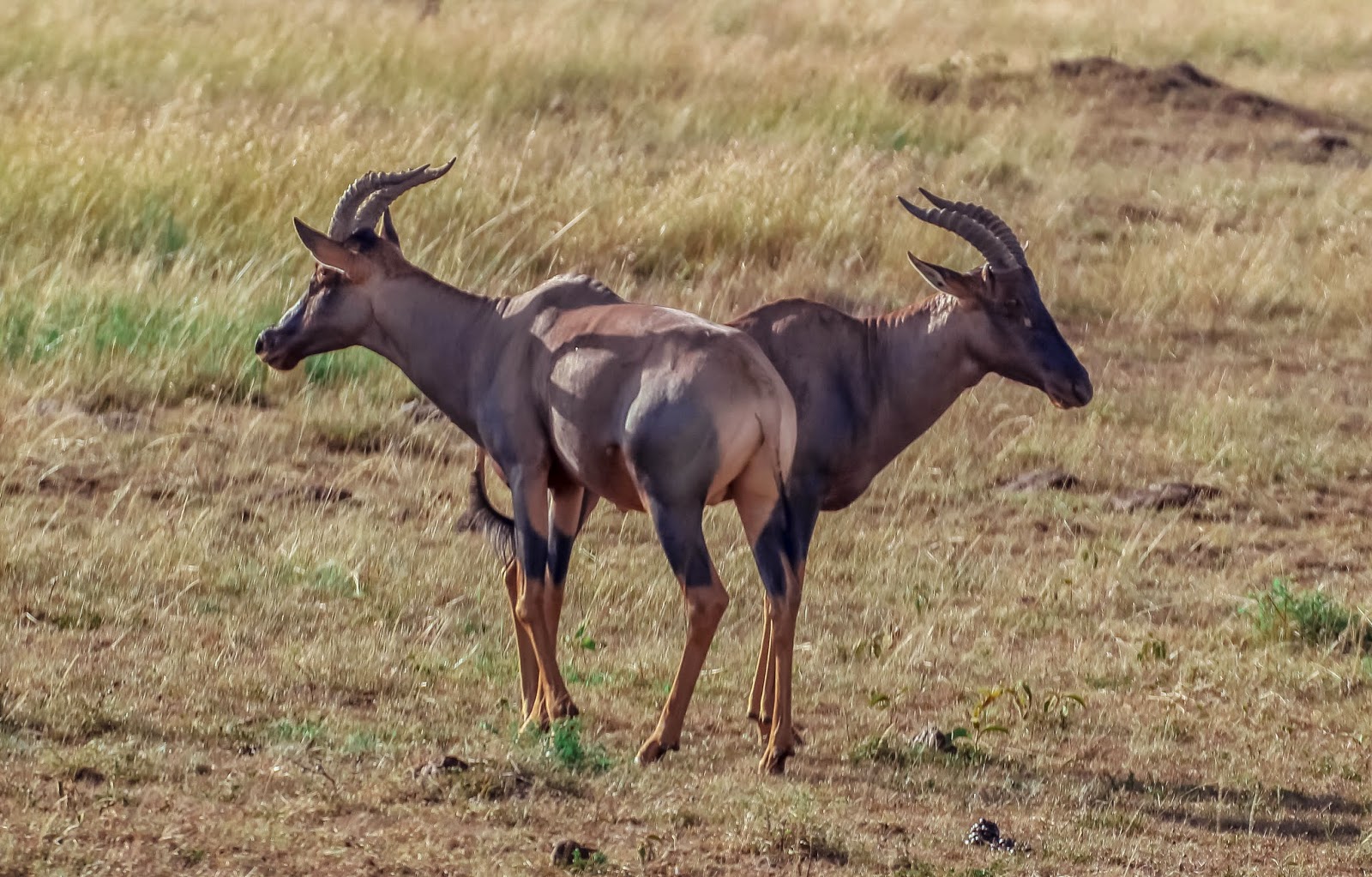
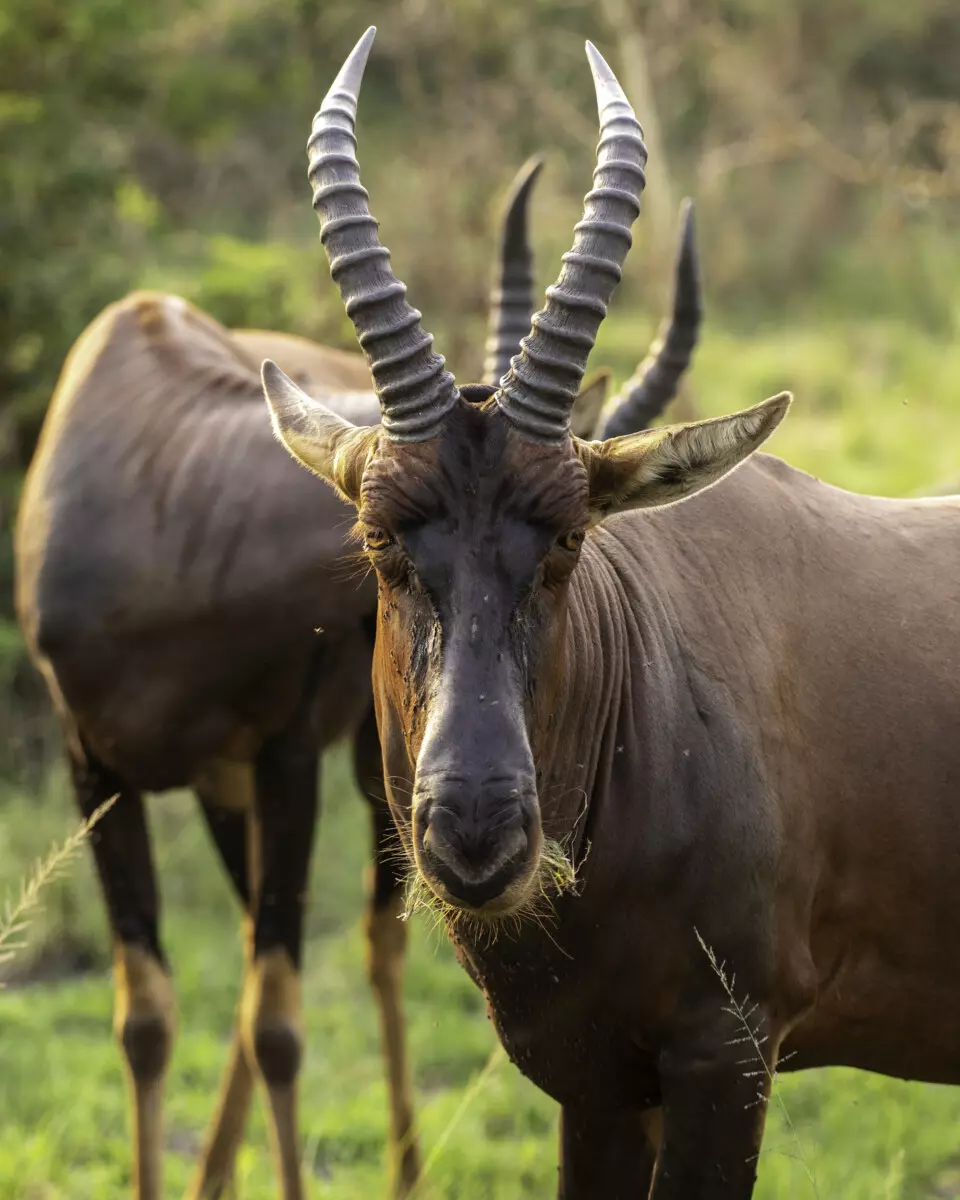
The Topi’s Behaviour
If you give yourself time with topi, their behaviour starts to feel almost strategic. They place themselves where views are best. Males climb termite mounds, old earth piles and any piece of raised ground, then stare out over the plains for long, silent minutes. When one male steps down, another often takes the exact same spot, as if the mound belongs more to the herd than to any individual.
Topi live in herds that shift with season and grass. You may see small family groups with females and calves, bachelor collections of young males, or larger mixed gatherings during times of rich grazing. Males defend territories during breeding periods, especially in areas where many topi crowd together. These “leks” can become busy, with males advertising themselves in small, adjoining territories while females move through and choose partners. From your seat in the vehicle, you see short chases, head swings and stiff legged walks that look more like displays than full attacks.
Communication flows through posture, scent and movement. A sudden stiffening of one animal can ripple through the herd in seconds. Ears point, heads lift, and bodies turn toward or away from something you might not have noticed. When danger feels real, topi whistle alarm calls and bunch together, then either stand facing the threat or break into a fast run. They rarely drift in a lazy way. Every movement seems to carry a reason, even if only the topi understand it fully.
Daily rhythm follows light and heat. Early morning brings active grazing and more movement between plains and water. During the hottest hours, many topi stand resting, often facing into the wind to catch scents and cool air, or they lie in short grass but still keep their heads up. Late afternoon, they feed again with more energy, calves playing in short bursts of running while adults continue to scan.
The Topi’s Diet
The topi’s diet focuses strongly on grasses. They prefer short, green growth that appears after rain or follows grazing by larger herbivores. You see them nibble close to the ground, taking the softest, youngest parts of shoots with quick, precise bites. On fresh plains, their heads stay low for long periods, tails flicking occasionally at flies while horns vanish into the sea of grass tips.
In drier times, topi shift toward slightly taller or tougher grasses, but they still choose the best sections available. They sometimes take herbs and forbs when these offer better nutrition than dry stems. Their narrow muzzles help them pick individual blades and growing points with care, making efficient use of patches that might seem thin from a distance.
Water needs vary with habitat and season. In many places, topi drink daily when water is within reach, often in the cooler parts of morning or evening. In other regions, moisture from plants supports them for longer periods between visits to rivers and waterholes. This gives them some freedom to graze away from crowded drinking points where predators wait.
The Topi’s Reproduction
Reproduction in topi often gathers around territories on good grass. In some areas, males hold scattered territories; in others, they form dense clusters where many males court females in a small area. These leks create intense social scenes. Each male claims a patch, marks it repeatedly and performs display behaviour when females approach, walking with head low, horns forward and body slightly stiff, as if he is both proud and tense at the same time.
When a female comes into estrus, one or more males attend her closely. Short chases, circling and repeated sniffing follow. Mating itself happens quickly, then the female usually leaves the territory and returns to her normal feeding group. The male stays behind to protect his small patch and wait for the next chance. From your perspective, it can look like a strange mix of patience, frustration and brief success repeated many times during the season.
Gestation lasts several months, ending with the birth of a single calf. Females often seek a slightly quieter area with enough grass cover before giving birth. The newborn stands on long, shaky legs within a short time, then feeds and rests while the mother stays alert. In some populations, calves hide for short periods; in others they join small nursery groups fairly quickly, moving alongside their mothers during feeding.
As calves grow, they form play groups within the herd, chasing each other in sudden sprints and turning sharply for no clear reason other than practice and joy. These games build strength and coordination they will need when real predators appear. Over time, young males begin to drift toward bachelor groups, while young females stay closer to the core of the herd, learning the routes and safe places that generations of topi have used.
Recommended Safaris
8 Days
Private
8 Days Murchison Falls, Gorilla, Chimpanzee & Queen Elizabeth Safari
from
$ 1790
per person
11 Days
Private
11 days Uganda Premium Gorilla, Wildlife & River Nile Adventure
from
$ 2900
per person
14 Days
Private
14-Day Uganda, Congo & Rwanda Gorilla Trekking & Wildlife Safari
from
$ 4900
per personTopi FAQs
How big is a topi compared with other antelope?
Topi are medium sized, heavier than gazelles but lighter than buffalo, with a lean, strong build that suits long runs and sudden direction changes on open plains.
When you see a topi standing near Wildebeest, its body looks slimmer and smoother, with more polished lines and that distinctive dark patch on the upper legs.
Where are the best places to see topi on safari?
You have strong chances in Serengeti, Maasai Mara, Akagera, Nairobi National Park, Kidepo and parts of Queen Elizabeth, especially on open grass plains.
Ask your guide to slow down near termite mounds and low ridges. A single topi on a mound can lead your eyes to a whole herd spread across the grass.
Do both male and female topi have horns?
Yes, both sexes carry horns, although male horns are usually thicker and more strongly ridged, with a slightly heavier base that looks more solid from the side.
Females often have slimmer horns, but shape and curve are similar. Behaviour and body posture sometimes provide better clues than horns alone when you watch from a distance.
Are topi aggressive toward other animals?
Topi can be assertive with their own kind, especially males defending territories, but they rarely seek trouble with other species unless pushed too close.
You may see them drive off smaller grazers from key patches of grass or stand their ground near predators, yet full confrontations are uncommon and usually brief.
What predators usually hunt topi?
Lions, hyenas, leopards and wild dogs all hunt topi, especially young or distracted individuals. Cheetahs sometimes target calves or smaller adults when conditions favour a fast chase.
Topi rely on early detection and strong running. Their habit of standing on mounds to scan is one way they try to reduce the chances of surprise attacks at close range.
When are topi most active during the day?
They are most active in the cooler hours of morning and late afternoon, when they feed more, move between feeding areas and water, and shift positions on mounds.
During hot midday periods, many stand resting or lie down briefly, still watching their surroundings. Activity does not stop completely, but the rhythm becomes slower and more measured.
How do topi communicate within the herd?
Topi use calls, scent marking and body posture. Alarm snorts and whistles alert others, while tail position, head height and ear angles carry quieter signals about mood and awareness.
Scent marking on grass and soil helps males define territories and tells other topi who holds a patch. Herd members read these signs as they move through familiar ground.
Why do topi stand on termite mounds so often?
Mounds give better views of predators and other herds. From a mound, a topi can see over taller grass and read movements that would stay hidden at ground level.
These raised spots also act as natural signposts for social behaviour. Males patrol between them, display from them, and sometimes turn them into small centres of territorial life.
Are topi important for the savanna ecosystem?
Yes. They convert grass into energy for predators and carrion feeders, forming an important link between plant growth and carnivores on open plains.
Their grazing also shapes grass height patterns, helping keep some plains short and open, which benefits other species that prefer lower vegetation and clearer sightlines.
Conclusion
Time with topi changes how you read the flat parts of the savanna. Open grass stops feeling empty and becomes a place where watchfulness itself stands on small hills and refuses to relax. You begin to expect a dark-legged antelope on almost every mound, scanning the same horizon you admire for sunsets.
You remember mornings when topi stood outlined against a pale sky, steam rising from their noses as they breathed. You remember herds bunching and turning toward an unseen lion, holding their ground until the risk felt too close. You remember calves racing in untidy circles, then settling quietly under the steady gaze of adults on nearby rises.
Don’t wait,
book this adventure safari today
Low season
Oct, Nov, Mar, Apr, may
Peak season
Jun, July, Aug, Sept, Dec

Got any questions
about traveling to Uganda?
Get in touch.
