

Select Page
Oribi: Facts, Classification, Reproduction, Habitat, Diet and More
Oribi Introduction
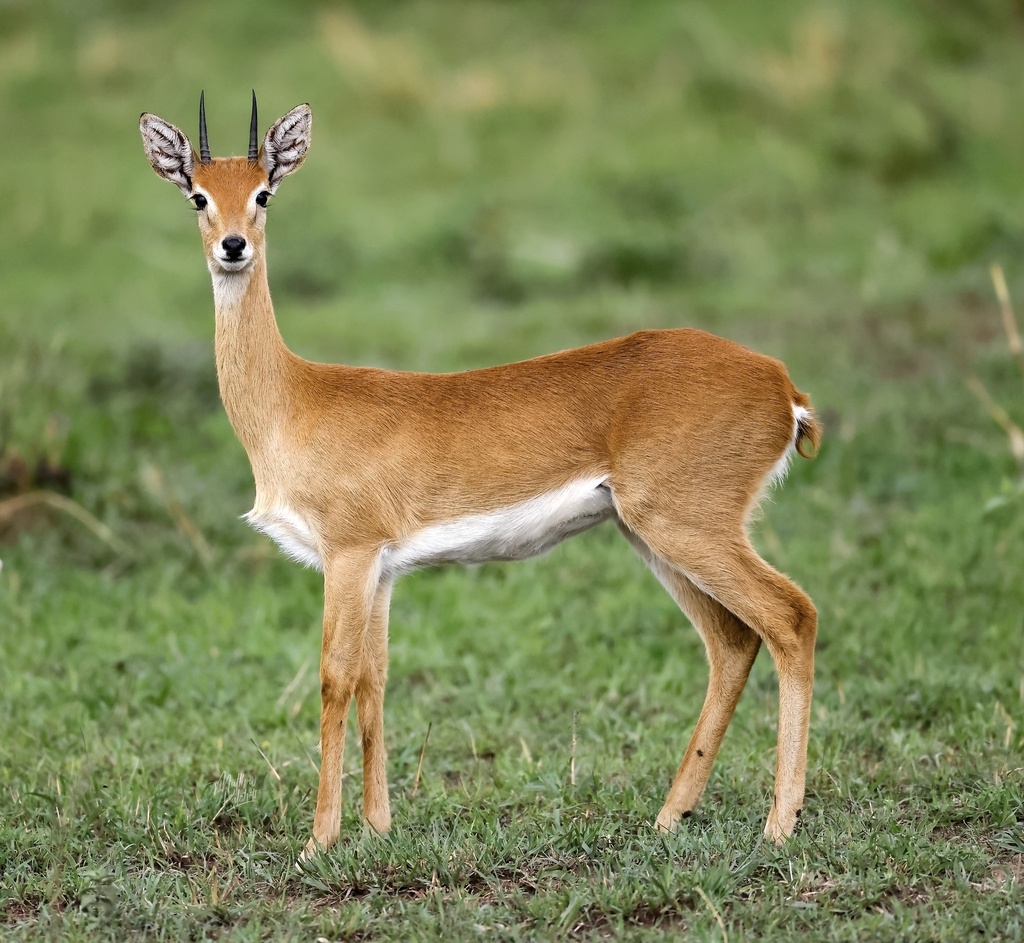
Your first oribi sighting often begins with a bit of confusion. You see movement in knee high grass, expect a hare or maybe a young impala, then a tiny antelope lifts its head and looks straight at you. The body is slim, the coat warm tan, and the dark tail flicks once before it decides whether you deserve more attention.
If you are more used to large, showy antelope, the oribi feels like a quiet specialist. It stands on a slight rise, big eyes soft and alert, ears turning to sounds you cannot hear. There is no dramatic horn display, no heavy neck. Instead, you see a small, refined animal that survives by noticing everything and choosing its moments very carefully.
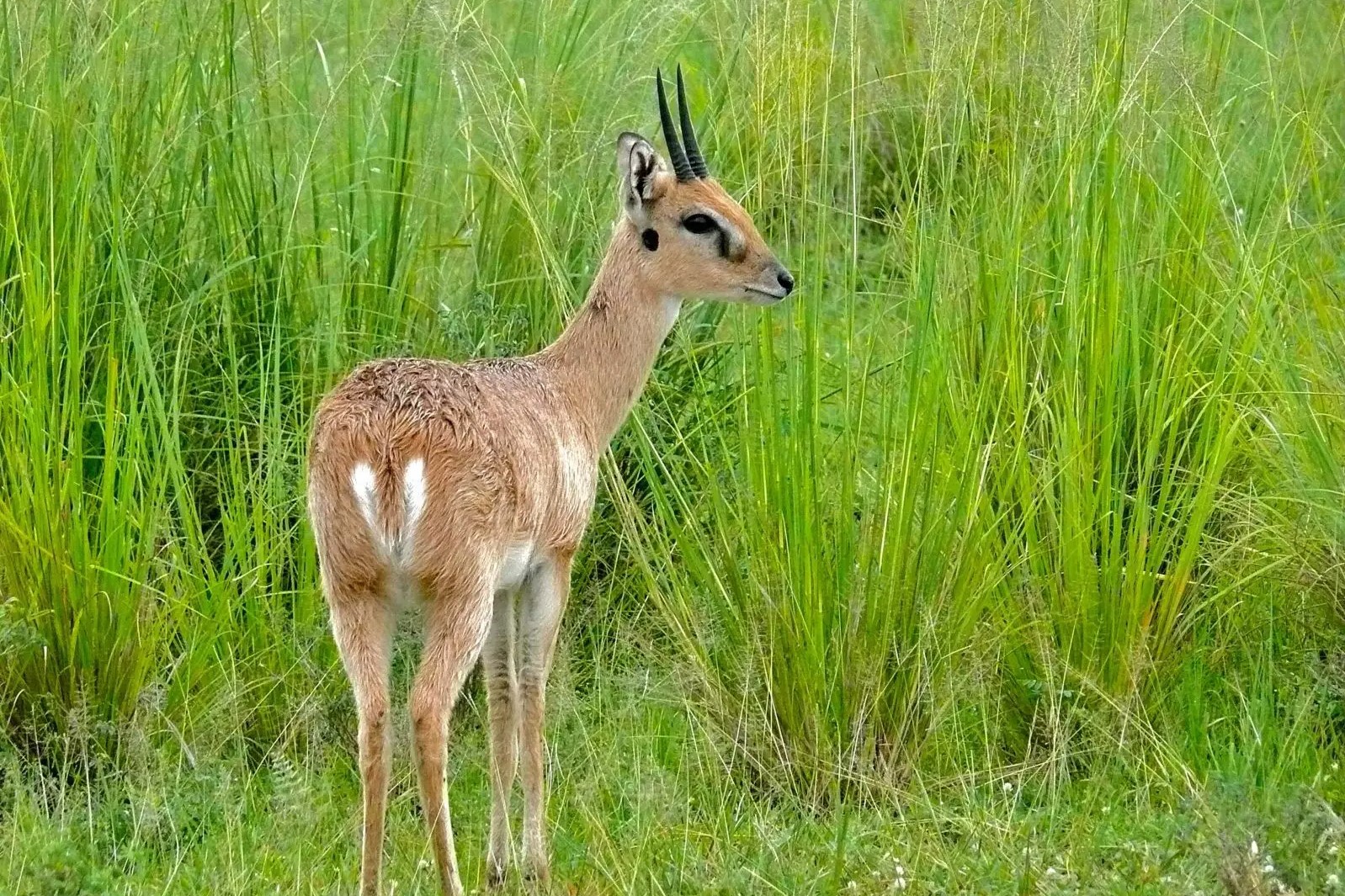
What makes the oribi unique is how it turns simple grass into both shelter and home. It is not a forest animal and not a deep bush animal. It prefers open or lightly brushed grass areas, often with nearby wetlands or gentle slopes. You watch one melt into cover simply by lowering its head and taking three careful steps, and the whole plain suddenly feels deeper.
Many travelers remember oribi as the “little antelope they nearly ignored.” Perhaps you were scanning for lions or giraffes when your guide mentioned a pair on a distant ridge. Once you finally locked eyes with them through binoculars, the scene changed. You were no longer looking only at plains and sky. You were looking at a delicate life being lived on a much smaller scale, inside the same big view.
Recommended Safaris

14 Days
Private
14-Day Uganda, Congo & Rwanda Gorilla Trekking & Wildlife Safari
from
$ 4900
per personWhere to See Oribi
Oribi live across patches of East, West and Southern Africa, mostly in open or lightly wooded grass areas with good grazing and some cover. You often find them where tall grass, short lawns and gentle wet ground meet.
Murchison Falls National Park, Uganda
On the northern bank, oribi feed on rolling grasslands dotted with borassus palms, often close to Uganda kob yet slightly apart, using termite mounds as quiet watch points.
Kidepo Valley National Park, Uganda
In the broad valleys and low ridges, small groups pick through golden grass, keeping enough distance from big herds and staying close to low rises for quick escape.
Lake Mburo National Park, Uganda
Around open grass near wetlands and rocky outcrops, oribi share space with zebra and impala, slipping into thicker tufts whenever vehicles or predators draw too near.
Serengeti fringes, Tanzania
On some quieter fringes of the Serengeti, away from dense migration traffic, oribi use mixed grass and scattered bushes, often near small drainage lines and seasonal pans.
Akagera National Park, Rwanda
In Akagera’s open grass and wet floodplains, they feed in small groups near gentle slopes, standing out as tiny figures beside taller waterbuck and topi.
Laikipia conservancies, Kenya
On mixed cattle and wildlife ranchlands, oribi graze in lightly used grass, weaving between boulders and low shrubs, always with one eye on distant movement.
Kruger National Park, South Africa
In certain grassy sections with low rocky ridges, oribi appear in small family groups, feeding near old termite mounds that double as lookout spots when heads go up.
Kafue and Liuwa Plain, Zambia
In Kafue and on open Liuwa flats, oribi share wide grass areas with larger open country herbivores, often using slightly higher, drier patches close to seasonal water.
Wherever you go, you improve your chances by paying attention to shorter antelope shapes in open grass, especially early and late in the day when light is soft and movement gentle.
Oribi Classifications
Class: Mammalia
Order: Artiodactyla
Family: Bovidae
Genus: Ourebia
Species: Ourebia ourebi
The Oribi Gallery
The Oribi’s Behaviour
If you stay with an oribi sighting longer than a quick glance, their behaviour feels like a constant balancing act between calm feeding and quick escape. They lower their heads to crop grass, then raise them again after only a few seconds, scanning in several directions. The body remains light on the toes, as if it is always ready to pick a new path at short notice.
Oribi usually live-in small groups. You often see a territorial male with one or more females, plus young of different ages. Bachelor males may hold nearby areas or float on the edges, waiting for a chance to claim space. Within each group there is a sense of personal distance, yet they rarely drift far from one another. When one animal stiffens, turns its head or stamps lightly, the others respond quickly, even if you heard nothing at all.
Communication uses posture, short calls and shared routines. A sharp whistle acts as an alarm, sending the group into a series of quick bounds toward safer ground. Tail movement also carries meaning. A raised or twitching tail can signal agitation, while a more relaxed tail often means the group feels comfortable enough to feed. You might not decode every subtle sign, yet you can feel tension rise and fall across the whole group as they react to your vehicle, a distant bird of prey or a shift in the wind.
Oribi favour dawn and late afternoon for most activity. During those cooler hours they feed more openly, venturing a little further from the nearest patch of cover. When the sun climbs, they rest in longer grass or near low bushes, sometimes lying down so that only the ears and horns of the male show above the plants. Even while they rest, heads lift often. You somehow sense that truly relaxed moments are brief, yet meaningful, in a world where every shadow might hide something hungry.
The Oribi’s Diet
Oribi are mainly grazers, which means they focus on grass more than leaves and shrubs. They prefer young, tender shoots and fresh regrowth that appears after rain or fire. You see them nibble close to the ground, selecting the best parts from mixed grass with quick, precise bites. On green, damp plains they often look content, moving steadily with small steps while their mouths do constant, careful work.
In tougher seasons, oribi shift to slightly older grasses and occasionally small herbs and forbs. Their small size helps; they do not need as much volume as larger antelope. They pick scattered high quality pieces in patches that might look poor to a casual viewer. In some areas they use burned ground cleverly, returning soon after fire to feed on the first soft green shoots that push through blackened soil. That combination of patience and timing turns harsh ground into something useful again.
Water needs vary with habitat. Where natural water is available, they drink from shallow edges or gentle streams, usually during safe, quiet periods. In some places, moisture in plants supports them for surprisingly long stretches without obvious drinking. This allows them to spend more time in open grass, rather than walking down to busy water points where larger predators expect nervous visitors.
The Oribi’s Reproduction
Reproduction in oribi builds around small territories and strong pair or harem bonds. Males hold territories that contain good grass, suitable resting cover and small raised areas for lookouts. They mark these spaces with dung middens and scent, defending them against other males. Much of the contest happens through posture, chasing and display chases rather than constant physical fights, but serious clashes still occur when boundaries are ignored.
Females come into breeding condition inside these territories, and males watch them closely, following and checking scent. Mating itself often happens without drama for outside observers. You might see the male shadowing a particular female for a while, then mounting briefly, then returning to normal feeding and scanning as if nothing unusual occurred. The real drama, in a sense, sits inside the long work of holding that piece of ground year after year.
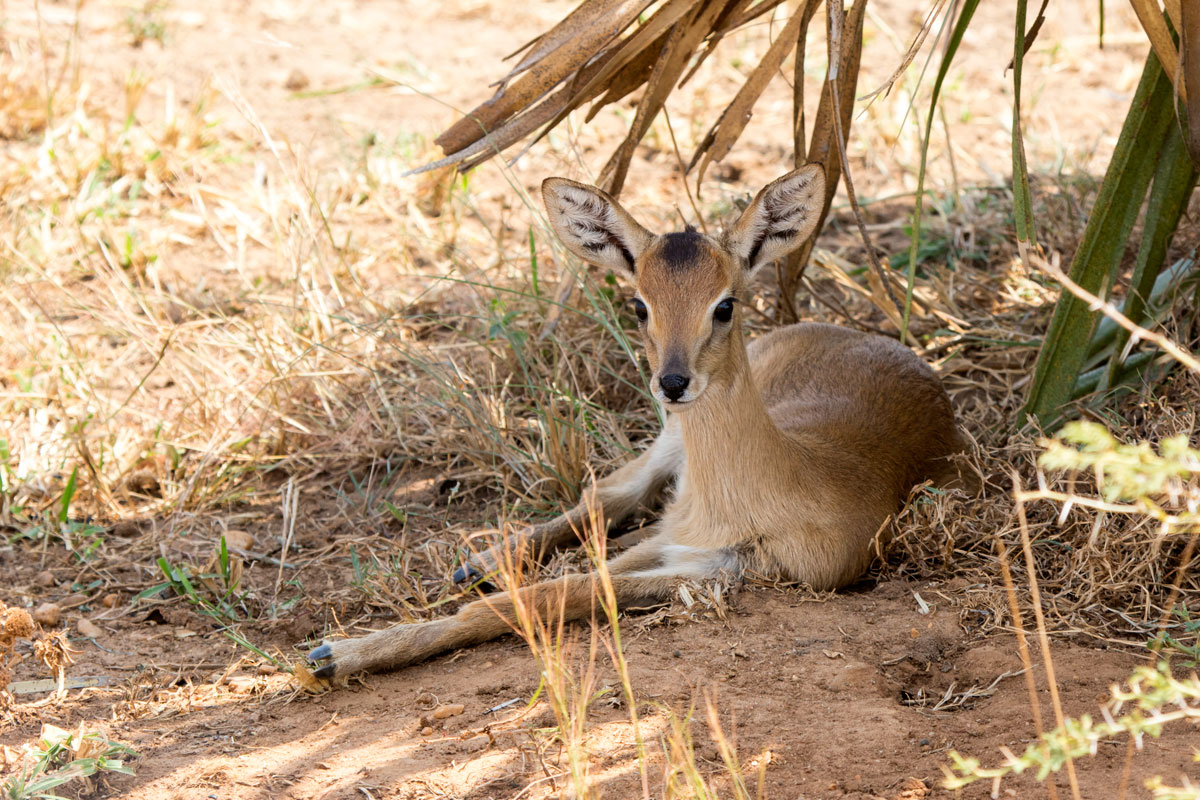
After mating, gestation lasts several months, ending with the birth of a single fawn. The mother usually chooses a quiet, well covered spot in longer grass, away from busy paths and obvious predator routes. The newborn lies flat, its coat and lack of scent helping it stay unnoticed while the mother feeds nearby. She returns frequently to nurse, groom and check for danger, yet keeps visits short so that repeated movement does not draw unwanted attention.
As the fawn grows stronger, it begins to follow the mother more often, first for short distances, then for longer feeding sessions. Early steps are shaky, but the youngster quickly learns where to stand, when to freeze and when to follow. Over time it joins the wider group more fully, playing with other young oribi in short dashes that look like pure fun, yet also train muscles and judgement for real flights from danger later.
Recommended Safaris

8 Days
Private
8 Days River Nile, Murchison Falls & Kidepo Wilderness Safari
from
$ 2400
per person
14 Days
Private
14-Day Uganda, Congo & Rwanda Gorilla Trekking & Wildlife Safari
from
$ 4900
per person
Oribi FAQs
How big is an oribi?
An oribi is a small antelope, with adults standing roughly knee high to a tall adult human, and weighing far less than many better-known savanna antelope.
Their size means they live in a different world within the same plain. Grass that reaches your thigh becomes a full forest for them, with hiding places and feeding spots everywhere.
Where can you see oribi on safari?
You often see oribi in open or lightly brushed grass areas of parks such as Murchison Falls, Kidepo, Lake Mburo, Akagera, some Serengeti fringes, Laikipia and sections of Kruger.
To improve your chances, ask your guide to stop on gentle grass slopes and scan carefully. Often oribi appear near termite mounds, low ridges and the edges of wetter ground.
Are oribi shy around vehicles?
Oribi are cautious. They sometimes stand for a few moments and watch a vehicle, then either relax and feed again or move away in a quick, springy run if they feel unsafe.
If you keep voices low and movements gentle, you often get longer views. Sudden noise or trying to approach too closely on foot usually ends the sighting very quickly.
Do both male and female oribi have horns?
In oribi, only males carry straight, spike like horns. Females usually lack horns, which makes it easier to tell sexes apart once you know what to look for.
When you scan a small group, count horned heads. One horned animal with several without often means a territorial male with his females and possibly young.
What do oribi mainly eat?
Oribi feed mainly on grass, preferring fresh, green growth when available. They also take herbs and forbs, especially when they offer more nutrition than older, dry stems.
You will often see them grazing calmly after rain or in areas that burned recently. Those places offer soft regrowth that suits their small mouths and gentle, precise feeding style.
Are oribi active during the day or at night?
Oribi are most active in the early morning and late afternoon, when temperatures feel softer and predators are easier to spot at a distance.
During hot midday hours, they rest in longer grass or shade, still alert but less likely to move far. Night activity does occur, yet you see far less of it directly.
How do oribi avoid predators?
They rely on early detection and smart use of cover. Good eyesight, constant scanning and quick, springing runs toward gentle rises or thicker grass help them avoid many attacks.
They also choose home ground carefully, favoring areas with both feeding patches and escape routes. A small rise or nearby hollow can make the difference between life and death.
Why are oribi important for grass ecosystems?
Oribi clip grass in a different pattern from big grazers, helping shape plant growth on a finer scale. Their grazing creates tiny lawns and edges that benefit insects and birds.
They also form prey for a range of predators, from jackals and medium cats up to leopards and sometimes larger hunters. In that sense they help carry energy through the whole system.
Can oribi live alongside cattle and farming?
In some regions they share space with low density cattle grazing, feeding on parts of the grass that livestock ignore, and using remaining wild patches for shelter and breeding.
Problems grow when fields replace grass or when hunting pressure rises. Where people leave some natural cover and manage hunting carefully, oribi often remain part of the picture.
Conclusion
Spending time with oribi changes how you look at open grass. That wide, flat plain stop being only a stage for big herds and starts to feel like a layered home with different stories playing out at different heights. Somewhere below the level of buffalo and giraffe, a small antelope is making its own decisions about when to feed, where to hide and how to raise a single fawn.
For many travelers, the oribi becomes a gentle reminder that you do not need size to matter. You remember the tilt of a small head on a low rise, ears sharp against a pale sky. You remember a brief burst of springing movement when the group decided they had shown themselves enough for one day. You remember how your guide smiled when you finally spotted them without help.
Don’t wait,
book this adventure safari today
Low season
Oct, Nov, Mar, Apr, may
Peak season
Jun, July, Aug, Sept, Dec

Got any questions
about traveling to Uganda?
Get in touch.
