

Select Page
Colobus monkey: Facts, Classifications, Habitat, Diet and More
Colobus Monkeys Introduction
Your first close look at Colobus Monkeys often starts with a flash of black and white in the trees. You tilt your head back, squint through the leaves, and then see a long white tail drifting behind a dark body like a slow flag. For a second you forget to photograph anything and simply watch.
If you come from a city with squirrels and pigeons, Colobus Monkeys feel almost theatrical. They sit high in the canopy with long white mantles over their shoulders, calm faces, and that neat black-and-white pattern that looks far too clean for forest life. One leaps, lands on a branch that looks too thin, and carries on without a hint of worry.
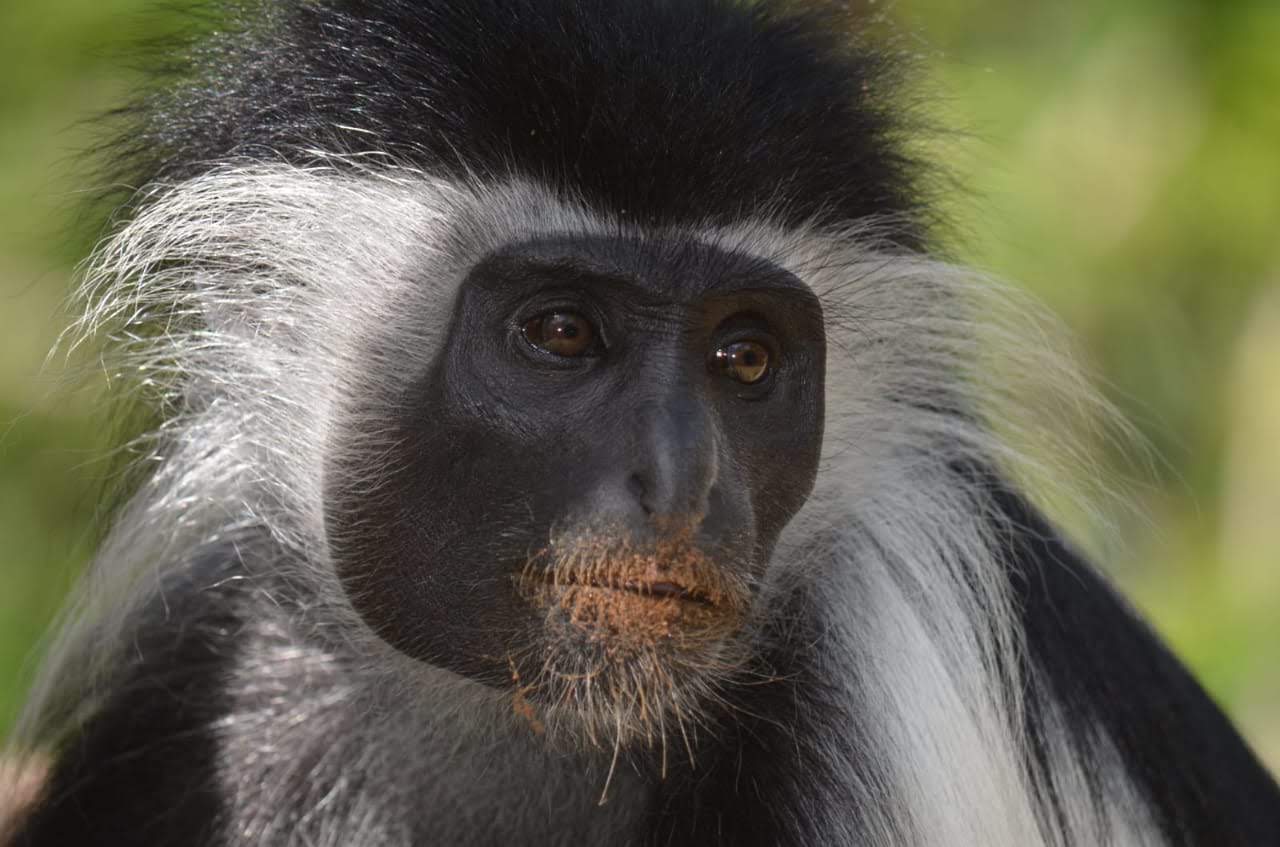
What makes Colobus Monkeys so unique is how perfectly they fit a life in the trees. Their thumbs are reduced, which sounds strange until you see how easily they hook long fingers over branches and swing through the canopy. They spend most of their time above you, eating leaves most other animals ignore, turning green foliage into fuel for long, unhurried days.
Many travelers remember Colobus Monkeys as the animals that framed their forest walks. You hear distant rustling, spot a tail, then realise a whole group is moving above you. While you pick your way around roots and mud, they travel with a few bold jumps and a light landing, as if the forest ceiling were a private highway only they know how to use.
Where to See Colobus Monkeys
Colobus Monkeys live in forests and wooded areas across parts of East and Central Africa, with different species in different regions. You often meet them on chimp or general forest walks, or even along roads that cut through tall trees.
Some of the places you might see them include:
Kibale Forest National Park, Uganda
Colobus Monkeys move through the tall canopy above chimp trekking trails, long tails hanging over the path while you listen to calls and rustling leaves.
Bwindi and surrounding forests, Uganda
On the forest edges around Bwindi and nearby reserves, black-and-white colobus feed quietly in fig trees while you prepare for or return from gorilla trekking.
Queen Elizabeth and Lake Mburo, Uganda
In riverine strips and scattered woodlands, small groups appear above water channels and lakeside trees, often near bird-rich sections of the parks.
Nyungwe Forest, Rwanda
Here you walk under dense, cool forest where both black-and-white and red colobus can appear in mixed groups, crossing the canopy in long, graceful jumps.
Arusha National Park, Tanzania
On forested slopes and along rivers beneath Mount Meru, Colobus Monkeys sit in tall trees, their white tails standing out against dark trunks and moss.
Recommended Safaris

8 Days
Private
8 Days Murchison Falls, Gorilla, Chimpanzee & Queen Elizabeth Safari
from
$ 1790
per person
Jozani Forest, Zanzibar
Red colobus move through coastal forest and mangroves, often quite relaxed near boardwalks, so you can watch them feed and play at eye level or slightly above.
Aberdare, Mount Kenya and Kenyan highland forests
In cooler, misty forests you see colobus shapes slipping through cedar and bamboo, turning grey days into something more alive each time a group passes overhead.
Wherever you go, the pattern is similar. Slow forest walks, patient looking up into the canopy, and guides who know favourite trees give you the best chance to see them well.
Colobus Monkeys Classifications
Since you may meet more than one type, it helps to know the basic group.
Class: Mammalia
Order: Primates
Family: Cercopithecidae
Subfamily: Colobinae
Genera: Colobus (black-and-white colobus), Piliocolobus (red colobus), and a few others in the wider colobus group
When most safari guides say “Colobus Monkeys” on forest trips in East Africa, they usually mean black-and-white colobus or red colobus, depending on the park.
Colobus Monkeys Behaviour
If you stop under a group of Colobus Monkeys and allow yourself time, you start to notice how much of their behaviour links to calm, steady feeding and careful social contact. Several animals sit in one tree, plucking leaves with slow, precise movements, while others groom or rest with tails draped over branches. They do not rush anywhere. Their movements feel measured, almost meditative, as if they know the forest will still be there in an hour.
Social structure varies among species, yet many live in multi-individual groups with females, their young, and a few males. Within those groups, grooming creates bonds. One monkey leans forward, closes its eyes slightly, and allows another to pick through its fur for debris and insects. Youngsters twist and climb around adults, testing branches, stealing leaves and occasionally receiving a gentle push when their enthusiasm gets in the way of a quiet meal.
Colobus Monkeys are arboreal, which shapes almost everything they do. They sleep high in the canopy and spend most of the day in the upper and mid layers of trees. When they move, they leap from crown to crown, often crossing gaps that seem astonishing from the ground. You might watch one crouch, judge a distance in a heartbeat, then launch into the air and land without a sound, tail following like a pale brushstroke.
Communication blends sound and body language. Deep calls travel through the forest to mark space and keep groups aware of each other, while softer grunts and squeaks manage distance inside a group. A raised eyebrow, a shift in posture, or a tail flick can mean “stop” or “give me space.” From below, you catch only pieces of this conversation, though you can feel that each animal knows its place in a quiet, ordered system.
colobus Monkey Gallery
Colobus Monkeys Diet
Colobus Monkeys are classic leaf eaters. They feed mainly on young leaves, shoots and tender foliage from a variety of trees. That focus explains their careful, deliberate feeding style. They reach, inspect, pick, and chew slowly, often staying in one crown for quite some time before moving on. Where other primates chase fruit, colobus settle into a patch of green and work through it with patient attention.
Their stomachs are specially adapted for this diet. Multi-chambered, with bacteria that help break down tough plant material, they function a little like internal fermentation tanks for leaves. This allows Colobus Monkeys to use food that would not give much value to many other animals. The tradeoff is that they do not spend all day leaping loudly from tree to tree. Long periods of sitting and digesting are part of the routine, which you see in those quiet resting sessions after heavy feeding.
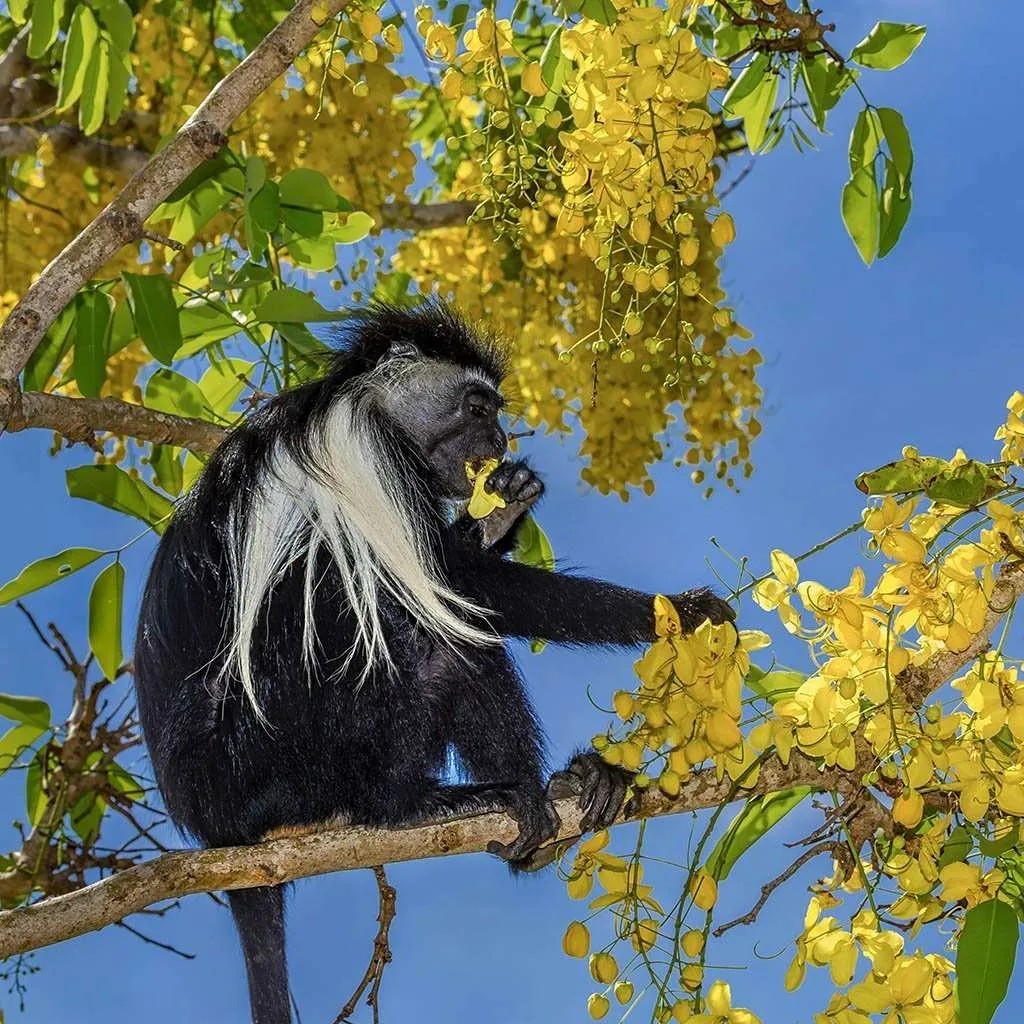
Although leaves dominate, they also take flowers, seeds and occasional fruit when available. Seasonal changes in forest plants shift the menu slightly. At some times of year you may see more flower feeding, at others more young leaves. Their ability to switch between tree species and different plant parts helps them cope when one favourite tree is not producing much. From your point of view, this means each month in the forest carries slightly different feeding scenes.
Colobus Monkeys Reproduction
Reproduction in Colobus Monkeys follows the general pattern of many forest primates, with some variety between species and regions. Females cycle and advertise readiness to males through scent and subtle physical changes. Males within the group, and sometimes neighbouring males, pay close attention during these periods. As a visitor you might only notice more restlessness or slightly sharper interactions among adults on certain days.
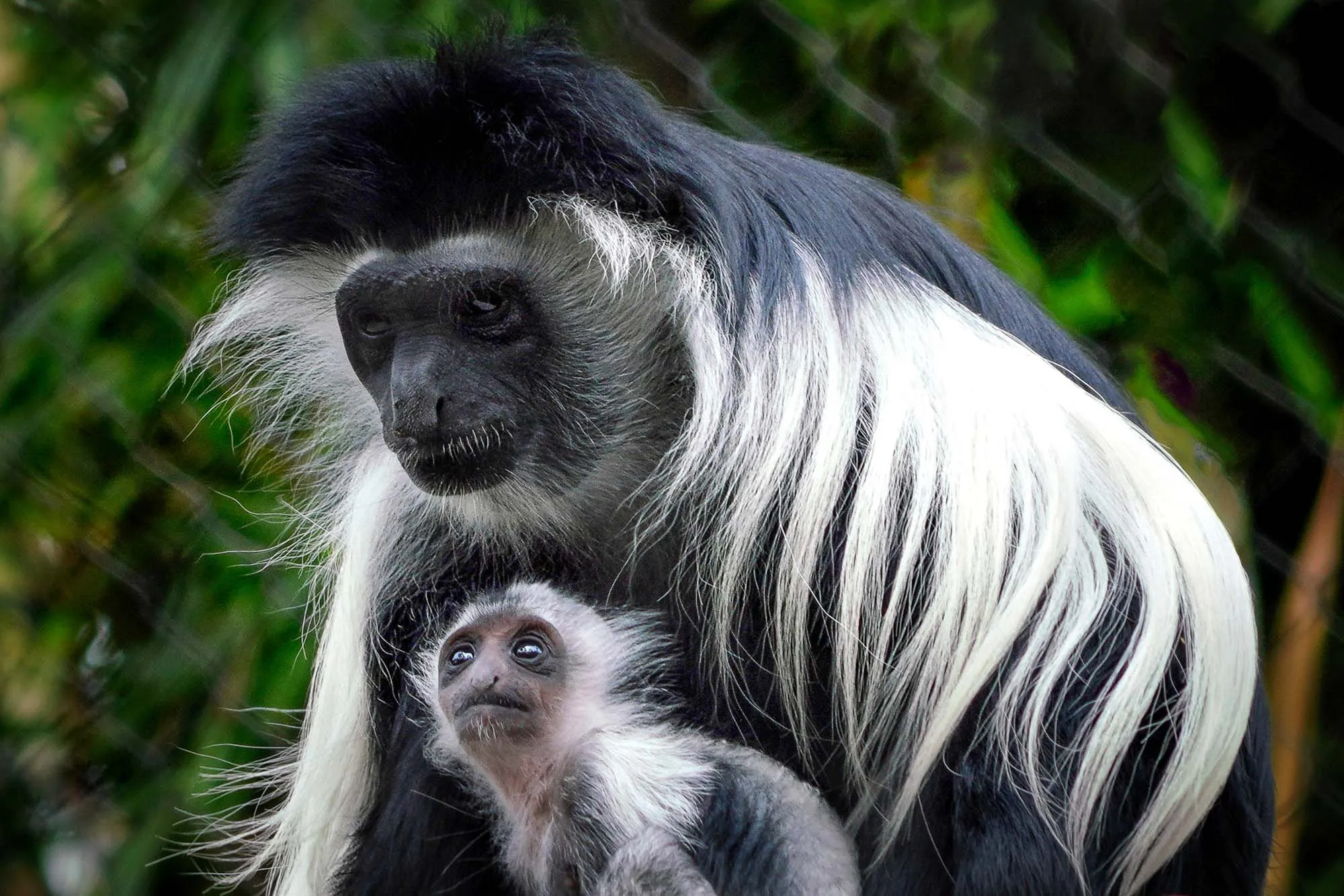
Gestation lasts several months, ending with the birth of a single infant. For black-and-white colobus, newborns often arrive with pale or white fur that darkens over time. Seeing a mother carrying a small, pale baby against her dark mantle can feel like watching a slowly moving piece of contrast art. She keeps the infant close to her belly or chest, and other females may attempt to hold the baby briefly before returning it.
As the infant grows, it begins to venture away from the mother for short periods, climbing along nearby branches and interacting with slightly older youngsters. The mother still remains the main base, yet the circle of safe space expands little by little. During this phase, you might see awkward climbing attempts, slips caught by quick hands, and small disputes over a particularly comfortable branch. Over time, those clumsy movements turn into the confident leaps you see in adults.
Group structure means that young colobus grow up surrounded by older animals doing everything they need to learn. They observe feeding choices, resting spots, travel paths and the fine rules of distance inside the group. Eventually, depending on species and sex, some disperse to join other groups, while others remain. These quiet shifts happen over years, not days, which is why guides who return to the same forest often feel they are catching up with old neighbours.
Recommended Safaris
8 Days
Private
8 Days Murchison Falls, Gorilla, Chimpanzee & Queen Elizabeth Safari
from
$ 1790
per person
Colobus Monkeys FAQs
Are Colobus Monkeys active in the day?
Yes, Colobus Monkeys are mainly active during daylight hours. They feed, rest and travel through the forest canopy from early morning until late afternoon, with quieter periods in midday.
You often see them most clearly in the softer morning and late afternoon light, when they move more between trees and sometimes sit in more open, sunlit spots.
Are Colobus Monkeys dangerous to people?
In normal forest visits, Colobus Monkeys keep a respectful distance. They stay in the canopy, avoid direct contact and move away if people behave unpredictably or get too close.
The main risk comes from people feeding or chasing them. Keeping food away and letting them stay wild protects you and them, and keeps their behaviour natural for future visitors.
What is the best way to see Colobus Monkeys?
Slow guided walks under tall trees work best. You move quietly, stop often, and let your eyes search branches rather than rushing along the path. Patience matters more than speed.
Night drives rarely help for colobus, since they are mostly inactive in the dark. Day walks, short pauses on forest roads, and time near fruiting or leafy trees give better viewing chances.
Do Colobus Monkeys only eat leaves?
Leaves are their main food, especially young, tender ones, but they also take flowers, seeds and some fruit when conditions offer those extra options.
Their stomachs are built for leaf digestion, which is why you see long resting periods after feeding. They are processing meals that would move quickly through many other animals.
Where in Africa can I see Colobus Monkeys easily?
Good options include Kibale, Bwindi edges, Nyungwe, Arusha, Jozani in Zanzibar, and several Kenyan highland forests near Mount Kenya and Aberdare. Each area hosts slightly different species.
Your guide usually knows which sections hold reliable groups. Mention your interest early and they can time walks or drives to pass through colobus-friendly forest zones.
Do Colobus Monkeys move on the ground?
They prefer the canopy and spend most of their lives in trees. In some places they occasionally come lower or cross short open spaces, yet this is not their comfort zone.
From your perspective, the best view is usually from below, looking upward as they move between crowns. That angle becomes a normal part of forest walks after a day or two.
How do Colobus Monkeys care for their young?
Mothers carry infants constantly at first, grooming them and keeping them close while moving and feeding. Other females sometimes help by holding or grooming the baby briefly.
As the infant grows, the mother allows short independent climbs and play with slightly older youngsters. She still acts as the base, stepping in quickly if anything feels unsafe.
Why are Colobus Monkeys important for the forest?
By feeding on leaves, flowers and fruit, Colobus Monkeys influence plant growth patterns and help spread seeds. Their movements and feeding choices shape small parts of forest structure over time.
They also form part of the diet for larger predators and large birds of prey. So, their presence signals a working forest, not only a scenic one.
Conclusion
Spending time with Colobus Monkeys changes how you look at a forest. The canopy stops being a flat green ceiling and becomes a layered home filled with quiet routines, small leaps and constant chewing sounds. You realise that many of the important stories happen above your head while you worry about mud on your shoes.
For a traveler who arrives focused on gorillas, chimps or big savanna animals, colobus can become a gentle, unexpected favourite. You remember standing on a path while long white tails drifted between branches, or that moment when a pale baby peeked over its mother’s shoulder. You remember how calm the group felt compared with your own busy mind.
Later, when someone asks what you loved about Africa’s forests, you might talk about the smell of rain or the chorus of birds. Somewhere in that answer, a picture of Colobus Monkeys will appear again, reminding you that the forest has its own quiet citizens who see your visit from far above.
Browse other sightings
Griffin Falls
Moroto town
JINJA-the source of the Nile
The Great Rift Valley
Igongo Cultural centre
Hot springs and Geysers
Lake Edward
Mabira Forest
Pian Upe Game reserve
kororo falls
Karamoja Apalis
Ssese islands
Don’t wait,
book this adventure safari today
Low season
Oct, Nov, Mar, Apr, may
Peak season
Jun, July, Aug, Sept, Dec

Got any questions
about traveling to Uganda?
Get in touch.
