

Select Page
Bush baby: Lifespan, Reproduction, Strength, Habitat, Diet and More
The Bush Baby Introduction
Your first proper encounter with a bush baby usually happens when you did not plan anything special. The guide turns off the lodge path, shines a soft light into a tree, and two huge eyes shine back. A small grey body clings to the branch, ears moving, tail hanging, and for a moment you feel like you have interrupted a secret night meeting.
If you grew up in a city in America or Europe, the idea of a “bush baby” sounds almost made up. Then you hear a strange cry in the dark, something between a baby’s wail and a sharp bark. A minute later you see this tiny primate leap from one trunk to another, landing perfectly on rough bark. Suddenly the name feels very literal, and also slightly funny.
What makes the bush baby so memorable is the contrast between its size and its presence. It is small, light, and quick, yet those eyes and calls fill the night. You sit under a thatched roof or in an open vehicle, watching one animal hop through the canopy with silent confidence while moths dance around the light and distant hyenas call. The whole scene feels close and personal, not like a distant documentary shot through long lenses.
Many travelers end up talking about bush babies when they describe their first African nights. Lions and elephants belong to the daytime program. The bush baby belongs to the time when the camp gets quiet, the stars grow sharper, and your ears pick up sounds you never noticed at home. It becomes proof that the forest or garden around your room is very awake while you sleep.
Where to See Bush Babies
Bush babies, or galagos, live across many wooded parts of sub-Saharan Africa. They favour acacia woodland, riverine forest, thickets and even lodge gardens with enough trees, insects and fruit. You mostly meet them after dark.
Masai Mara and surrounding conservancies, Kenya
In the Mara you often see bush babies in camp trees, jumping between branches near lanterns while you walk back to your tent after dinner.
Recommended Safaris

14 Days
Private
14-Day Uganda, Congo & Rwanda Gorilla Trekking & Wildlife Safari
from
$ 4900
per personAmboseli and Tsavo areas, Kenya
In drier bush close to Kilimanjaro and Tsavo’s red soils, bush babies cling to acacia trunks, moving in short, careful bursts between thorny branches.
Serengeti and Ngorongoro, Tanzania
On the edges of Serengeti woodlands and in lodges around Ngorongoro, guides often spot them with red or soft white light, eyes shining bright against dark leaves.
Tarangire, Ruaha and Selous regions, Tanzania
In these parks you sometimes hear bush babies before you see them, loud calls from riverine trees, then quick grey shapes hopping between trunks above the vehicle.
Queen Elizabeth and Murchison Falls, Uganda
In Ugandan savanna and riverine forest belts, bush babies use fig and acacia trees near lodges, appearing as bouncing shadows along branches during night walks or drives.
Kruger and private reserves, South Africa
In Kruger and nearby private ground, they move through riverine forest strips and camp trees, sometimes watching you from low branches while you sit around a small fire.
Kgalagadi, Etosha and drier southern parks
Even in drier areas with scattered trees, certain bush baby species manage quite well, using sparse woodland, drainage lines and small clumps of taller shrubs.
Wherever you stay, your best chances come with slow night drives, gentle torch use, and a habit of looking up into tree crowns rather than only along the road.
The Bush Baby Classifications
Class: Mammalia
Order: Primates
Family: Galagidae
Genus: Galago, Otolemur and others
Species: Several, including lesser bush babies such as Galago senegalensis and larger species like Otolemur garnettii
Bush baby Gallery
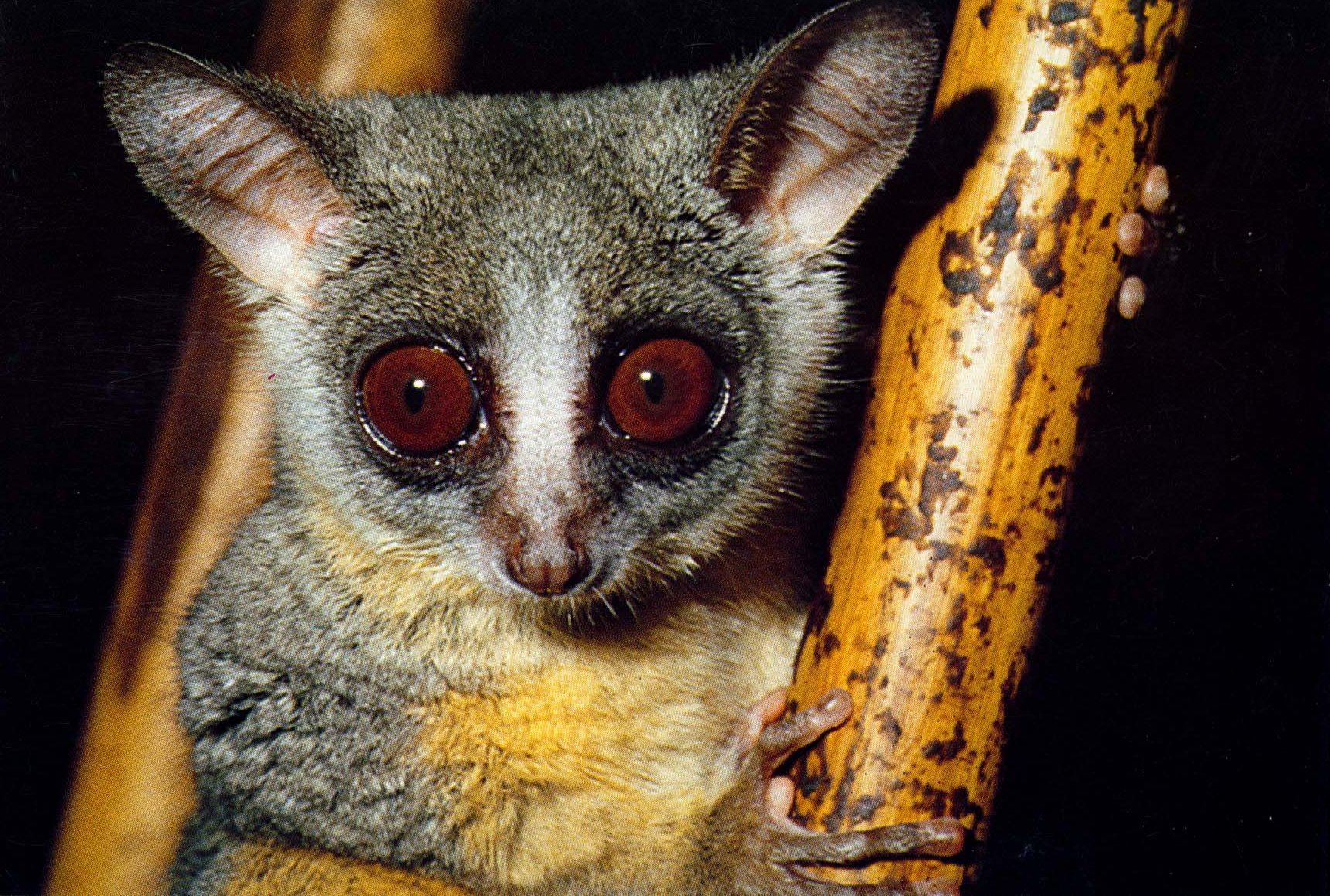
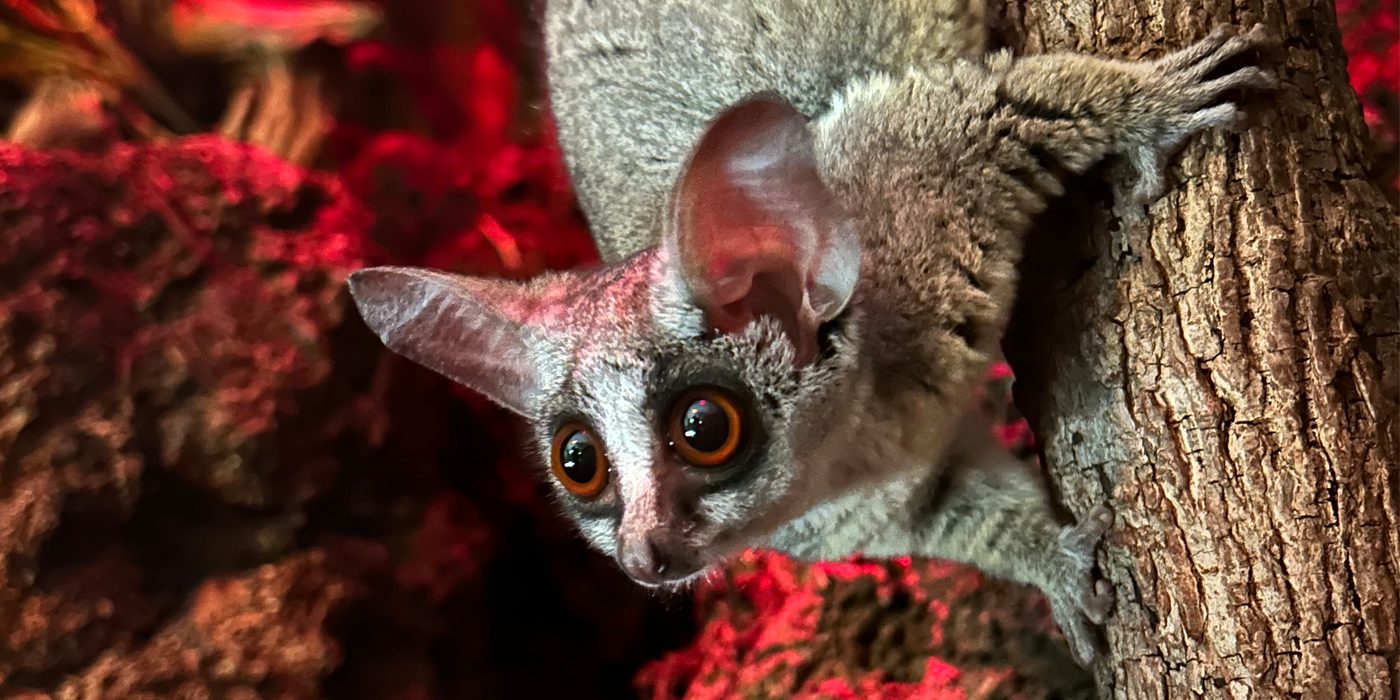
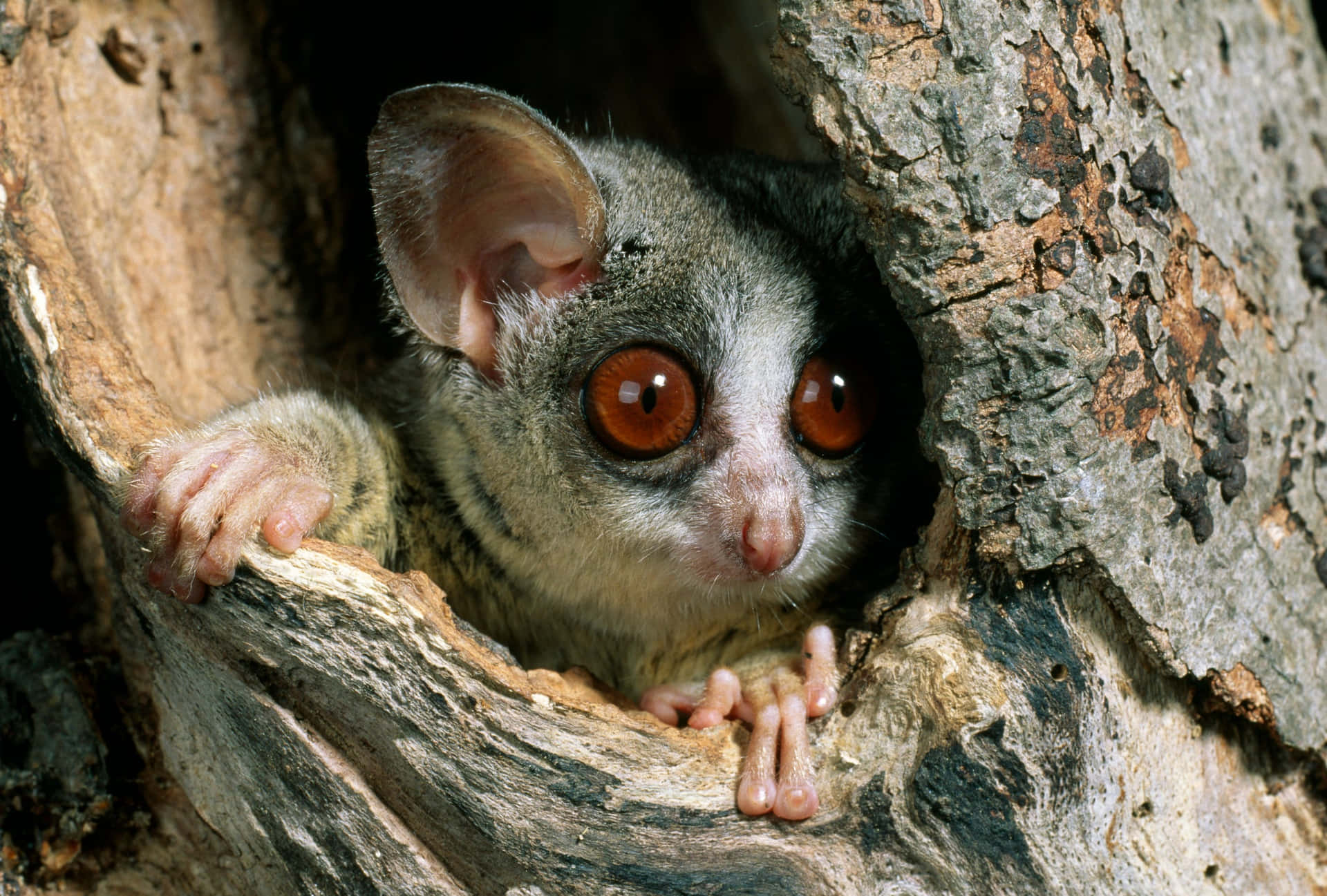
The Bush Baby Behaviour
The Bush Baby’s behaviour feels perfectly tuned to darkness. It is almost entirely nocturnal, sleeping in tree hollows or dense vegetation by day, then emerging when light fades. The first signs are often faint calls and the subtle sound of claws on bark. Soon after, you see one small animal pause on a trunk, head tilted, ears moving. That moment marks the start of its active shift.
Movement is a mix of climbing, hopping and sudden leaps. Bush babies have powerful hind legs relative to their size. They launch from trunk to trunk with impressive distance and accuracy, often crossing gaps that look large for such small bodies. You might see one pause, judge the distance in a heartbeat, then push off and land like a soft grey ball gripping rough bark. Watching a series of these jumps can feel oddly calming and slightly unreal at the same time.
Social behaviour varies by species, yet many bush babies combine solitary foraging with some level of social contact. Individuals often move alone while hunting, but they may share sleeping sites and interact with familiar neighbours. Calls, scent marks and grooming help keep track of who belongs where. On some nights you hear several voices calling back and forth, and you realise that what looked like one pair of shining eyes is part of a wider, mostly invisible network.
Communication blends sound, scent and touch. Bush babies mark branches with urine and gland secretions, leaving information about identity and status. Vocal ranges include piercing cries, chattering, barks and softer contact sounds. When two animals meet on a branch, they may sniff, groom briefly and move on, or they may argue with quick chases and sharp calls. From the ground, you only glimpse parts of this, yet even partial scenes show that a lot of decision-making sits in those small heads.
The Bush Baby Diet
The Bush Baby diet is surprisingly varied for such a small primate. Many species feed heavily on insects, including moths, beetles, grasshoppers and other night active invertebrates. You see one perched on a branch, then suddenly it darts forward, grabs something in midair or off bark, and eats it with quick, efficient bites. That kind of hunting repeats many times in a single night.
Gum from trees, especially acacias, is another key food source. Some bush babies lick gum exuding from bark wounds, using small, specialized teeth to scrape the surface. Gum provides energy when insects are less abundant, which matters in drier seasons. On a quiet night drive, your guide might point out a small shape clinging to a trunk, head turned, carefully working on one sticky patch while ignoring everything else.
Fruit and flower nectar also play a role, especially in wetter periods when plants produce more resources. Bush babies move between fruiting trees, feeding on small pieces that larger animals ignore or drop. By doing this, they also move seeds and pollen around, even though they are not famous for that service. When you look at one eating a small berry, you are seeing a tiny link between the forest and the animals that use it later.
The Bush Baby Reproduction
Reproduction in bush babies follows seasonal patterns that depend on food and rainfall. Females usually come into breeding condition when they can expect enough insects and plant resources to support pregnancy and lactation. Males respond by seeking mates, sometimes travelling across several neighbouring home ranges. For you, this may show as slightly louder, more frequent calls during certain weeks of the year.
Gestation length varies slightly between species, yet generally lasts a few months. The female gives birth in a nest, tree hollow or dense tangle of branches, where she can keep young safe from owls, snakes and other predators. Litter sizes are often one or two infants, though some species produce three. Newborns are small and vulnerable, with their survival tied closely to the mother’s condition and the safety of the chosen site.
Mothers carry infants in their mouths or on their bodies when they need to move them. At first, young bush babies spend most of their time at the nest, attached or close to the mother. As they grow stronger, she leaves them in carefully chosen “parking” spots while she goes out to feed, returning regularly to nurse and groom. The image of a tiny bush baby left alone on a branch, holding still and trusting its mother to return, stays with many people.
As the young mature, they begin to explore around the nest, trying small jumps and short hunts under the mother’s watch. Eventually they separate more, establishing their own areas while still sometimes interacting with relatives. That gradual shift from full dependence to independence, spread over many weeks, mirrors something human parents recognise, even though the setting and the scale are different.
Recommended Safaris
8 Days
Private
8 Days Murchison Falls, Gorilla, Chimpanzee & Queen Elizabeth Safari
from
$ 1790
per person
8 Days
Private
8 Days River Nile, Murchison Falls & Kidepo Wilderness Safari
from
$ 2400
per personThe Bush Baby FAQs
Are they nocturnal?
Bush babies are mainly active at night. They sleep in tree hollows or dense vegetation during the day, then begin to move when light fades and insects start their own shifts.
You meet them most often on night drives, short guided walks around camps, or even from your veranda when lodge staff point out small shapes near outdoor lights.
Are bush babies dangerous to us?
For visitors, bush babies are not dangerous. They are small, cautious primates that prefer to keep distance, using speed and height to avoid larger animals, including people.
Risks usually arise only if someone tries to catch, feed or keep them. Watching from a distance and letting them move on their own keeps everyone safe and calm.
When is the best time to visit for bush baby sighting?
The best time is after dark, especially early evening and the first half of the night, when they are most active and still close to their sleeping or feeding trees near camps.
Moon phases and weather change behaviour slightly. On bright, windy nights they may stay deeper inside cover, while on still, warm evenings they may move more openly.
What is their diet basics?
Bush babies eat insects, tree gum, fruit and sometimes nectar. In many areas, moths and beetles make up a large share of their protein intake across seasons.
Tree gum supports them when insects are less abundant, and fruit adds energy and moisture. That mix lets them cope with both dry and wetter periods reasonably well.
Where can they be easily seen?
You can find them in many East and Southern African parks where trees and shrubs remain, from Mara and Serengeti to Kruger and smaller forest reserves near towns.
Most sightings happen close to watercourses, camp clearings or lodge gardens, where night lights attract insects and give bush babies a reason to hunt near people.
How do they care for their Pups?
Mothers carry young in their mouths or on their fur and choose hidden spots to leave them while they forage. These “parking” places are usually safe, sheltered branches or hollows.
She returns regularly to nurse and clean them, then moves them if she senses danger. That constant shuttling between feeding and care shapes much of her nightly routine.
How is their Jumping skills?
Their jumping depends on strong hind legs, flexible joints and accurate depth judgment. Bush babies measure distances quickly, then commit to leaps that look bold from a human viewpoint.
Practice begins early. Young ones start with short jumps close to the nest, building strength and confidence until longer gaps between trunks and branches feel normal.
Why are bush babies special?
Bush babies feel special because they bring the night forest closer. They show that after the safari vehicles stop, the trees and thickets are still busy with stories.
They also add a gentle, slightly playful note to trips heavy with big predator drama. Many people remember their first bush baby eyes as clearly as their first lion.
Conclusion
Spending time with bush babies changes how you experience night in Africa. The darkness stops feeling like a solid curtain and starts to feel like a space filled with moving, listening and feeding creatures. You realise that your room, your fire and your table are small islands inside a much larger living system.
For a traveler who arrives thinking only of daytime drives, this small primate can become a quiet favourite. You might remember elephants from a distance and lions sleeping in the heat. Then your mind jumps to that one bush baby clinging to a branch above the path, eyes bright and body ready to spring.
Don’t wait,
book this adventure safari today
Low season
Oct, Nov, Mar, Apr, may
Peak season
Jun, July, Aug, Sept, Dec

Got any questions
about traveling to Uganda?
Get in touch.
