

Select Page
Black backed jackal, Habitat, Diet, Fun facts and more
The Black-backed Jackal Introduction
Your first honest look at a Black-backed Jackal rarely happens in a dramatic moment. It is more likely a quiet second at the edge of a track. You notice a slender, foxlike body, a dark saddle on the back, and a face that looks far more alert than afraid.
If you come from a city in America or Europe, the word “jackal” might sound like a villain from an old story. Then you see one trotting along a dirt road at dawn, tail relaxed, ears forward, checking every scent. It glances toward the vehicle for a second, decides you are not worth extra worry, and returns to its own plans. The character in your head starts to change.
The Black-backed Jackal lives in that interesting middle zone. Not as big as a wolf, not as tame as a village dog, yet somehow more self possessed than both. You watch one stand a few metres from a lion kill, judging risk and reward with every heartbeat. Later that same day you see another one near a den entrance, letting pups clamber over its shoulders. It carries scavenger, hunter and parent inside one lean frame.
Many travelers discover that jackals slowly become part of the rhythm of their trip. You hear their calls outside camp at night, see them in the first pale light, and catch glimpses of them slipping between bushes during quiet hours. Big cats may take most of the attention, but the Black-backed Jackal quietly stitches many days together.
Recommended Safaris

5 Days
Private
5-Day Kahuzi Biega Congo Gorilla Trekking & Chimp Safari in Rwanda
from
$ 2500
per person
14 Days
Private
14-Day Uganda, Congo & Rwanda Gorilla Trekking & Wildlife Safari
from
$ 4900
per personThe Black-backed Jackal Where to See Them
The Black-backed Jackal has two main ranges, one in eastern Africa and one in the south. It favours open savanna, semi desert, scrub and even farmland edges, as long as there is food and some cover.
-
Serengeti National Park, Tanzania
On Serengeti’s short grass plains, jackals trot between Wildebeest and Zebra, visiting carcasses at first light and hunting rodents and young birds in the open. -
Ngorongoro Conservation Area, Tanzania
Inside the crater, they weave between grazing herds and picnic sites, quick to snatch dropped scraps yet equally busy chasing mice, larks and restless chicks in the grass. -
Maasai Mara National Reserve, Kenya
In the Mara you see them near river crossings and open plains, waiting at the edge of lion kills and then slipping in as soon as the big cats move off. -
Samburu and Tsavo, Kenya
In these drier parks, jackals cross tawny soil and sparse thorn scrub, their dark backs standing out clearly in the soft morning light and long evening shadows. -
Kidepo Valley National Park, Uganda
Kidepo’s wide valleys hold small jackal families that hunt rodents and young antelope, often crossing tracks ahead of vehicles with a steady, unhurried trot. -
Etosha National Park, Namibia
Around Etosha’s pale pan and busy waterholes, jackals dart between springbok and zebra, sharing space with vultures while searching for scraps and small hunting chances. -
Kgalagadi Transfrontier Park, South Africa and Botswana
In Kgalagadi they patrol dune valleys and dry riverbeds, silhouettes clear against red sand and blue sky as they listen for ground birds and small mammals. -
Kruger National Park, South Africa
In Kruger you meet them along both tar and gravel roads, sometimes pacing ahead of the car before turning off toward riverbeds, thickets and quiet clearings. -
Chobe and Hwange, Botswana and Zimbabwe
Around these big game areas, jackals hover near waterholes and elephant paths, catching doves, feeding on leftovers and watching predator movements with very sharp attention.
Wherever you travel, your odds rise when you pay attention in the first and last hours of light, when jackals feel confident enough to move in the open while many larger predators rest.
The Black-backed Jackal Classifications
Class: Mammalia
Order: Carnivora
Family: Canidae
Genus: Lupulella
Species: Lupulella mesomelas
Black backed Jackal Gallery
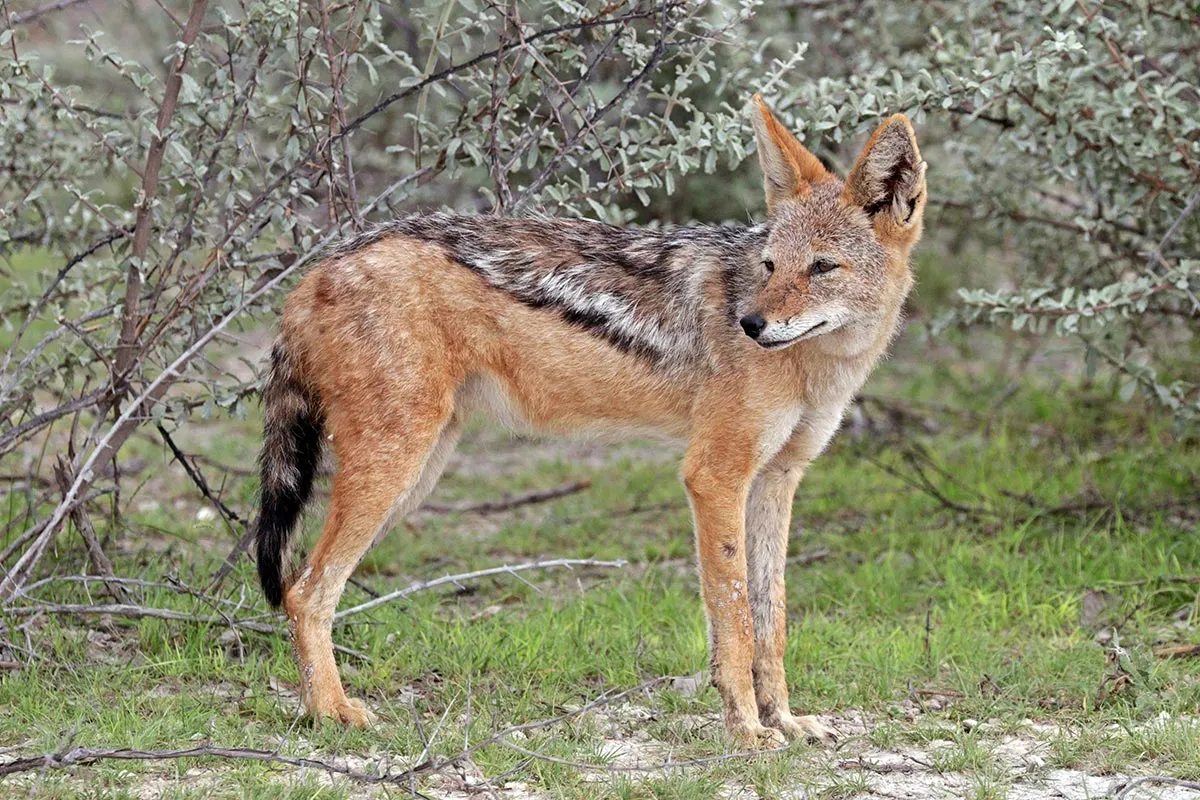
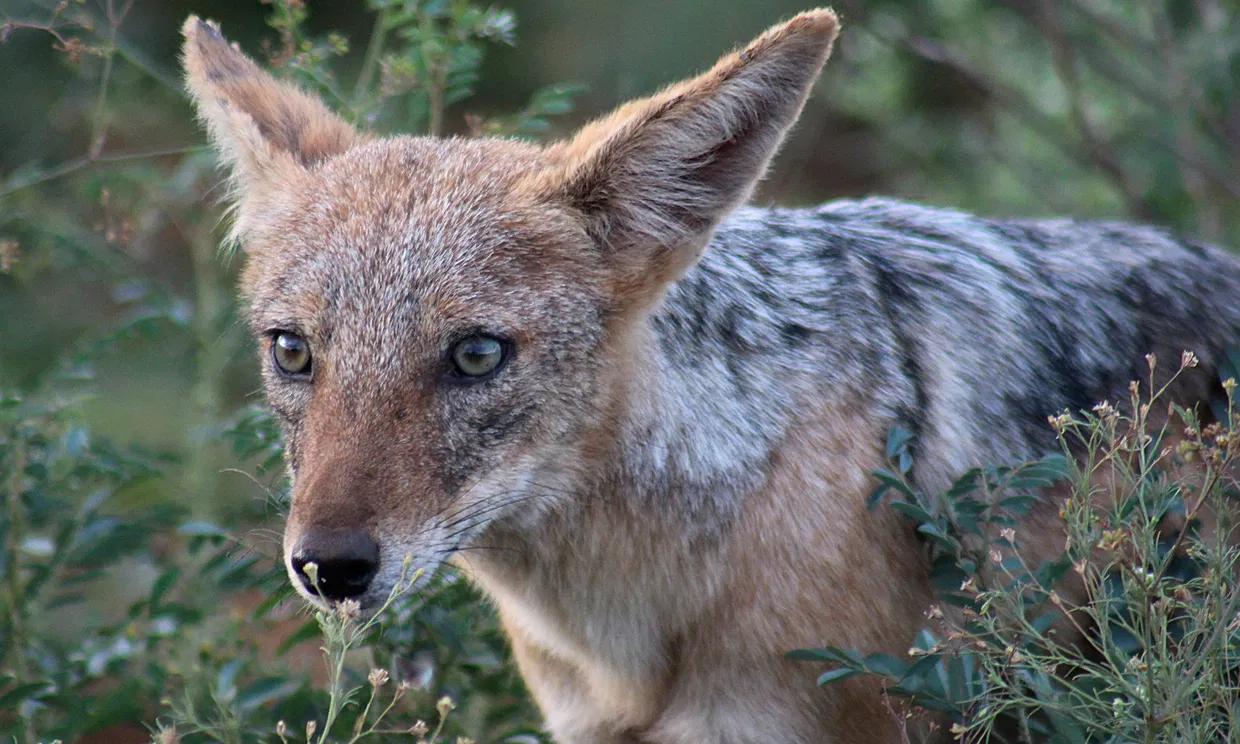
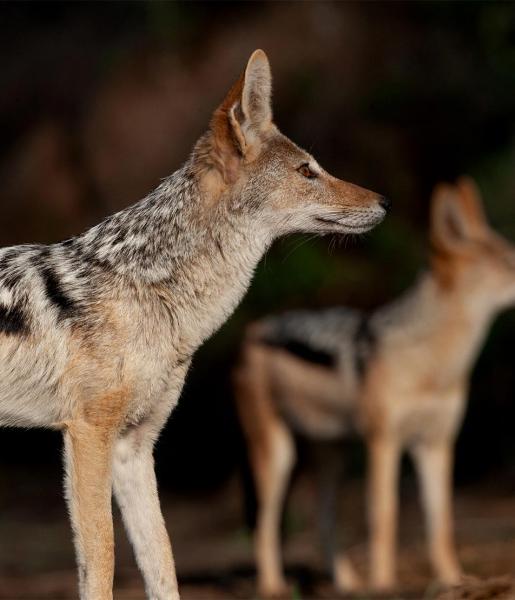
The Black-backed Jackal Behaviour
The Black-backed Jackal spends a lot of its time in motion. Watch one for a few minutes and you see a clear pattern. It moves in a light trot, nose low, ears angled forward, then stops, listens, and shifts direction with small adjustments that make complete sense to the jackal, even if you cannot see the trigger. The body language says, “I am busy, and I have a plan.”
Most Black-backed Jackals live as bonded pairs that hold territories over several years. A pair patrols together, marks boundaries with scent, and responds quickly to intruders. Older offspring sometimes remain as helpers, forming a small family group rather than a large pack. When you see three or four jackals moving together with purpose, you are often looking at parents and nearly grown young, not a random gathering.
Sound plays a big role in this social life. At night you hear their high yelps, wails and cackles rolling across the open ground. Those calls mark territory, keep pairs in touch and sometimes signal alarm. During the day, communication becomes quieter. Short whines, tail positions and ear movements carry meaning at short range. A single glance between two adults at a carcass can decide which direction they will run when a lion shifts its weight.
At scavenging sites, behaviour changes again. The jackal reads the mood of everyone around the carcass. It approaches in short, careful bursts, head low, body ready to jump back. As soon as larger predators look away, it rushes in, grabs a mouthful and darts out. That mix of respect and boldness often looks entertaining, yet behind the humour sits a serious understanding of risk. A misjudged lunge can end badly.
The Black-backed Jackal Diet
The Black-backed Jackal eats a wide range of food, which helps it cope with changing seasons and different regions. Small mammals such as rodents and hares form a big part of the diet. The jackal listens and watches for movement, then uses short, fast chases to catch these quick animals. Often a pair will hunt together, using angles and timing to corner slightly larger prey.
Birds and their eggs also feature strongly. Ground nesting species are especially vulnerable. You might see a jackal carefully inspecting tufts of grass or small bushes where lapwings or sandgrouse hide their nests. When it finds eggs or chicks, it eats quickly, always checking for danger. To human eyes that scene can feel harsh, yet those calories support pups and keep adults moving.
Carrion is another key resource. Jackals follow the activities of lions, leopards, cheetahs and hyenas. They learn which trees big cats favour for shade, which waterholes draw frequent kills, and which gullies hold old carcasses. At all these places they pick up scraps of meat, skin and intestine that others leave behind. Around farms and villages they also take rubbish, dead livestock and spilled grain, which helps them survive but can increase conflict with people.
Fruits and insects round out the menu. Berries, wild fruit and even hardy desert melons provide extra energy and moisture. Beetles, termites and grasshoppers appear in droppings from many areas. When you add all these food items together, you see an animal that does not rely on one perfect prey. It survives because it can shift from hunter to scavenger to fruit eater as the week demands.
The Black-backed Jackal Reproduction
Reproduction in Black-backed Jackals sits inside that strong pair bond. A male and female usually stay together for years, raising repeated litters within the same territory. They time breeding so that pups arrive during or just before seasons when prey is more available and conditions support the hard work of feeding a growing family.
The female gives birth underground, usually in an abandoned burrow or a hole enlarged by the parents. The den may have several entrances and side tunnels, offering escape routes and cool resting spots. Litter size varies, but four or five pups are common. For the first weeks the young remain out of sight, nursing and sleeping while both parents guard the entrance and bring food.
Older offspring often help with the next litter. These helpers bring food, play with the small pups and watch the area while the parents hunt. Their presence can make the difference between weak and strong survival in difficult seasons. When you see several jackals gathered around one den entrance, you are likely watching more than one generation working together, not just a single pair.
As pups grow, they begin to explore outside. At first they make clumsy, short ventures, pouncing on beetles, chewing sticks and jumping on each other. Adults tolerate a lot of this chaos, correcting only when play gets too rough or a pup strays too far. Slowly, those games turn into real practice for hunting, chasing and reading the moods of bigger animals.
Recommended Safaris

8 Days
Private
8 Days River Nile, Murchison Falls & Kidepo Wilderness Safari
from
$ 2400
per person
5 Days
Private
5-Day Kahuzi Biega Congo Gorilla Trekking & Chimp Safari in Rwanda
from
$ 2500
per person
The Black-backed Jackal FAQs
Are Black-backed Jackals social?
Black-backed Jackals are social in a focused way. They form long term pairs that defend territories together, rather than large, loose packs wandering across huge distances. Those pairs sometimes include older offspring as helpers. The result is a tight family group where each member knows familiar paths, den sites and neighbours very well.
Do jackals attack people?
Healthy wild jackals usually avoid direct contact with people. They move away from vehicles and keep distance on walking routes, especially where they experience firm boundaries. Problems usually arise where food is easy near settlements, such as rubbish, livestock carcasses or handouts. That is why good camps and lodges keep waste controlled and never feed them.
What do they mainly eat?
They eat a mix of small mammals, birds, eggs, insects and carrion. In some areas, rodents and hares dominate, in others, carcasses and bird colonies matter more across the year. This flexible diet lets them switch quickly when one source drops. If a rodent population crashes, they can lean more on insects, fruit or scavenged meat for a while.
Are they only scavengers?
No. They are capable hunters. A Black-backed Jackal can bring down small antelope calves, chase hares and catch birds, often using quick sprints and clever angles in open ground. Scavenging simply adds another layer. By feeding on carcass remains, they reduce waste and gain energy from food that would otherwise rot or feed only insects and microbes.
Where are my best chances to see them?
Your best chances come in open East and Southern African parks with good prey, such as Serengeti, Maasai Mara, Etosha, Kruger, Kgalagadi and Kidepo. Look along roads at dawn and dusk, and around waterholes and carcass sites during the night or early morning when they work hardest.
How long do pups stay with parents?
Pups start to appear outside the den after a few weeks, but they stay closely tied to the family territory for many months as they gain strength and skills. Some leave after their first year to find territories of their own. Others remain as helpers for another breeding season, delaying independence for the sake of shared success.
Do they carry diseases?
Like other wild canids, Black-backed Jackals can carry rabies and similar diseases, especially where domestic dogs are unvaccinated and contact between species is high. Inside well managed parks, the main safety rule is simple. Do not feed or touch wildlife. Watching them from vehicles keeps everyone safe and still allows very close views.
Why are they so common compared to other predators?
Their success comes from flexibility. They cope with natural savanna, cattle ranches and even crop edges, shifting between hunting, scavenging and fruit eating as needed. They also reproduce steadily and use dens that other animals dig, which lowers their effort. While larger predators decline in many modified areas, jackals often hold on.
The Black-backed Jackal Conclusion
Spending time with Black-backed Jackals gives you a new respect for medium sized carnivores. You see how often they appear at the edges of big events. A lion kills, vultures arrive, and somewhere nearby a jackal waits for its moment. Calving herds gather, and jackals patrol the fringes, eyes tuned to any sign of weakness or distraction.
For a traveler who began with big five checklists, this can feel quietly powerful. You realise that much of the day belongs to animals that do not always make cover photos. A pair of jackals trotting together at sunrise, tails low, ears sharp, can tell you as much about the place as a dramatic chase.
Don’t wait,
book this adventure safari today
Low season
Oct, Nov, Mar, Apr, may
Peak season
Jun, July, Aug, Sept, Dec

Got any questions
about traveling to Uganda?
Get in touch.
