

Select Page
Bat eared Fox: Facts, Classification, Habitat, Diet and More
The Bat-Eared Fox Introduction
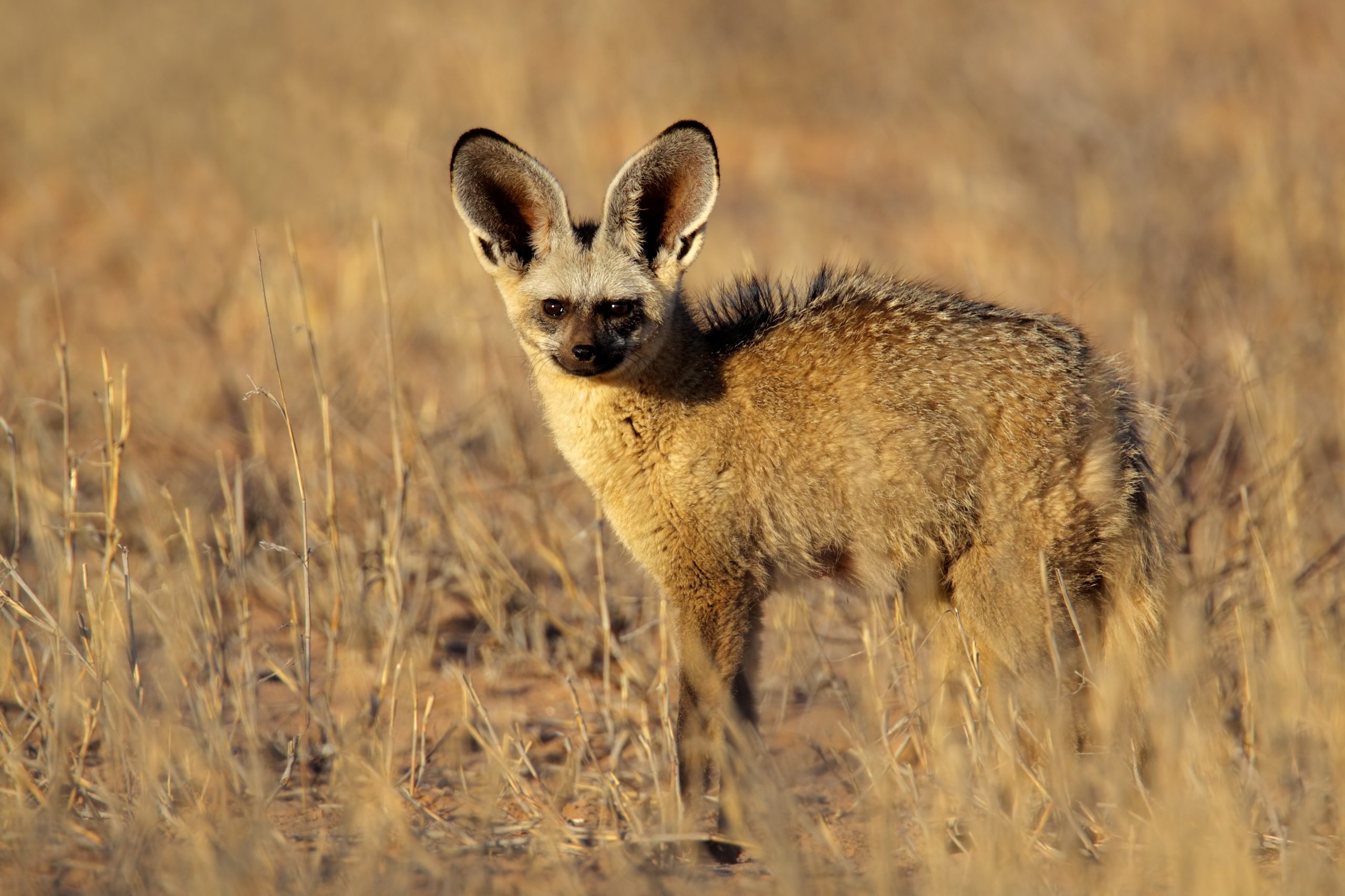
Your first real look at a Bat-Eared Fox can feel almost unreal. The body is small, sandy and neat, but the ears are huge, like they belong to another animal. It stands in short grass, ears turning slowly, listening harder than you ever do, and for a moment you forget the lions and think only about this little listener.
If you come from a busy American or European city, you might expect foxes to feel familiar. This one does not. The Bat-Eared Fox moves with quick, light steps, nose low, ears sharply forward. It pauses, tilts its head, then digs suddenly and pulls a termite or beetle from the soil. You are watching a canid that built its whole life around tiny prey most people never notice.
What makes the Bat-Eared Fox special is this mix of gentle size and focused purpose. It is not here to chase gazelle or fight for carcasses. It is here for insects, family, and survival on dry ground. You see one adult pause so a youngster can catch up, both ears pointing toward each other for a second, and the whole scene feels like a quiet family walk, only with more listening.
Many travelers end up remembering the Bat-Eared Fox as their “small surprise” animal. They arrive dreaming of big cats and thundering Wildebeest, then one cool evening a spotlight catches a pair of foxes hunting side by side. Later, when life at home feels loud, the picture that returns is not always a chase. Sometimes it is two small bodies in pale grass, ears wide open to the night.
The Bat-Eared Fox Classifications
Class: Mammalia
Order: Carnivora
Family: Canidae
Genus: Otocyon
Species: Otocyon megalotis
Recommended Safaris

3 Days
Private
3 Days Rwanda Gorilla Safari to Volcanoes National Park
from
$ 2500
per personThe Bat-Eared Fox Where to See Them
Bat-Eared Foxes live across dry and semi dry parts of East and Southern Africa, favoring short grass areas with many termites. You usually meet them in open plains, light shrub and gently used farm edges, often in the cooler hours of morning and evening.
Kidepo Valley National Park, Uganda
In Kidepo you look across wide, quiet valleys where Bat-Eared Foxes trot between tufts of grass, pausing near termite mounds while distant mountains frame the whole scene.
Pian Upe Game Reserve, Uganda
Pian Upe feels raw and open, with dry plains and scattered bush. Here foxes move through termite rich soils, often near small tracks where few vehicles pass.
Serengeti and Ngorongoro, Tanzania
On Serengeti’s shorter grass sections and Ngorongoro’s drier stretches, Bat-Eared Foxes hunt by night and cool mornings, weaving between grazers and old aardvark holes.
Tarangire National Park, Tanzania
In Tarangire’s open, sandy flats between baobabs, you sometimes see family groups at first light, ears tilted forward as they work termite patches near Zebra and Wildebeest.
Maasai Mara and Laikipia, Kenya
In Mara’s drier zones and Laikipia’s semi-arid ranchlands, foxes use short grass and acacia edges, often seen hunting calmly while distant hyenas and lions claim the drama.
Samburu and Tsavo, Kenya
Samburu and the two Tsavo parks hold foxes in scrub and open plains. Night drives or very early starts often reveal pairs working carefully around termite mounds.
Botswana and Namibia
In Chobe’s drier areas, Makgadikgadi and parts of Namibia including Etosha, Bat-Eared Foxes use open, short grass with scattered shrubs, their pale coats blending into dusty ground.
South Africa (Kalahari, Karoo, West Coast)
Parks like Kgalagadi, Mokala and West Coast hold healthy fox numbers. Cool evenings bring them into view, ears working hard across sand, hardpan and low shrubby fields.
Kruger National Park
Wherever you go, the pattern is similar. Short grass, termite mounds, and quiet times of day give you the best chance. Once you notice one fox, your eyes begin to catch many more pale shapes near the ground.
Bat eared Fox Gallery
The Bat-Eared Fox Behaviour
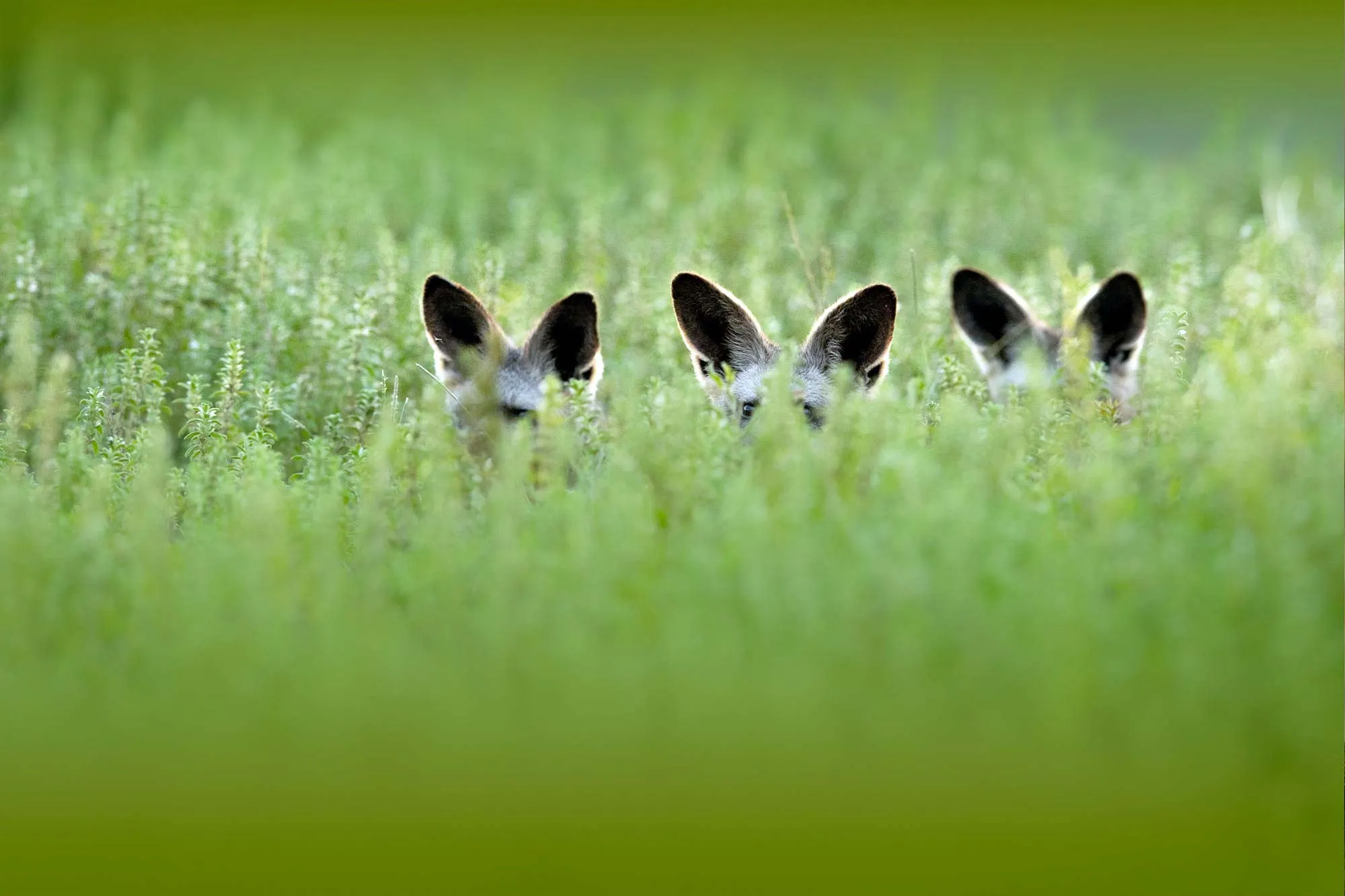
When you watch a Bat-Eared Fox family for the first time, the ears steal the show. They tilt, swivel and freeze in place as if the whole animal is a listening device with legs. Inside those ears lies a way of living. The fox locates prey mainly by sound, hearing termites and beetles moving under the surface, then matching each noise with a quick dig and a fast bite.
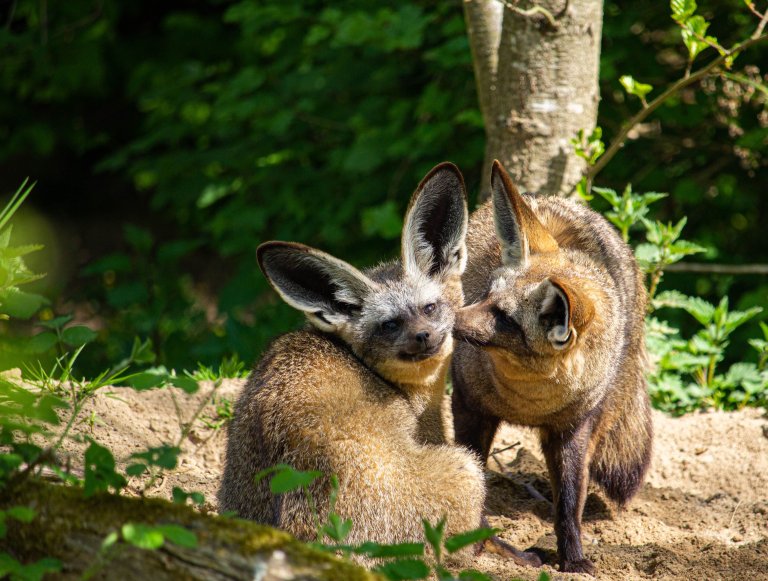
Bat-Eared Foxes are social. In many places they live as pairs with pups, and in some areas small family groups form around one male and closely related females. They forage together, rest together near dens, and spend long periods grooming each other. You see one adult gently work through another’s fur with teeth and tongue, and it feels more like a quiet relationship ritual than a cleaning job.
Daily rhythm shifts with region and season. In parts of East Africa, foxes are mostly active at night, their pale shapes slipping through the grass under stars. In cooler Southern African winters they often become more active by day, standing near burrow entrances in soft morning light before heading out to feed. Either way, they aim for times when insects are active but heat and predators feel manageable.
Communication involves soft calls, scent marking and clear body language. Ears upright and forward show interest and alertness. Ears flattened back with body low signal threat or submission. At the den you may hear quiet contact calls between adults and pups, almost too soft to catch from a vehicle. You are looking at a small, fine-tuned community that depends on staying in step, not on strength alone.
The Bat-Eared Fox Diet
The Bat-Eared Fox is unusual among canids because most of its diet is insects. Harvester termites can make up a very high share of what it eats in some areas. You see a fox walk slowly with ears forward, then stop, listen, and dig quickly at a spot that looked totally plain to you a second earlier. That small hole often produces several termites in a row.
When termites are scarce, Bat-Eared Foxes broaden the menu. They take beetles, grasshoppers, ants, spiders, scorpions, millipedes and sometimes small rodents, lizards, eggs and fruits. Each item is small, but patience and constant movement add up. Over a night, one fox can take thousands of insects, which makes them far more important for pest control than their size suggests.
They get much of their water from this food. Termites and other invertebrates carry moisture, so foxes in very dry areas often meet most of their water needs through diet rather than direct drinking. For you, that means seeing them away from obvious water sources, active on dry flats that look too harsh for such a slight body at first glance.
The Bat-Eared Fox Reproduction
Bat-Eared Fox families are usually built around one male and one female that stay together across breeding seasons. In some East African areas, one male may share life with more than one closely related female, but the bond around the family still feels strong when you watch them near a den.
Females give birth to litters of one to six pups after about two months of pregnancy. Pups arrive in underground dens, often dug by the foxes themselves or adapted from old burrows. For the first weeks you may see only brief glimpses of small heads at the entrance, eyes bright and ears already looking a little too big for the bodies below them.
Parental roles differ from many other canids. Males take on a lot of direct care, including guarding, grooming, and huddling with the pups, while the female forages to support milk production. Male time at the den links closely with how well pups survive, so when you see a male curled around several youngsters, you are watching real protection, not a random moment.
As pups grow, they play at the den entrance, chasing each other, pouncing on shadows and practicing quick digs in soft soil. Adults tolerate a lot of this chaos, stepping over small bodies and gently pushing them aside when it is time to move. One morning of watching that entrance can stay in your mind for years.
Recommended Safaris

8 Days
Private
8 Days Murchison Falls, Gorilla, Chimpanzee & Queen Elizabeth Safari
from
$ 1790
per personThe Bat-Eared Fox FAQs
Why do they have big ears?
The large ears give Bat-Eared Foxes superb hearing for small underground movements and also help with cooling. Blood flows near the surface, and air passing over the ears lowers body temperature slightly.
For you as a visitor, the ears become an instant field mark. Even in fading light, two tall ear shapes above grass often reveal a fox before the rest of the body appears clearly.
Are they shy?
Bat-Eared Foxes are cautious but not invisible. In quiet areas they may let vehicles come quite close if movements stay slow and noise remains low, especially during early or late hours.
On foot, they keep more distance, often trotting away with quick, light steps before stopping to look back. Their first choice is nearly always escape, not confrontation or aggression.
When is the best time to see them?
Cool mornings and evenings work well in many parks, when foxes leave dens to forage or return after a night of hunting. Spotlights on legal night drives often reveal them clearly.
In some Southern African winters, they also become active in daylight, standing near burrow entrances or moving across short grass. Local guides usually know which pattern fits their area.
What do they eat?
Bat-Eared Foxes focus on insects, with harvester termites playing a major role where available. They also take beetles, grasshoppers, ants, spiders and other small invertebrates with quick digs and bites.
When insect supplies drop, they add small vertebrates, eggs and fruits. This flexible menu keeps them going across seasons, even when one food source becomes harder to find.
Are they dangerous?
To people in vehicles, Bat-Eared Foxes are safe to watch. They are small, avoid conflict and prefer to move away from trouble rather than stand and fight.
Biting risk appears only if someone tried to corner or handle them, which responsible guides avoid. Respecting distance and den spaces keeps the experience calm for both sides.
Where can I see them?
Look for them in short grass, semi arid parks in East and Southern Africa, including Kidepo, Serengeti, Maasai Mara, Laikipia, Etosha, Kgalagadi and similar dry country reserves.
As you drive, ask guides to slow near termite fields and open, sandy patches. Many sightings happen when someone takes time to scan the ground instead of only the horizon.
Do they live in families or alone?
You often see Bat-Eared Foxes in pairs or small family groups. They forage side by side, rest together and share grooming, which keeps bonds strong and pups well supported.
Single foxes appear too, especially when one partner is at the den and the other is feeding. Even then, nearby family members are usually somewhere within earshot.
How do pups grow?
Pups spend their first weeks mostly in the den, nursing and sleeping while adults protect the entrance. As they grow, they start exploring just outside, then follow adults short distances.
Play teaches them a lot. Chasing, wrestling and mock digging build the skills they later use for real hunting and for reading social signals within the group.
Why are they important?
Bat-Eared Foxes control insect populations, especially harvester termites, and turn dry, termite rich ground into a useful food base. They also feed larger predators when they become prey themselves.
For your safari, they add a fine detail layer. Watching them shifts your focus from only big animals to the smaller workers that keep plains running day and night.
Conclusion
Spending unhurried time with Bat-Eared Foxes changes how you read dry ground. A patch of short grass and scattered mounds stops looking empty. You start to imagine tiny feet, quiet digging, and ears tuned to every small sound. The plains feel less like a backdrop and more like a working surface filled with hidden conversations.
If you came hoping mainly for large predators, this little fox offers a different kind of memory. You still enjoy lions and hyenas, of course, but the moments that return later can be smaller. A pair of foxes standing side by side, ears forward in the last light, or pups stepping nervously from a den entrance for the first time. Those scenes stay gentle in your mind.
Don’t wait,
book this adventure safari today
Low season
Oct, Nov, Mar, Apr, may
Peak season
Jun, July, Aug, Sept, Dec

Got any questions
about traveling to Uganda?
Get in touch.
