

Select Page
Banded Mongoose: habitat, behavior, and facts
The Banded Mongoose Introduction
Your first real meeting with a banded mongoose can feel surprisingly personal. The banded mongoose trots past with its tail held straight, nose busy, dark bands clear across the back, and suddenly your attention leaves the bigger animals and settles on this small, determined body. You watch it pause, sniff, then dive into grass, and you realise there is an entire story happening at ground level.
If you come from a busy American or European city, you probably never imagined caring this much about a small African carnivore. Yet there you are, sitting in a safari vehicle, smiling at a banded mongoose running between burrows, carrying food, or chasing a beetle. The scene feels close to something from a childhood nature show, except now you smell dust, hear their quiet calls, and feel the sun on your own arms.
What makes the banded mongoose special is the mix of curiosity and cooperation. One mongoose is interesting. A whole group, moving like a small search party, becomes a living pattern. Heads pop up together, bodies spread out to forage, and then everyone rushes back toward safety when someone gives the alarm. You can almost feel the group thinking, even though no one stops to explain their plan to you.
Many travelers end up remembering banded mongooses as the unscripted comedy in their safari days. While guides track lions and elephants, a mongoose family suddenly appears near a picnic site or lies sunning on a termite mound. You watch them fuss over each other, dig with intense focus, then sprint into hiding when a shadow moves overhead. By the time you fly home, those small, busy shapes feel like old neighbours you did not know you needed.
The Banded Mongoose Where to See Them
Knowing where to look helps you picture yourself in banded mongoose country instead of thinking about them only as names in a book. These animals prefer savannas, open woodlands, and grasslands with plenty of termite mounds, rocky crevices, or abandoned burrows to use as dens. They are active by day, which suits visitors who like watching behaviour in good light.
You can often see banded mongooses in several well-known African parks, including:
Uganda: Queen Elizabeth National Park, Murchison Falls National Park, Lake Mburo National Park
Kenya: Maasai Mara National Reserve, Samburu National Reserve, Tsavo East and Tsavo West National Parks
Tanzania: Serengeti National Park, Tarangire National Park, Lake Manyara National Park, Ruaha National Park
Botswana and Namibia: Chobe National Park, Moremi Game Reserve, parts of the Okavango region, Etosha National Park
South Africa and Zimbabwe: Kruger National Park, Hluhluwe–Imfolozi Park, Hwange National Park, and other reserves with mixed woodland and open ground
Picture an early morning in one of these parks. The vehicle stops near a cluster of old termite mounds. At first you see nothing. Then a banded mongoose head appears, then another, then a whole stream of them pours out, each animal checking the air before joining the day’s search. That is the kind of moment you can reasonably hope for in these places.
Recommended Safaris


4 Days
Private
4 Day Murchison Falls & Chimpanzee Tracking Safari
from
$ 1260
per personThe Banded Mongoose Classifications
Class: Mammalia
Order: Carnivora
Family: Herpestidae
Genus: Mungos
Species: Mungos mungo
The Banded Mongoose Behaviour
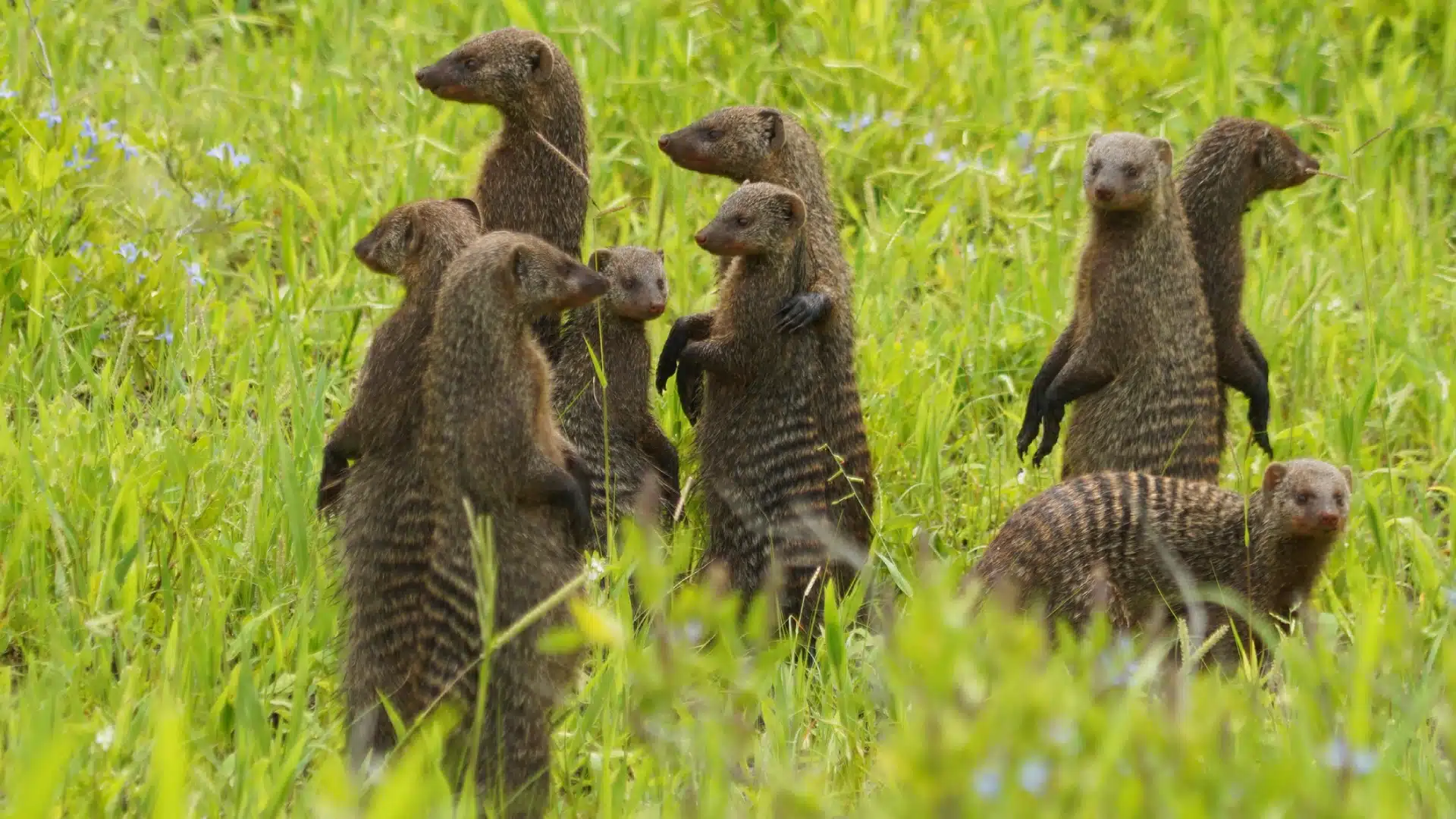
When you watch a banded mongoose group, you are watching a tight, active society. They live in family clans that can range from a handful of animals to several dozen. As they move, you see adults, subadults, and young animals all mixed together in a low, flowing shape that spreads over the ground like a careful search pattern. No one leads with a flag, yet somehow, they all keep close enough to rush into the same refuge if trouble comes.
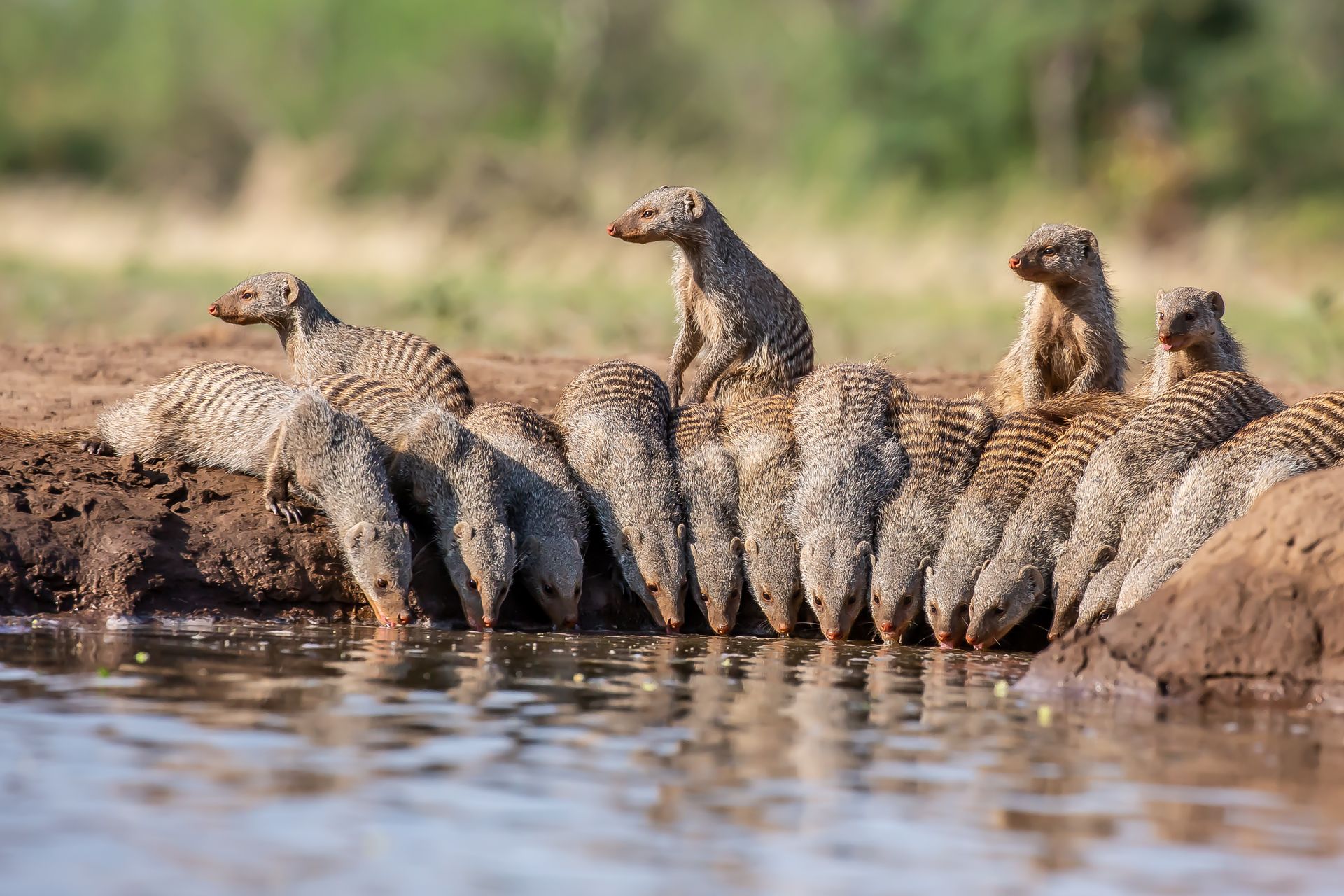
Cooperation sits at the centre of banded mongoose behaviour. They share dens, raise young together, and take turns keeping watch while others feed. One mongoose stands a little taller on a mound or log, nose high, eyes scanning the sky and bush edges. When the sentry gives a sharp alarm call, the whole group reacts instantly. Animals that were busy digging or chewing run toward cover, disappearing into holes, thickets, or rocky cracks. You may not fully follow their signals, yet the speed of that shared decision is hard to miss.
Communication uses sound, scent, and body language. You hear soft twittering calls while they forage, louder alarms for danger, and different tones for regrouping. They also use scent marking along paths and at den entrances, leaving information you cannot see but other mongooses read easily. Bodies brush past each other, tails flick, and brief chases break out in small bursts of play or tension. From your seat, the group feels like a living web, always adjusting, never quite still for long.
At rest, the banded mongoose shows another side. In calm moments they may lie piled together near a den entrance, warming themselves in the sun. Younger animals play with sticks, tug at each other’s tails, or practice mock fights that help build skills for later life. Adults groom one another, teeth and tongues working through fur with clear patience. Watching them in these quiet intervals, you might find yourself comparing them to families on a shared sofa, each person doing something slightly different, yet still very much together.
Banded mongoose Gallery
The Banded Mongoose Diet
The banded mongoose diet is a patient hunt for small things. They feed mainly on insects and other invertebrates, especially beetles, termites, and larvae hidden in soil and rotten wood. You see their nose along the ground, sniffing with care, then dig fast with sharp claws when they catch a promising scent. Sometimes they flip over droppings, stones, or small branches to reach what hides beneath.
They also eat millipedes, snails, scorpions, and occasionally small vertebrates like lizards, rodents, or bird eggs. Tougher prey such as eggs or some insects meet a clever technique. A mongoose may carry an egg or hard-shell item to a rock, then throw it repeatedly with a quick twist of the head until it cracks. If you see this, it feels half serious, half playful, yet it is a learned method that turns obstacles into meals.
Because banded mongooses work in groups, they can cover a large area while foraging. Each individual searches its own small patch, yet group movement keeps them within sight of each other and of shared refuges. From your perspective, a dusty clearing that looked empty a moment ago suddenly fills with many little bodies digging, sniffing, and moving with focused purpose. Every few seconds, someone surfaces with a worm, beetle, or grub, giving the whole scene a feeling of constant, quiet reward.
The Banded Mongoose Reproduction
Banded mongoose reproduction is as social as the rest of their lives. Many females in a group come into breeding condition at roughly the same time, and births often happen within a very short window. That means you can sometimes encounter a clan where many pups are almost the same size, moving around like a small, clumsy school class supervised by many adults. The sight feels both funny and moving if you think about the planning behind it.
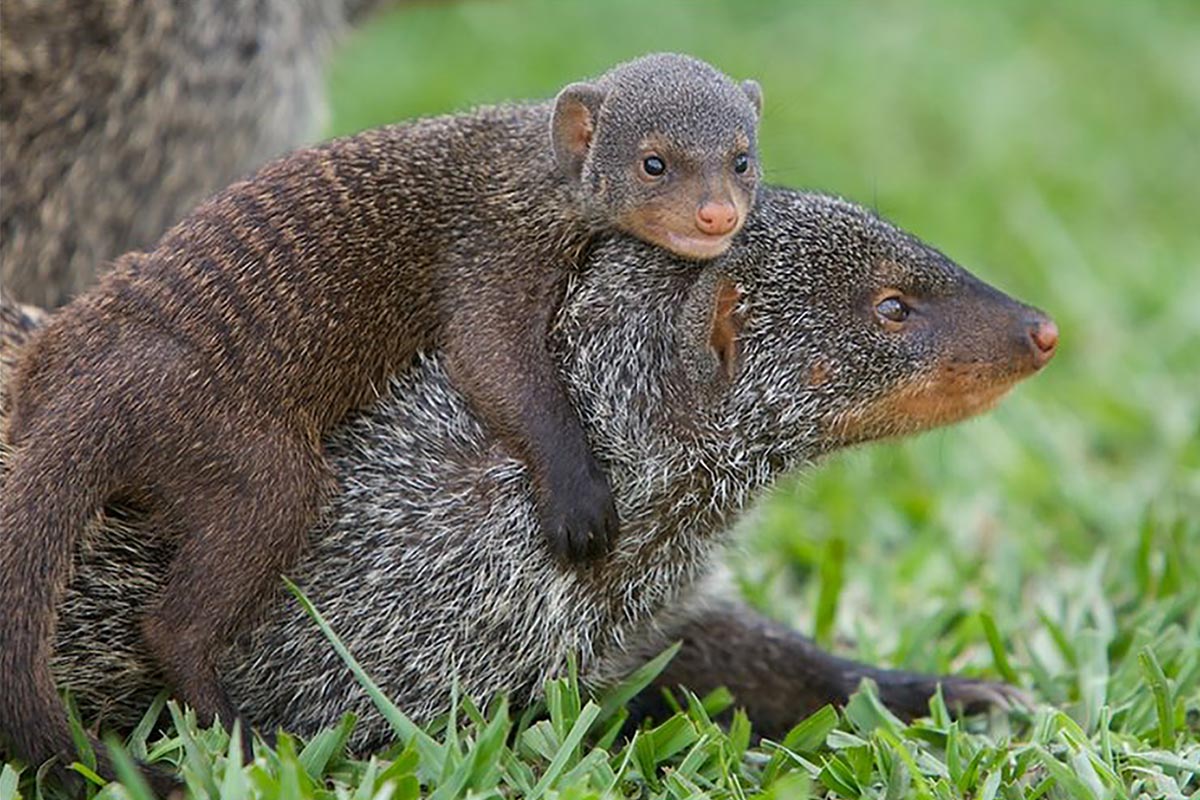
The group raises young in communal dens, often in termite mounds or hollow logs. Pups spend their earliest days hidden inside, eyes still closed, relying completely on the warmth and protection of the adults around them. When they are old enough to venture out, they do so in cautious stages. You might see a few tiny heads at the entrance first, then a cluster of pups following an adult a short distance before retreating again at the slightest alarm.
Adults provide food and guidance. Specific carers, sometimes called “escorts,” often take charge of individual pups, leading them during foraging trips and offering food items. You can watch an adult drop a grub or small insect in front of a pup, wait while the youngster struggles to handle it, then nudge or pick it up again if help is needed. That gentle back and forth repeats many times a day, turning the ground around the den into a classroom where every lesson has teeth and claws but also patience.
Recommended Safaris
4 Days
Private
4 Day Murchison Falls & Chimpanzee Tracking Safari
from
$ 1260
per person
3 Days
Private
3 Days Murchison Falls & White rhino Tracking in Ziwa
from
$ 620
per personThe Banded Mongoose FAQs
Why are Banded Mongoose so social?
Group living helps banded mongooses share vigilance, warmth, foraging knowledge, and den sites, so even small individuals gain protection and chances from many watchful relatives.
Are Banded Mongoose Dangerous to us?
To visitors in vehicles, they pose no real danger, usually fleeing to cover if approached, unless someone blocks their burrows or harasses them at very close range.
What is the best time to see them?
They are most active in daylight, especially cool mornings and late afternoons, when they emerge from dens to sun themselves, groom, play, and begin coordinated foraging.
What do they eat?
Their diet centres on beetles, termites, larvae, worms, and other small invertebrates, with occasional eggs, lizards, and rodents when opportunity appears during careful ground searching.
Where can I find Banded Mongoose?
Look near termite mounds, rocky outcrops, and fallen logs in parks like Serengeti, Maasai Mara, Kruger, Chobe, Etosha, and Queen Elizabeth, especially along open track edges.
How do pups learn?
Pups learn by following adult escorts, copying digging, sniffing, and food handling, while playful wrestling sharpens reflexes needed later when threats appear above ground.
Why do they share dens?
Shared dens let clans defend entrances together, care for many pups at once, keep warm on cool nights, and switch burrows quickly if predators focus on one.
What feels special?
Their mix of intelligence, playfulness, tight family bonds, and active daytime routines makes them easy to watch, turning small patches of ground into busy, memorable stories.
Conclusion
Spending time with banded mongooses shifts your focus from the horizon to the soil at your feet. At first, you chase big silhouettes against the sky. Then one day the vehicle stops near a worn mound, a group of small striped bodies pours out, and suddenly your whole attention shrinks to a few square metres of busy life.
For a traveler new to Africa, this change in scale can feel surprisingly moving. You realise the savanna is not empty space around lions and elephants but a shared home full of smaller stories. Each banded mongoose clan carries its own routines, dangers, and jokes in the way they move and play. Once you have watched them for even ten minutes, it becomes hard to think of the ground as quiet ever again.
Don’t wait,
book this adventure safari today
Low season
Oct, Nov, Mar, Apr, may
Peak season
Jun, July, Aug, Sept, Dec

Got any questions
about traveling to Uganda?
Get in touch.
