

Select Page
Tree Climbing lion: Facts, Classification, Reproduction, Habitat, Diet and More
Tree Climbing Lions Introduction
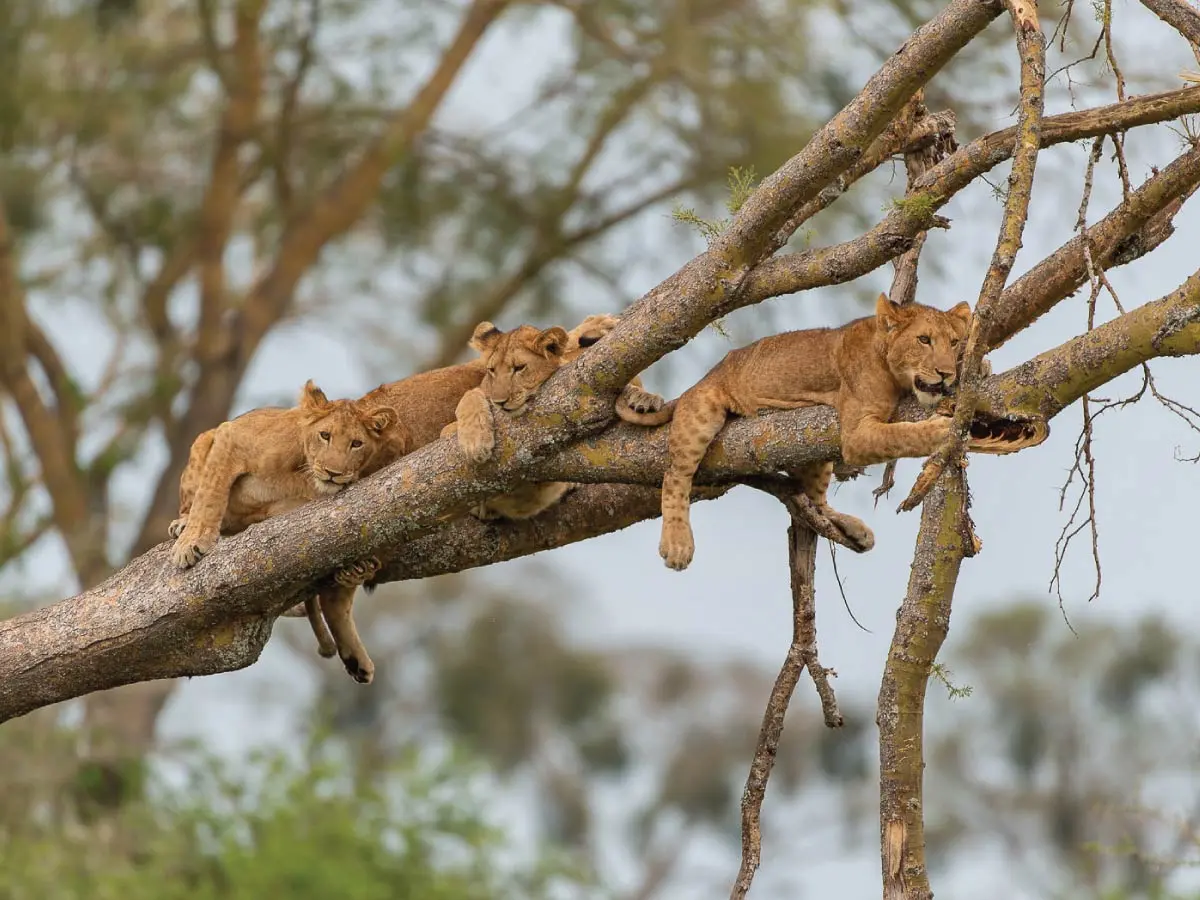
Your first sight of tree climbing lions can feel slightly unreal. You expect lions on the ground, near tall grass or under a bush, then you look up and see a full-grown cat draped along a branch. The tail hangs, the paws dangle, and for a second your brain needs to reload its picture of Africa.
Tree climbing lions take something familiar and twist it in a gentle, memorable way. The face is the same powerful lion face you know from photos, yet the body rests where you expect only leopards or big birds. A young lion may stretch on a branch that sways in the breeze, glance down at you as if this is the most normal place in the world to nap, then close its eyes again.
What makes tree climbing lions so special is the mix of calm and tension in that scene. They look relaxed, even lazy, yet you remember that every muscle on that branch belongs to a serious predator. You imagine them dropping down from the tree after the heat fades, shaking dust from their coats, and returning to the same hunting life as any ground pride.
Many travelers think back on these lions as the moment their idea of safari changed. You remember the guide telling you to check the fig trees. You remember the quiet gasp in the vehicle when someone finally spotted a tail in the branches. You remember realising that in this part of Africa, even the trees hold surprises.
Tree Climbing Lions Classifications
Class: Mammalia
Order: Carnivora
Family: Felidae
Genus: Panthera
Species: Panthera leo
Recommended Safaris

14 Days
Private
14-Day Uganda, Congo & Rwanda Gorilla Trekking & Wildlife Safari
from
$ 4900
per person
Where to See Tree Climbing Lions
Tree climbing lions are still quite rare. Most lions stay on the ground. A few populations learned to climb regularly, and those are the places you want to focus on when you plan or describe trips.
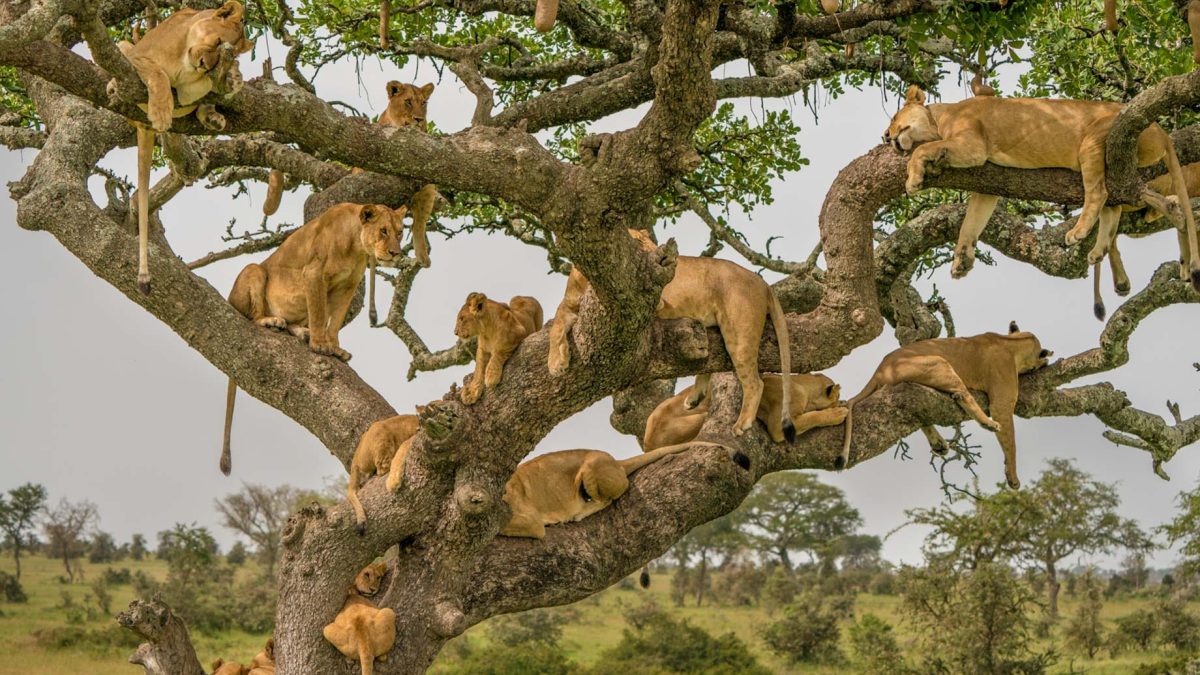
In Queen Elizabeth National Park in Uganda, tree climbing lions rule the Ishasha sector. Broad fig trees rise above open plains, and lions rest in the branches during hot hours. You might see several cats in one tree, bodies stretched along thick limbs while Kob graze below as if the sky is empty.
In Lake Manyara National Park in Tanzania, lions often choose acacia branches that lean over open clearings. You drive under delicate green leaves and suddenly realise there is a lion lying above the track. The lake, the ground water forest and these trees create a very compact, easy to picture scene where everything feels close and layered.
In Serengeti and parts of the southern plains, lions climb less often, yet some individuals and prides still use low branches of sausage trees and acacias. Guides in those areas now look up as well as ahead, especially in hotter months when shade and a breeze matter.
In Tarangire National Park, a few lions climb into broad, low trees that grow near river channels and waterholes. Elephants pass below, zebra move through dust, and a lion tail sometimes flicks lazily above the whole scene.
Scattered reports come from Lake Nakuru, Maasai Mara fringes and parts of Kidepo, where individual lions occasionally rest on branches. These are less predictable, yet they remind you that climbing is always an option when a lion finds the right tree and the right mood.
Wherever you go, your chances rise when you slow down near large, spreading trees, ask your guide to scan branches carefully, and accept that the best sightings often arrive when the midday heat feels strongest.
Tree Climbing lion Gallery

Tree Climbing Lions’ Behaviour
To understand tree climbing lions, you first remember that they are still ordinary lions. They live in prides, with related females and their young at the core, and adult males holding or contesting control. Their behaviour in trees grows out of that same social frame, not from a separate species. You can think of climbing as a local habit layered on top of normal lion life.
In places like Ishasha and Manyara, climbing seems tied strongly to comfort. Days can feel hot and humid. The ground carries biting insects and tall grass traps heat. Branches offer shade, a breeze and fewer insects. You often see lions walking toward particular trees with clear purpose, then climbing into regular resting spots as if following an old family script. Young lions copy adults, practising balance and jumps until moving into trees becomes a normal part of their day.
Social behaviour continues in the branches. Two sisters may share a wide limb, paws hanging over the same edge, heads resting on each other’s shoulders. Cubs scramble up lower sections, then freeze when they realise how far down the ground looks, forcing a patient adult to guide them back. A big male might choose the strongest fork, his body heavier, his movements slower yet still careful. The tree becomes a raised version of the usual pride meeting place.
From that height, behaviour shifts toward watchfulness. Lions in trees can see further over the plains, watching herds, vehicles and other predators. They may track movements of Kob or buffalo, then climb down late in the day to position themselves for a hunt. At times they also use trees to avoid irritation from nearby elephants or to stay clear of buffalo herds that feel too bold. The branches give them a clean, safe pause while the ground sorts itself out below.
Not every lion in these areas climbs all the time. Some individuals prefer the ground, some climb only as cubs, and some adopt particular trees for years. Guides who work in one sector often learn which pride favours which group of figs. That local knowledge shapes your sighting, because it feels as if you are visiting lions at their preferred rooftop lounge rather than searching randomly in a huge park.
Tree Climbing Lions’ Diet
Tree climbing lions eat the same prey as other savanna lions. They feed on antelope, buffalo, warthog, zebra and any other suitable large or medium prey they can bring down. In Ishasha, for example, Uganda Kob are common targets. In Manyara and Tarangire, they may focus more on zebra, giraffe calves or animals using the lake and river edges.
The tree habit does not change their basic hunting strategy. Lions still rely on stalks, short rushed chases and teamwork more than speed alone. They usually come down from the trees before they start serious hunting. You might imagine spectacular kills from above, yet in reality, most hunts still begin from ground level, with cats using bushes, termite mounds and evening light to close distance.
Resting in trees can influence the timing of hunts. Lions that spend hot hours above the ground often remain relatively fresh by evening. They drop down as temperatures fall, stretch stiff muscles and move into cover. The tree gave them a cooler, quieter day, which may help them manage long nights of stalking and moving.
Once a kill happens, the pride usually feeds at ground level. If danger appears, such as many hyenas or a pushy buffalo herd, some lions may retreat temporarily into nearby trees while others hold ground. They rarely drag large carcasses into branches like leopards do. The tree serves more as a vantage point and refuge than a pantry.
Tree Climbing Lions’ Reproduction
Reproduction for tree climbing lions follows the same pattern as other lions. Females in a pride tend to come into heat around similar periods, mate with territory holding males, and give birth in hidden dens such as thick bush patches, rocky crevices or deep grass. The presence of tree habits does not change the basic cycle, yet it can influence how cubs experience their world.
Lionesses with access to good trees may bring cubs close to safe trunks once they are old enough to travel. At first, cubs only climb low parts, pawing at bark, exploring roots and lower branches. With time, bolder youngsters scramble higher, supervised by mothers or older siblings. This early practice builds balance and confidence, turning tree climbing into another learned skill alongside stalking and wrestling.
Coalitions of males, often brothers or partners, still compete for control of prides in these areas. A new coalition may take over by challenging existing males, sometimes leading to loss of young cubs as the new males seek to start their own bloodline. The trees do not protect against these deep lion rules, although they occasionally give females extra places to hide older cubs during tense transitions.
Cubs that grow up around tree climbing adults may carry that behaviour into new areas if they disperse. A young male that learns to climb comfortably in Ishasha might climb in another part of Queen Elizabeth later, simply because that habit feels natural. Over time, such behaviours can spread slowly through certain regions, even if not every lion chooses to leave the ground.
Recommended Safaris


11 Days
Private
11 days Uganda Premium Gorilla, Wildlife & River Nile Adventure
from
$ 2900
per personTree Climbing Lions FAQs
Why do some lions climb trees while others stay on the ground?
Tree climbing seems to develop in places where branches are strong, heat feels intense and insects compete for every patch of shade at ground level. Local conditions encourage new habits.
Cubs then copy what adults do. Over time, climbing becomes a normal part of pride behaviour in that area, while other prides in different habitats simply never develop the same routine.
Are tree climbing lions a different species or sub species?
No, they are the same African lions you see elsewhere. The difference sits in behaviour, not genetics, at least based on current understanding from researchers and guides.
They still form prides, hunt similar prey and follow normal lion social rules. They have simply learned that branches can be comfortable places to rest and watch.
Is it safe for lions to climb trees with their weight?
Lions pick trees with thick, low branches that support their bodies well. They rarely climb high into thin sections where breakage risk rises sharply. Experience teaches them limits.
Small slips do happen, especially with bold young lions, but adults usually move carefully. You might see a branch bounce under a big male, yet it almost always holds.
What is the best place to see tree climbing lions?
If you want reliable sightings, Ishasha in Queen Elizabeth National Park and Lake Manyara in Tanzania are strong choices. Both have established populations that use trees often.
Other areas provide occasional sightings, yet these two destinations offer the clearest mix of suitable trees, regular lion presence and guiding teams trained to scan branches carefully.
What time of day is best for seeing tree climbing lions?
Late morning and early afternoon often work well. Lions feed or move in the cool of dawn, then climb trees once heat and insects begin to build near the ground.
If you enter these sectors around midday, guides will often drive slowly between known fig or acacia trees, checking branches where lions like to stretch and sleep.
Do tree climbing lions still hunt as well as other lions?
Yes, they hunt effectively. Climbing does not weaken their ground skills. They still stalk, rush and work together much like any other pride in open savanna country.
The main difference is comfort between hunts. Instead of lying only in grass or under bushes, they sometimes choose branches that keep them cooler and more relaxed for longer.
Can lions jump down safely from high branches?
They usually choose moderate heights and strong forks, so jumps remain manageable. Lions climb down in controlled steps or short drops, not wild leaps from great heights.
Watching a lion climb down can feel almost slow, with careful paw placement. That caution helps protect joints and muscles that they still need for night hunts.
How often do you see tree climbing lions on a typical safari?
In Ishasha or Manyara, you have a fair chance if you spend enough time in the right sectors and work with patient guides. Some days you see several lions in one tree.
In other parks, sightings are rare and unpredictable. That is why many itineraries include at least one night in these specific areas for guests who dream of this behaviour.
Do tree climbing lions use trees during floods or tall grass seasons?
They can use branches to avoid wet ground or very tall grass, especially near rivers and seasonal floodplains. Trees give them dry, clear platforms above messy ground.
You may find them resting above soggy soil when recent rain turned plains muddy, waiting for conditions to improve before moving out for evening hunts.
Conclusion
Tree climbing lions gently correct the idea that lions belong only on open plains or in low shade. They show you that even familiar predators still have local tricks, taught by heat, insects, trees and the slow passing of seasons. A lion stretched on a fig branch feels both strange and completely right once you have watched long enough.
You remember narrow tracks between fig trees in Ishasha, every branch a possible surprise. You remember Manyara acacias bending slightly under the weight of resting cats that ignored passing vehicles. You remember the sound of your guide quietly saying, “Look higher,” and how the whole safari changed its shape for you in that moment.
Later, when someone asks what image of lions stayed in your mind, you might talk about roaring males or hunting scenes. Somewhere in that story, a tree will appear. In that tree, a lion will be sleeping with paws hanging over the edge, leading your thoughts back to a warm midday in East Africa when you learned to search the sky for cats as carefully as the grass.
Don’t wait,
book this adventure safari today
Low season
Oct, Nov, Mar, Apr, may
Peak season
Jun, July, Aug, Sept, Dec

Got any questions
about traveling to Uganda?
Get in touch.
