

Select Page
Giraffe: Facts, Size, Classification, Habitat, Diet and More
The Giraffe Introduction
Your first serious look at giraffes often feels a bit unreal. You expect them to be tall, of course, but when one walks across the plain in front of you, the height turns into something you feel in your chest. Your eyes climb from hooves, up those legs, past the patterned body, and still travel further until they reach the head quietly watching you from above.
If you come from a city with buildings taller than any animal, you might think you are used to scale. Then you meet a giraffe bending to drink. The legs spread, the neck dips toward the water, and suddenly this huge animal looks oddly careful, even a little awkward, while still holding a calm confidence that says it has done this thousands of times.
What makes giraffes memorable is not only their size, but the mix of gentleness and power in each movement. A small turn of the head reveals long lashes and soft eyes. A second later that same neck swings with enough force to settle serious disputes between males. You sit in the vehicle watching one group feed in silence, and before you know it, you realise ten minutes have passed without you saying anything at all.
Many travelers later admit that giraffes were their quiet favourites. They might talk about lions first, then think of that tall shape walking through morning light, oxpeckers on its back, tongue curling around acacia leaves. Giraffes often enter your memory gently, then refuse to leave.
Where to See Giraffes?
Giraffes live in savannas, open woodlands and semi arid areas across much of East and Southern Africa. You usually find them where scattered trees offer good feeding and long views.
Serengeti National Park, Tanzania
In Serengeti, giraffes move between acacia trees, often standing on small rises while herds of Wildebeest and Zebra flow around their legs like a moving carpet of lower shapes.
Tarangire and Manyara, Tanzania
In Tarangire and around Lake Manyara, they walk between baobabs, river corridors and groundwater forests, stopping to feed where fresh leaves grow above the reach of smaller browsers.
Ngorongoro Conservation Area, Tanzania
On the outer slopes and wider highlands, giraffes use scattered trees and valleys, their heads appearing above shrubs long before you see their bodies.
Maasai Mara National Reserve, Kenya
In the Mara, giraffes cross open grass between acacia patches, sometimes standing near topi and gazelles, turning slowly to keep an eye on vehicles and distant predators.
Recommended Safaris

14 Days
Private
14-Day Uganda, Congo & Rwanda Gorilla Trekking & Wildlife Safari
from
$ 4900
per person
Amboseli and Tsavo, Kenya
Around Amboseli, they feed on dry country trees with views of Kilimanjaro, while in Tsavo their patterned coats match red soil and pale trunks in a surprisingly neat way.
Murchison Falls and Kidepo, Uganda
In Murchison Falls and Kidepo, giraffes share wide savannas with kob and buffalo, often close to the Nile or valley floors where trees grow along old river lines.
Kruger National Park, South Africa
In Kruger, they move through mixed bush, stopping at marula and acacia trees, sometimes right beside the road, close enough for you to see each pattern on the neck.
Chobe, Moremi and Okavango, Botswana
Around Chobe and the Okavango, giraffes appear on sand ridges and floodplain edges, feeding above elephants and kudu while water channels reflect their tall silhouettes.
Wherever you travel, your chances improve when you slow down in lightly wooded areas and watch tree lines carefully. Often you notice a head or neck long before the rest of the animal.
The Giraffe Classifications
Class: Mammalia
Order: Artiodactyla
Family: Giraffidae
Genus: Giraffa
Species: Several, often grouped under Giraffa camelopardalis with regional species and subspecies
The Giraffe’s Behaviour
If you give yourself time to watch giraffes without rushing to the next sighting, a pattern slowly appears. They spend much of the day feeding, stepping forward in small moves, stretching those long necks to reach leaves that other animal cannot touch. Between mouthfuls they pause, stand still, and scan the area with slow, thoughtful turns of the head. Even when they look relaxed, you rarely catch them completely off guard.
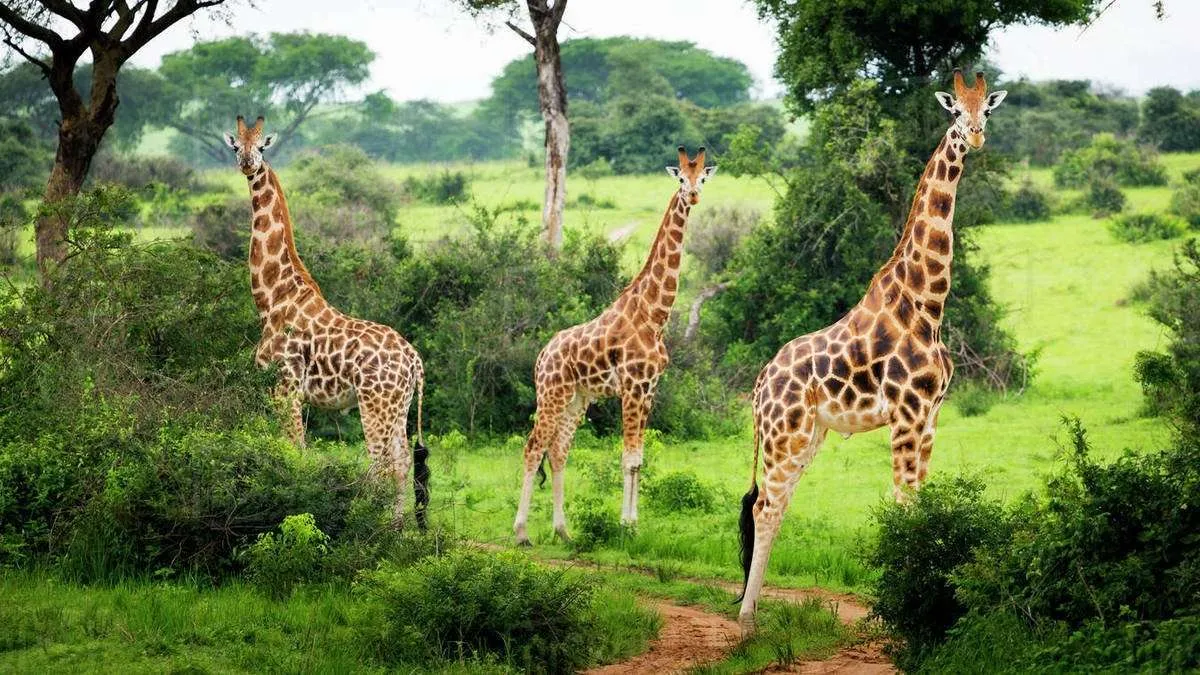
Giraffes live in loose social groups. Females and their young often move together in changing bands, while males drift in and out, forming temporary bachelor groups or travelling alone. The structure feels flexible rather than rigid. Today the group might hold twelve animals, tomorrow eight, with some of the same faces and some new ones. Calves stay close to their mothers, yet spend a lot of time with other young, forming small play clusters that gallop around under the calm gaze of several adults.
Communication is more complex than it first appears. Giraffes use body posture, eye direction, tail movement and neck position to send signals. They also produce low frequency sounds that humans rarely hear, along with audible snorts, grunts and soft hisses when needed. A simple step forward by an older female can make the whole group follow. A fixed stare in one direction can pull every neck into the same line within seconds, all watching the same distant point where you still see nothing.
Male giraffes show another side of behaviour when they fight for status, a practice called necking. Two bulls stand side by side and swing their necks, driving heavy heads against each other’s bodies. Sometimes it looks almost gentle, like slow practice. Sometimes the blows land hard enough to echo faintly across the grass. Even then, there is a strange grace in the way they balance, adjust, and accept a pause when one decides the message has been received.
Giraffes Gallery
The Giraffe’s Diet
Giraffes are browsers, which means they feed mainly on leaves, shoots and twigs from trees and shrubs. Acacias and similar thorny trees form a large share of their diet in many regions. You might expect those thorns to stop them, yet you watch a long, dark tongue curl around a branch, strip leaves in one clean pull, and leave most of the thorns behind. That tongue, often more than forty centimetres long, becomes a tool as precise as any hand.
Because they feed high in the trees, giraffes can reach food that many other herbivores cannot touch. This reduces direct competition with shorter browsers, although there is still plenty of overlap lower down. In the dry season they stretch even higher, sometimes standing with necks fully extended, lips picking at the last green patches near the top of a favourite tree. Watching that effort makes you understand how hard life becomes when rains fail.
They also take flowers and fruits when available, and drink water when they can reach it safely. Drinking remains one of their most vulnerable moments. To lower the head, a giraffe must spread its front legs wide or bend its knees, which complicates escape if danger appears. Because of this risk, they do not drink at every chance. Much of their water comes from moisture in leaves, especially when those leaves are fresh and full of sap.
The Giraffe Reproduction
Reproduction in giraffes follows a calm, steady rhythm rather than dramatic seasonal gatherings. Males test females by smelling urine and watching behaviour, trying to judge when they are ready to conceive. You sometimes see a bull follow one female closely for a while, head tilted, tongue flicking out in a way that looks odd until you learn he is checking her status through scent.
Gestation lasts around fifteen months, which is long even by large mammal standards. The female gives birth standing up, so the calf begins life with a drop to the ground that would shock most human parents. The youngster struggles for a moment, then finds its feet surprisingly quickly, usually within an hour or two. This speed matters. A giraffe calf lying still for too long becomes an easy target.
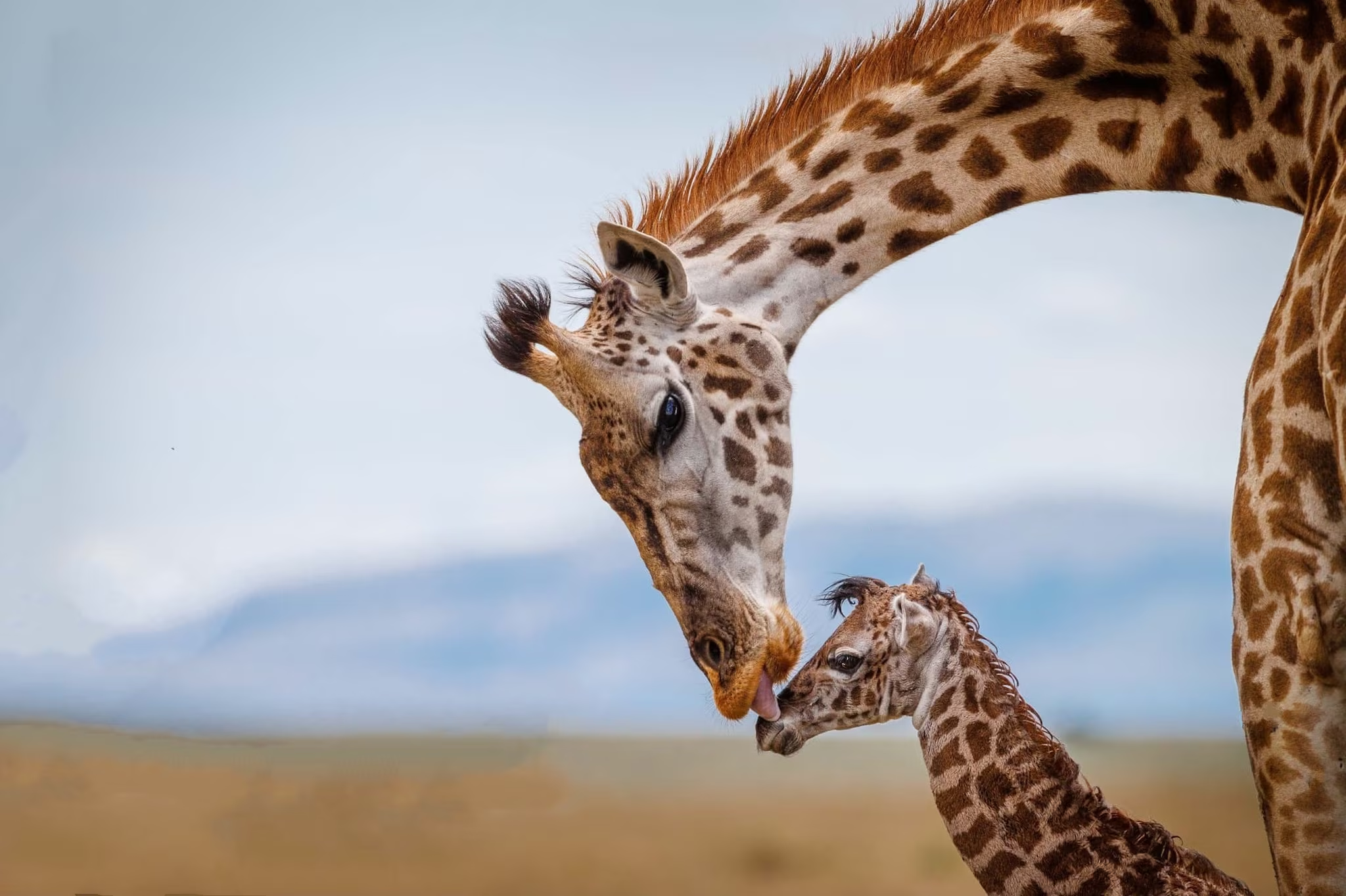
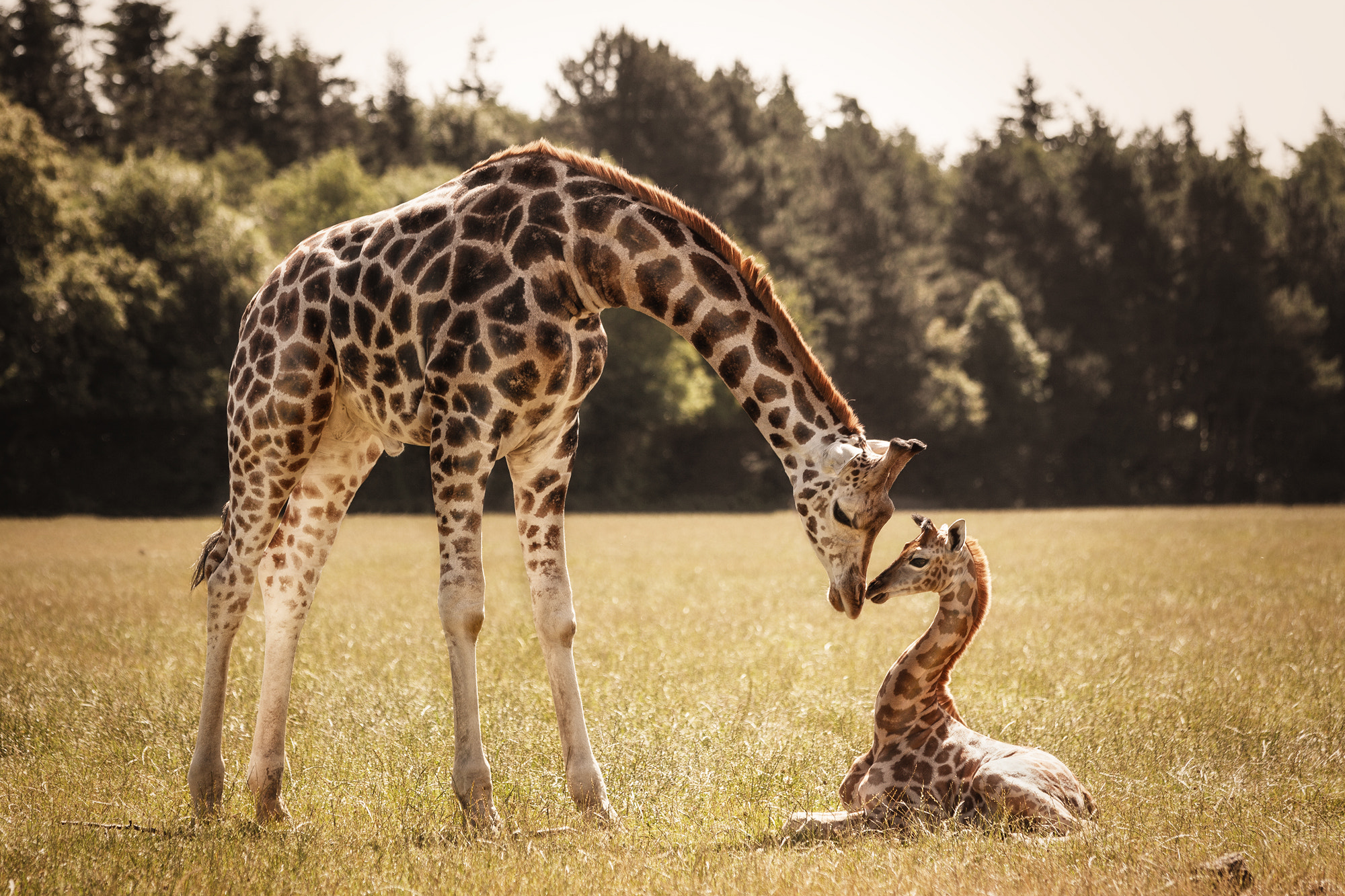
For the first weeks, mother and calf stay close, with the youngster often resting in grass while the mother feeds nearby. In some areas, nursery groups form, where several calves rest together under the rough care of a few adults, while other mothers feed a little further away. You might see a small cluster of young lying down, heads popping up one by one when something catches their attention, then dropping again when nothing happens.
As the calf grows, it spends more time exploring, nibbling leaves low on trunks and testing its legs with short runs. The mother corrects gently, stepping in if play gets too rough or if the calf wanders too far. Over months, the youngster merges into wider group movements, until one day it looks less like a baby and more like a slightly slim version of every other giraffe around it.
Recommended Safaris

8 Days
Private
8 Days River Nile, Murchison Falls & Kidepo Wilderness Safari
from
$ 2400
per person
11 Days
Private
11 days Uganda Premium Gorilla, Wildlife & River Nile Adventure
from
$ 2900
per personThe Giraffe FAQs
How do Giraffes’ spend their daily lives?
Giraffes spend much of the day feeding and moving slowly between trees. They rest standing or lying for short periods, ruminating and watching the surroundings with steady attention.
Activity often increases in the cooler morning and late afternoon. In very hot hours they may move less, standing in light shade while still using every chance to reach good leaves.
Are Giraffes dangerous to people?
In normal safari settings, giraffes do not seek conflict with people. They prefer distance, and vehicles give them an easy way to watch without feeling threatened.
On foot, they deserve respect. While they rarely attack unprovoked, a kick from a giraffe can be extremely serious, which is why walks stay at comfortable distances.
When is the best time to view Giraffes?
Early morning and late afternoon usually give the best light and behaviour. In those hours, giraffes move more, feed actively and stand in open positions that make viewing easier.
You can still see them through the day, especially near rivers and favourite tree belts. The main difference is pace. Midday often feels slower for them and for you.
What do Giraffes eat?
Their main food is leaves from trees and shrubs, especially acacias and other species with small leaflets and tough branches. They also take flowers and fruit when available.
In harsher times they stretch higher or reach deeper into thorny crowns, using experience and that tough tongue to find remaining green patches others miss.
How is their social patterns?
Giraffe society is flexible. Females and calves form loose groups that change in size, while males drift between them or spend time in bachelor bands.
These groups rarely move in tight formations. Instead, you see several animals spread across an area, connected more by awareness and direction than by fixed positions.
How do Giraffes care for their young ones?
Calves stay close to mothers for many months. At first, they rest often, standing only when the mother encourages them, then they begin to play more with other calves.
Mothers protect mainly through position. They choose feeding spots with reasonable views, stand between calves and possible danger, and remain ready to move if something feels wrong.
How do Giraffes run?
When they run, giraffes move both legs on one side together, then both legs on the other side. This creates a rolling, surprisingly smooth gallop for such tall animals.
At higher speeds, the neck and head move in a counter rhythm that helps keep balance. Watching a full-speed run can feel both powerful and strangely graceful.
Are Giraffes at risk now?
Some giraffe populations have declined because of habitat loss, conflict, and hunting. Others in well protected areas still hold steady or recover slowly where space and security remain.
For visitors, choosing parks and operators that support conservation helps more than it might seem. Each visit adds weight to the argument for keeping giraffe country intact.
Conclusion
Spending time with giraffes gently changes the scale in your head. Trees, hills and even distant clouds look different when you watch them beside animals tall enough to meet branches at eye level. You start to judge distance by how many giraffe lengths stretch across a valley rather than by road markers.
For a traveler who arrives focused on dramatic chases, giraffes offer a slower kind of interest. You remember a small group walking in single file across evening light. You remember a calf peeking from behind its mother, neck not yet reaching the lowest branches. You remember the faint sound of hooves in dry grass and the quiet pause each time a long head turned toward the vehicle.
Later, when someone asks what Africa felt like, you might describe heat, dust and wide skies. Somewhere in that answer a giraffe appears again, standing under a lone tree, chewing thoughtfully, looking back at you from a height you never imagined sharing with an animal.
Don’t wait,
book this adventure safari today
Low season
Oct, Nov, Mar, Apr, may
Peak season
Jun, July, Aug, Sept, Dec

Got any questions
about traveling to Uganda?
Get in touch.
