

Select Page
Klipspringer: Facts, Classifications, Habitat, Diet and More
The Klipspringer Introduction
Your first Klipspringer sighting often happens when you almost look past it. You see rock, shadow, scrub, then realise that one “stone” has thin legs and tiny hooves. The Klipspringer freezes, stares back, and suddenly the cliff feels alive.
If you come from a place where goats stay in fields and never climb serious rock, the Klipspringer changes your idea of balance. This small antelope stands on the very edge of a boulder, hooves together, chest still, as wind moves around it. You feel slightly nervous on its behalf, while it looks perfectly at home.
What makes the Klipspringer unforgettable is how much confidence fits inside such a compact body. The coat blends with stone, the build looks almost round from some angles, yet the way it jumps between rocks feels clean and precise. One second it is a spotted statue. The next second it lands on a narrow ledge that would make most people hesitate.
Many travelers talk about lions and elephants first, then remember a Klipspringer pair outlined against the sky. Maybe you were coming around a bend near a kopje, thinking about something else. Then two small forms appeared on the highest rock, standing so still that you felt they had been watching you long before you saw them.
The Klipspringer Where to See It
Klipspringers live on rocky hills, escarpments, kopjes and cliffs across parts of East and Southern Africa. If a place has steep rock and scattered shrubs, there is a fair chance they are nearby.
Serengeti National Park, Tanzania
Around the granite kopjes, Klipspringers stand like sentries on boulder tops, watching Wildebeest herds move below while they keep to their steep stone strongholds.
Ngorongoro Conservation Area rim, Tanzania
Along the crater rim and nearby cliffs, you sometimes see a pair outlined against misty air, using narrow ledges and rock steps as safe, private paths.
Recommended Safaris

14 Days
Private
14-Day Uganda, Congo & Rwanda Gorilla Trekking & Wildlife Safari
from
$ 4900
per personTarangire and Manyara escarpment, Tanzania
On rocky outcrops and the Rift Valley escarpment, Klipspringers move between fig roots and cracks in the stone, slipping out to feed, then melting back into broken rock.
Samburu and Laikipia, Kenya
In these dry, rugged areas, they pick their way across orange rock and thorn bushes, tiny hooves gripping rough surfaces while elephants and gerenuk stay on gentler ground.
Hell’s Gate and Rift Valley cliffs, Kenya
Sheer rock walls and scattered towers give Klipspringers plenty of vertical space. You might spot one halfway up a cliff, in a place that looks unreachable.
Kidepo Valley and Karamoja ranges, Uganda
In Kidepo and surrounding hills, they stand on rocky ridges above wide valleys, using steep slopes as protection while they survey grass and acacia below.
Kruger National Park and private reserves, South Africa
On granite koppies and rocky ridges, Klipspringers use boulders as both lookout and refuge, often seen at first light before the heat settles over the rocks.
Drakensberg foothills and cliff country, South Africa and Lesotho
Along steep valleys and cliffs, they move between ledges, feeding in small pockets of vegetation that cling to rock faces far above the valley floor.
Etosha fringes and rocky hills, Namibia
Around stony slopes near the pan edge, the Klipspringer uses pale rocks as both camouflage and highway, stepping quietly between cracks while the flats below stay busy with larger antelope.
Your chances improve whenever you slow near rocky ground and scan carefully. Look high, not low. Often the first thing you notice is a pair of dark eyes on a ledge far above the track.
The Klipspringer Classifications
Class: Mammalia
Order: Artiodactyla
Family: Bovidae
Genus: Oreotragus
Species: Oreotragus oreotragus
Klipspringer Gallery
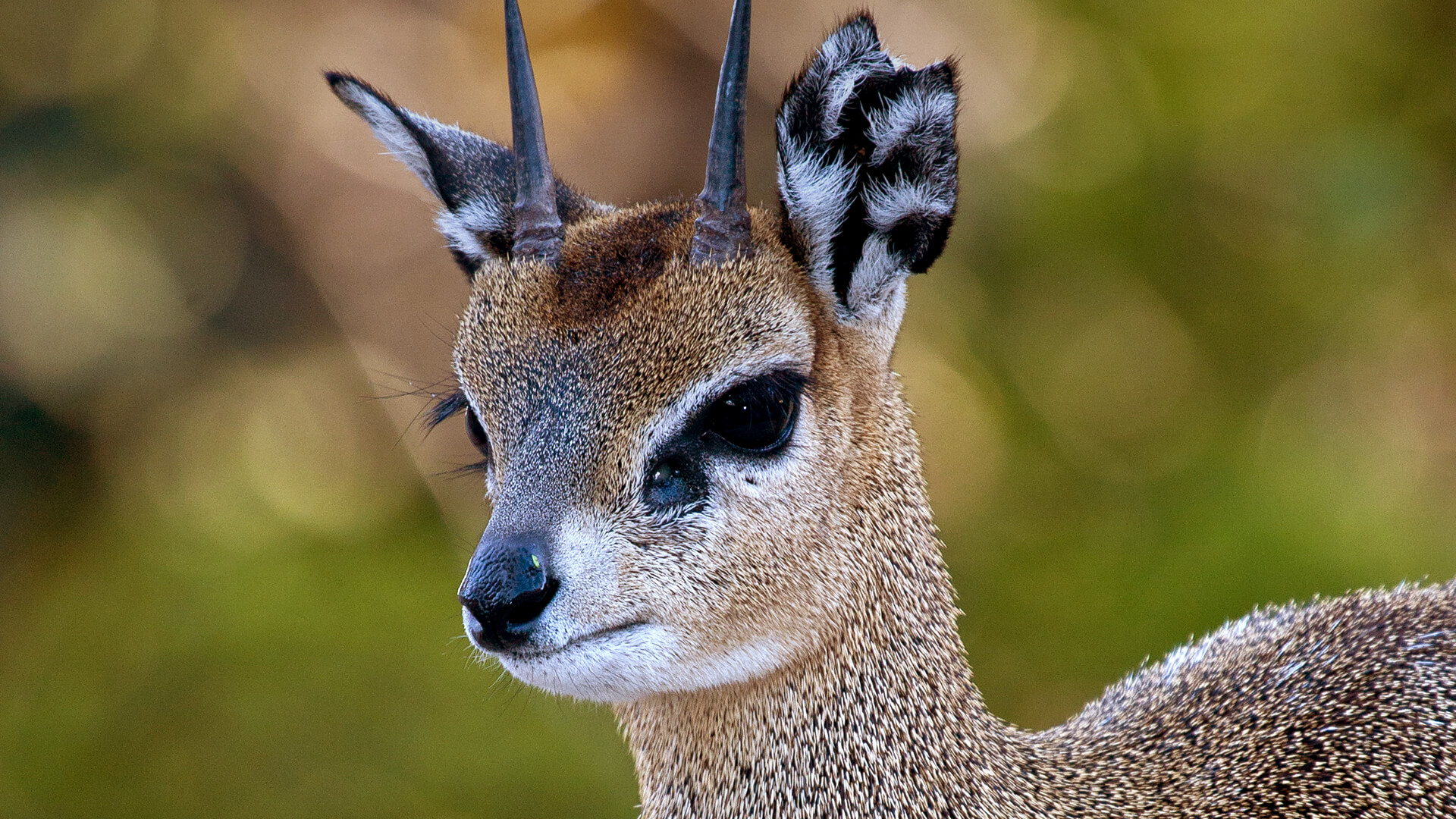
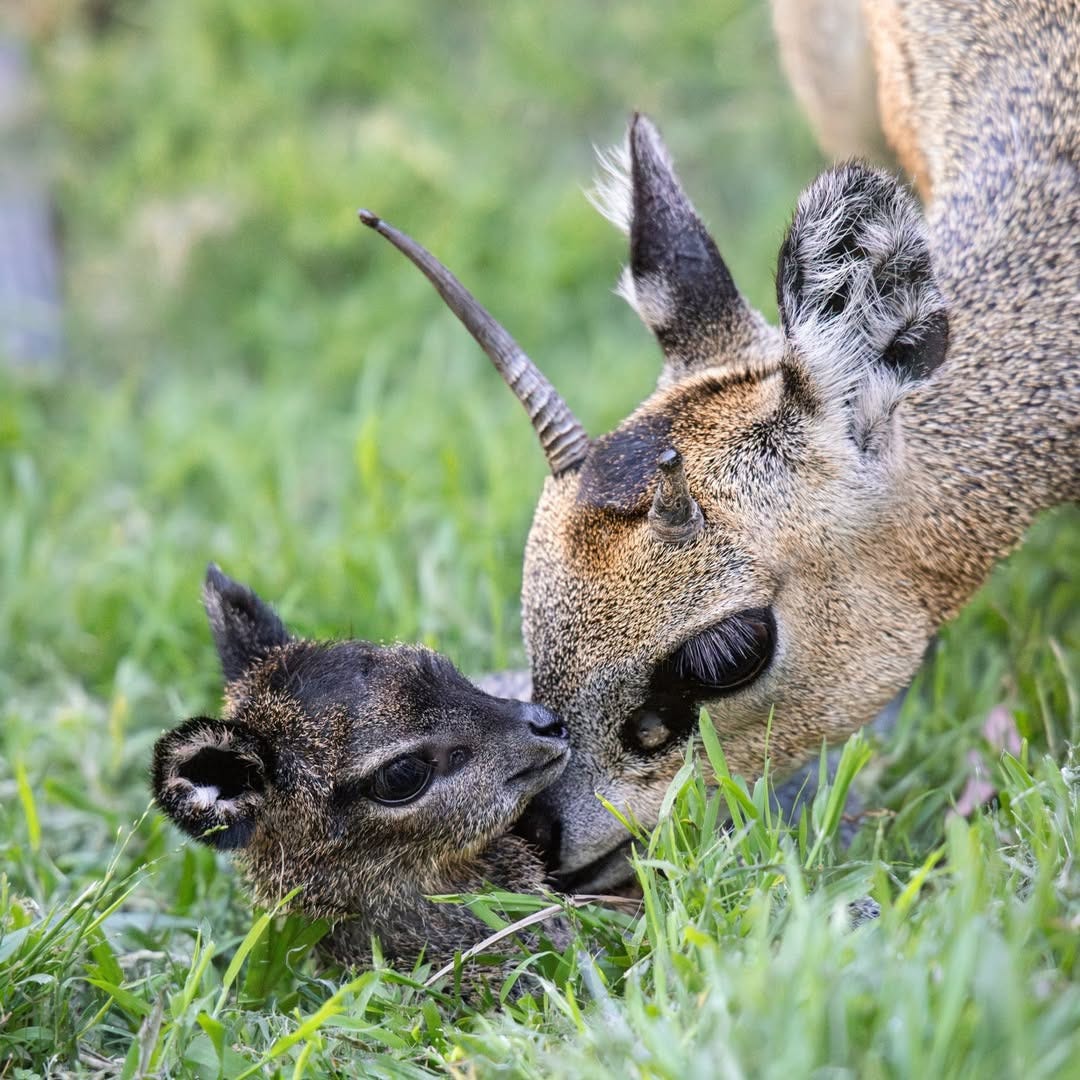
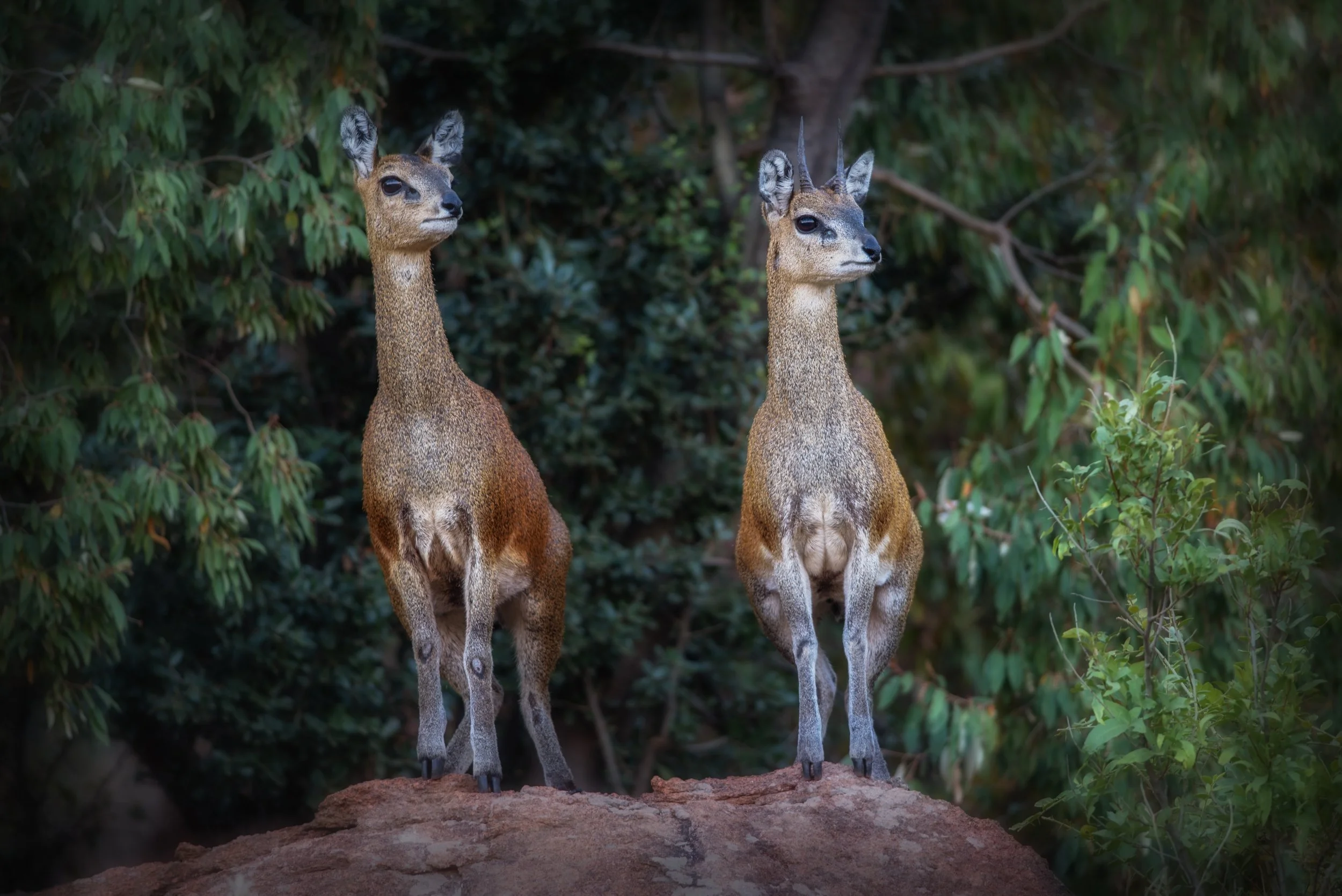
The Klipspringer’s Behaviour
Watch a Klipspringer for a few minutes and you see how every habit fits mountain life. It stands with tiny, rubbery hooves placed together on the tips, not the full sole, gripping small rock irregularities. That posture lets it balance on ledges that are barely wider than its hoof. You might feel your own feet curl slightly inside your shoes as you imagine standing there yourself.
Klipspringers usually live in pairs or small family units. A male and female often share a territory, with a young one staying for a while before dispersing. They keep in loose contact, rarely far apart. While one feeds lower down, the other may stay slightly higher, watching. Calls are soft and brief, but body position carries meaning. A head lifted sharply or a sudden stillness can pull the partner’s attention to the same distant threat.
Most of their movement involves smooth, springy jumps. They push off from one rock, land lightly on the next, pause, and then climb higher with short, powerful steps. If a predator appears, they choose steep, broken ground instead of open flats. Lions and leopards can follow only so far before loose stone and sudden drops make the path too risky. The Klipspringer wins that contest by knowing every ledge and crack on its slope.
Voice is not a huge part of their daily routine, yet they do call when alarmed. A sharp whistle or snort alerts a partner and any neighbours that something is wrong. Often, though, they simply rely on movement patterns. A quick dash to a higher rock, a sudden stop with the body turned toward danger and ears forward, can say as much as a long call. From the vehicle, you see this as a shift in mood that passes through the little group.
Klipspringers are mostly active in the cooler parts of the day, feeding and moving at dawn and late afternoon. During hot hours they rest in shade against rocks or small bushes, still close to steep ground. Even at rest they rarely look careless. The eyes stay open, ears turn toward small sounds, and the body seems ready to spring forward at the first sign that something in the valley below deserves more attention.
The Klipspringer’s Diet
The Klipspringer’s diet fits its rocky home. It feeds on leaves, shoots, flowers and small fruits from shrubs and herbs that grow between boulders or cling to rock faces. Where other antelope graze open grass, the Klipspringer works little pockets of greenery higher up, sometimes stretching to reach plants that hang from cracks in vertical stone.
This browsing style gives it some independence from larger herbivores that rely on flatter ground. While kudu and impala share parts of the menu, they usually stay lower. The Klipspringer climbs above them, picking choice pieces from tough shrubs and small trees that manage to root among rocks. For you, the sight of a small antelope calmly feeding on a near vertical slope can feel both odd and impressive.
Water needs are modest. Many plants it eats carry enough moisture to support long hours on dry rock without regular visits to obvious waterholes. When it drinks, it often chooses quiet trickles, rock pools or steep sided drainage lines rather than crowded open pans. That habit reduces risk, since most ambushes happen where paths to water are obvious.
The Klipspringer’s Reproduction
Reproduction in Klipspringers ties closely to their strong pair bonds and the demands of raising young in steep terrain. Males and females maintain territories year round, and breeding often occurs within these stable partnerships. You may not notice any dramatic courtship from the vehicle. The change can be as simple as the pair staying closer, feeding side by side more often, and spending extra time on quiet slopes.
After mating, the female carries a single offspring for several months before giving birth. She usually chooses a sheltered, hard to reach spot among rocks or thick shrubs on a slope. The newborn arrives in a world of edges and drops, yet the first weeks involve little movement. The mother hides the young in safe hollows while she feeds nearby, returning regularly to nurse and groom.
As the youngster grows stronger, it begins to follow, learning the exact placement of hooves on rough stone. Early movements look slightly uncertain, yet parents guide carefully by example rather than constant correction. Short, controlled jumps replace long, risky leaps until the young Klipspringer can match adult paths. From your viewpoint, spotting a small one near a pair feels like catching a very private family moment in a demanding home.
Young stay with their parents for some time before dispersing. Eventually, growing males and females leave to find their own rocky territories, repeating the cycle with new partners. That quiet spreading of families across hills and kopjes keeps the species present in places where a casual visitor might think life would struggle to take hold.
Recommended Safaris


8 Days
Private
8 Days River Nile, Murchison Falls & Kidepo Wilderness Safari
from
$ 2400
per person
11 Days
Private
11 days Uganda Premium Gorilla, Wildlife & River Nile Adventure
from
$ 2900
per personThe Klipspringer FAQs
What makes the Klipspringer special to watch?
You see a small antelope standing in places that hardly look possible, hooves together on rock points, eyes level and calm. That alone leaves a stronger impression than many larger animals.
Then you watch it jump between boulders with almost no noise, landing on narrow ledges as if the rock were flat ground. The mix of fragility and confidence stays with you.
Where can you see Klipspringers on safari?
You find them on rocky hills, kopjes and cliffs in parks such as Serengeti, Ngorongoro, Tarangire, Samburu, Laikipia, Kruger, Kidepo and Etosha, mostly in areas with serious stone.
Guides often stop near granite outcrops or escarpments and ask you to scan the higher rocks. Once you see your first silhouette on a ridge, spotting the next one becomes easier.
Are Klipspringers shy around vehicles?
They are cautious, yet they trust their rocks more than distance. Often they stand still and watch from a safe height rather than running far away when a vehicle appears below.
If you move quietly and avoid sudden noise, they may remain on their lookout for several minutes. That gives you time to look, breathe and study body shape without pressure.
What do Klipspringers mainly eat?
They browse leaves, shoots, flowers and small fruits from plants that grow among rocks. Many of these shrubs and herbs anchor in cracks where soil collects and moisture lingers.
Because they rely less on open grass, they can feed even when nearby plains dry out. Their menu sits partly above the struggle that grazers face on flatter ground.
Do Klipspringers live in large herds?
No. They usually live as pairs or small family units. A typical sighting shows a male, a female and sometimes a youngster, all using the same cluster of rocks.
This small group structure fits the steep terrain. Large herds would struggle to find enough safe ledges and hiding places on a single hill or kopje.
How do young Klipspringers cope with steep rock?
They start with short steps and small jumps, following their parents closely. Early paths avoid the most exposed ledges, focusing on safer routes that still teach good balance.
Over time, their confidence grows. You might see a youngster practise on medium rocks while adults watch from higher points, ready to move if real danger appears.
Are Klipspringers active at night?
They can move in low light, but much feeding and visible activity happens in early morning and late afternoon, when temperatures are kinder and predators are easier to see.
At night they rely on steep terrain and stillness, resting near rock cover. From the valley floor, you might not realise they are up there, listening to each sound below.
Why are Klipspringers important for rocky habitats?
They turn steep stone into usable living space, using plants that few others reach. Their browsing shapes small patches of vegetation and adds life where you might expect only silence.
They also provide food for leopards and other predators that can reach the rocks. In that way, even small, quiet Klipspringers help keep those cliff and kopje communities connected.
Conclusion
Spending time with Klipspringers changes how you read rocky ground. A cliff stops being only a backdrop for lions and becomes a home with small paths, lookouts and private hiding spaces. Each boulder stack feels less like scenery and more like a layered apartment block for a very focused tenant.
If you arrive expecting plains and big herds, this little antelope can become a quiet favourite. You remember that one pair standing above the valley, framed by sky, motionless for long minutes. You remember how one small jump turned nervous rock into something that looked as easy as a flat road.
Don’t wait,
book this adventure safari today
Low season
Oct, Nov, Mar, Apr, may
Peak season
Jun, July, Aug, Sept, Dec

Got any questions
about traveling to Uganda?
Get in touch.
