

Select Page
Coke’s hartebeest, Facts, classification, Size, Habitat, Diet and More
Coke’s Hartebeest Introduction
Your first real encounter with Coke’s Hartebeest often happens in quiet grass, not in the middle of a chase. You notice a tall, narrow-faced antelope with high shoulders and a sloping back, standing still while the wind moves through the savanna around it. For a moment you might think something looks slightly “wrong,” then your eyes adjust and you see how well this body fits open country.
If you come from a city in America or Europe, you might be more used to compact deer or heavy cattle. The Coke’s Hartebeest sits somewhere in between in your mind. It looks calm while grazing, head down, tail loose, then suddenly the head lifts and the whole posture changes. Ears focus, horns frame the sky, and the animal turns into a careful lookout that reads the plain with one long stare.
What makes Coke’s Hartebeest memorable is how clearly you can see distance built into its frame. Long legs, small head, lean body and that gentle slope from shoulder to rump all signal running power and stamina. This is an antelope designed to move, to keep going across hot grass, and to react quickly when shapes on the horizon turn into real threats. Once you notice that, every herd starts to look like a group of quiet long-distance runners spread across the valley.
Many travelers only learn the name “kongoni” near the end of their trip, then suddenly realise they have been looking at Coke’s Hartebeest all week without giving them enough attention. Later, when they remember wide grass plains, those reddish bodies with blackish tails often appear again in the picture, holding ridges and slopes in a very steady way.
Recommended Safaris

5 Days
Private
5-Day Kahuzi Biega Congo Gorilla Trekking & Chimp Safari in Rwanda
from
$ 2500
per personCoke’s Hartebeest Where to See It
Coke’s Hartebeest lives in parts of Kenya and Tanzania, mainly in open and tall grass savanna with scattered trees. You meet them most easily where plains still stretch out without heavy bush.
-
Serengeti National Park, Tanzania
On Serengeti’s rolling plains, Coke’s Hartebeest graze in loose herds between Wildebeest and Zebra, usually on slightly higher ground where they can watch a wide area. -
Ngorongoro Conservation Area, Tanzania
Inside the crater and across the highlands, they stand along ridges and open flats, moving in slow lines through grass while always leaving one or two heads up to scan. -
Tarangire National Park, Tanzania
In Tarangire they use grasslands between baobabs and riverlines, drifting between feeding spots and small rises that give shade and a better view of approaching danger. -
Nyerere National Park (Selous), Tanzania
Around wide floodplains and light woodland, Coke’s Hartebeest mix with other grazers, their rich coats standing out against pale grass near channels and open clearings. -
Maasai Mara National Reserve, Kenya
In the Mara, kongoni often hold gentle hilltops and open slopes, sometimes sharing space with Topi and Wildebeest while keeping a little extra distance from the busiest herds. -
Nairobi National Park, Kenya
Here you may see Coke’s Hartebeest grazing with city towers faint in the background, a strange yet powerful reminder that open plains still exist next to a modern capital. -
Amboseli and Tsavo, Kenya
In Amboseli they use drier grass away from the swamps, and in Tsavo they move across red soil plains, picking out better grazing among thorn scrub and lava ridges. -
Laikipia and Mount Kenya region, Kenya
On some Laikipia ranchlands and Mount Kenya foothills, they share open grazing with other wildlife and cattle, moving between natural grass and lightly used pasture.
If you want to give them proper time on safari, you ask your guide to linger on open ridges and wide grass flats, then scan slowly for that high-shouldered, long-faced outline.
Coke’s Hartebeest Classifications
Class: Mammalia
Order: Artiodactyla
Family: Bovidae
Genus: Alcelaphus
Species: Alcelaphus buselaphus
Subspecies: Alcelaphus buselaphus cokii (Coke’s Hartebeest)
Coke's Hartebeest Gallery
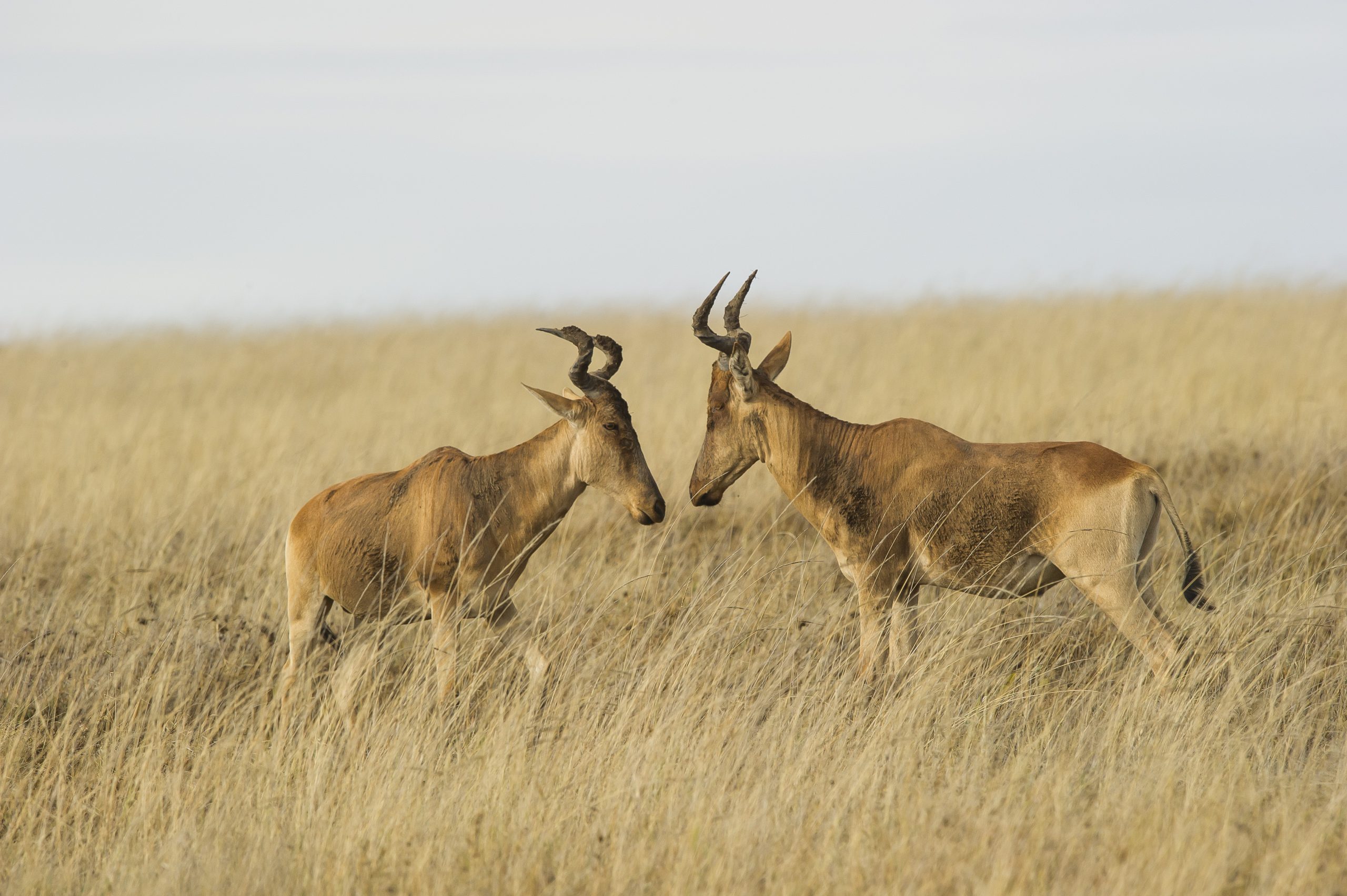
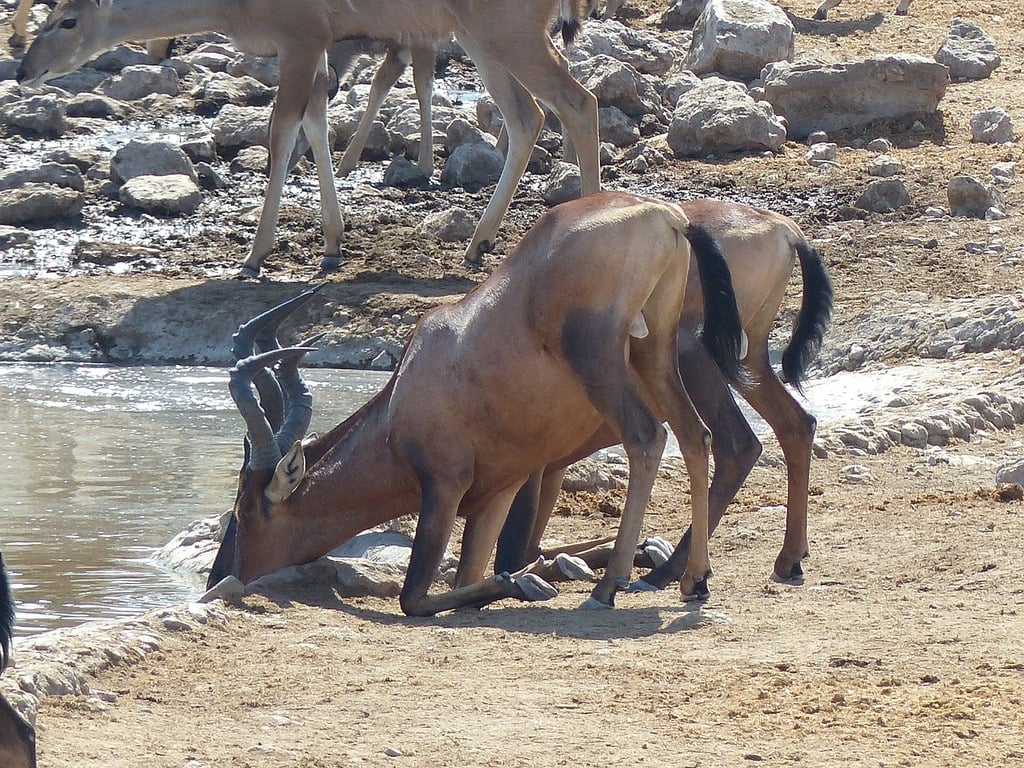
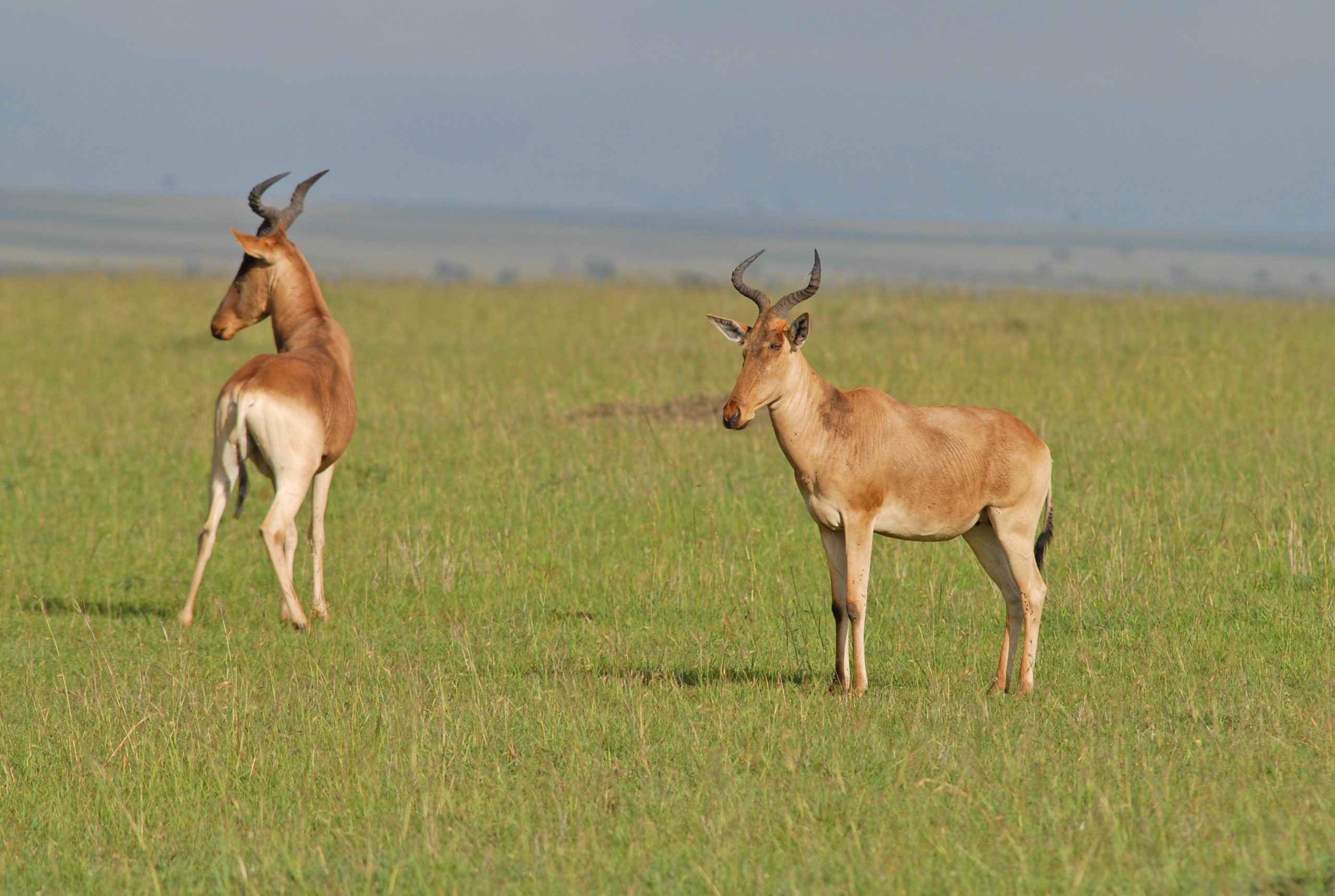
Coke’s Hartebeest Behaviour
If you stop near a Coke’s Hartebeest herd and simply watch, you see a rhythm that repeats. Heads drop to feed, tails flick, a few animals raise their heads and stare into the distance, then the whole herd drifts a little further. That mix of feeding and checking never really stops, even when the light feels soft and nothing obvious threatens them.
Coke’s Hartebeest usually live in herds of females and young, often six to thirty animals, sometimes more. Territorial males claim patches of good grass and try to keep these female groups inside their area. You might see a single bull standing slightly apart, head high, marking with dung and scent, and chasing off other males that wander too close. Bachelor males form their own loose herds where they test each other and wait for a chance at holding space.
Communication within the herd is clear without many loud sounds. A sudden stiff posture, with head up and body facing one direction, makes other animals look the same way. Short snorts and blowing breaths pass information along the line. When one hartebeest breaks into a run, others respond quickly, often before you have even seen the lion or cheetah that started the whole reaction far down the slope.
Activity patterns follow light and heat. Early morning and late afternoon bring more walking and grazing. When the sun climbs, many Coke’s Hartebeest stand or lie near small bushes or slight rises, ruminating while they rest. Even then, at least one or two individuals keep their heads up, acting as early warning for the rest. In that sense, the herd feels like a shared watch system wrapped around a shared feeding plan.
Coke’s Hartebeest Diet
Coke’s Hartebeest are mainly grazers. They feed on grasses of different lengths and stages, from fresh green blades at the start of the rains to drier stems that remain months later. Their long faces and flexible lips help them crop low, picking up material that some other antelope leave behind.
They manage surprisingly well on grass that looks rough to human eyes. Where cattle, Wildebeest and Zebra have already fed, Coke’s Hartebeest still find value by taking shorter shoots and tougher pieces. That willingness to work with less perfect grass helps them stay in areas where competition is strong and conditions shift between good and harsh.
From time to time they also take small amounts of herbs or low shrubs, especially when new leaves carry more moisture than dry stems. Water comes both from plants and from natural sources such as pans, pools and small streams. After hot days you often see them drift toward water with other grazers, drink, then spread out again to feed on nearby slopes.
Coke’s Hartebeest Reproduction
Reproduction in Coke’s Hartebeest roughly follows the pattern of rain and grass growth. Females tend to give birth when conditions either are good or are moving toward better, so that milk and early grazing for calves come during a kinder part of the cycle. In years with poor rains, this timing can become stressed, which you feel when you see thinner adults and fewer young.
Gestation lasts around seven to eight months and usually ends with one calf. When birth approaches, a pregnant female often moves away from the main herd to taller grass or light scrub. There she gives birth out of direct sight, allowing the calf to stand and find its balance without a crowd around. Within a short time the youngster can walk and even run, but the pair still stays hidden for roughly two weeks.
During that time, the mother visits mainly to nurse and clean the calf, then moves off to graze before returning. The young animal lies still and flat when she is gone, blending into grass and trusting that stillness will keep it safe. After the hiding stage, mother and calf rejoin the main herd. Young males may stay with their mothers for up to two years before shifting into bachelor groups, while young females slide more naturally into the female herd structure.
Recommended Safaris


8 Days
Private
8 Days River Nile, Murchison Falls & Kidepo Wilderness Safari
from
$ 2400
per person
Coke’s Hartebeest FAQs
How do I recognise Coke’s Hartebeest?
You look for a reddish-brown antelope with a very long, narrow face, high shoulders and a back that slopes down toward the rump. The tail usually looks darker than the body.
Both sexes have ridged horns that rise, bend out slightly, then angle inward. When you see that head shape in open grass, you are usually looking at kongoni rather than another species.
Are Coke’s Hartebeest social animals?
Yes, although their groups are not huge. Female herds move with calves and yearlings, while males either hold territories or gather in bachelor herds that test and jostle among themselves.
Within a herd, animals keep comfortable personal space yet respond quickly to each other. A single alert posture or quick movement spreads along the group within seconds.
What do Coke’s Hartebeest mainly eat?
Their main food is grass. They take both fresh and older growth, including stems that many other grazers find less appealing, especially in late dry seasons.
Because they handle lower-quality grass quite well, they can continue feeding in areas where heavy pressure from livestock or other wildlife has already shortened much of the cover.
When is the best time of day to see them?
Your best chances are in the morning and late afternoon, when herds feed more and move across open ground. Light is also better for seeing coat colour and horn shape.
During hot midday hours they often stand still or lie down, sometimes near scattered bushes or gentle rises. If you scan carefully, you still see them, but movement is slower.
Are Coke’s Hartebeest aggressive toward people?
In normal safari settings they are wary, not aggressive. If vehicles approach calmly and give space, they usually watch for a while, then continue grazing or move away at a trot.
Aggression appears mainly between males. Territorial bulls chase rival males, clash horns and perform short display runs. Guides keep you far enough that you see this without adding pressure.
How often do they have calves?
A healthy female can produce a calf roughly once a year when food and conditions allow. The exact timing shifts with local rainfall and grass patterns.
Calf peaks often appear after good rains, when grass is green and richer, giving mothers better support for milk and early grazing. That is when you see more small youngsters in herds.
What threats do Coke’s Hartebeest face today?
Key threats include loss of open grass to farms and settlements, fencing that blocks movement, competition with livestock, and hunting in some regions. Numbers are lower than they used to be.
Protected parks, conservancies and community areas that keep wide grazing grounds open help hold local populations. Your visit quietly supports the value of keeping those spaces wild.
Where are my best chances to see Coke’s Hartebeest?
Good places include Serengeti, Ngorongoro, Tarangire, Nyerere, Maasai Mara, Nairobi National Park, Amboseli, Tsavo and several Laikipia conservancies in Kenya.
If you care about them, tell your guide early in the trip. That small comment often nudges route choices toward grass zones where kongoni still stand in view on ridges and slopes.
Conclusion
Spending time with Coke’s Hartebeest changes how you look at a plain. What once felt like simple “grass and sky” turns into a layered space where each shape and slope matters to animals that live by running and reading distance. You begin to notice how often they choose ridges, how they angle their bodies to wind and how a whole herd can shift mood in one breath.
If you started with lists of famous species, this antelope can become an unexpected favourite. You remember one bull standing alone against a pale horizon, or a line of females moving slowly through waist-high grass. You remember a calf racing after its mother when the herd moved faster than you expected, legs flying and tail up. These are some exceptional memories you will never forget about your trip in the African jungle
Later, when someone asks what you learned from the plains, you might mention lions and Wildebeest first, then pause and think of Coke’s Hartebeest. In that pause, you realise that the open grass did not only belong to predators. It also belonged to quiet runners that have shaped those spaces for a very long time.
Don’t wait,
book this adventure safari today
Low season
Oct, Nov, Mar, Apr, may
Peak season
Jun, July, Aug, Sept, Dec

Got any questions
about traveling to Uganda?
Get in touch.
