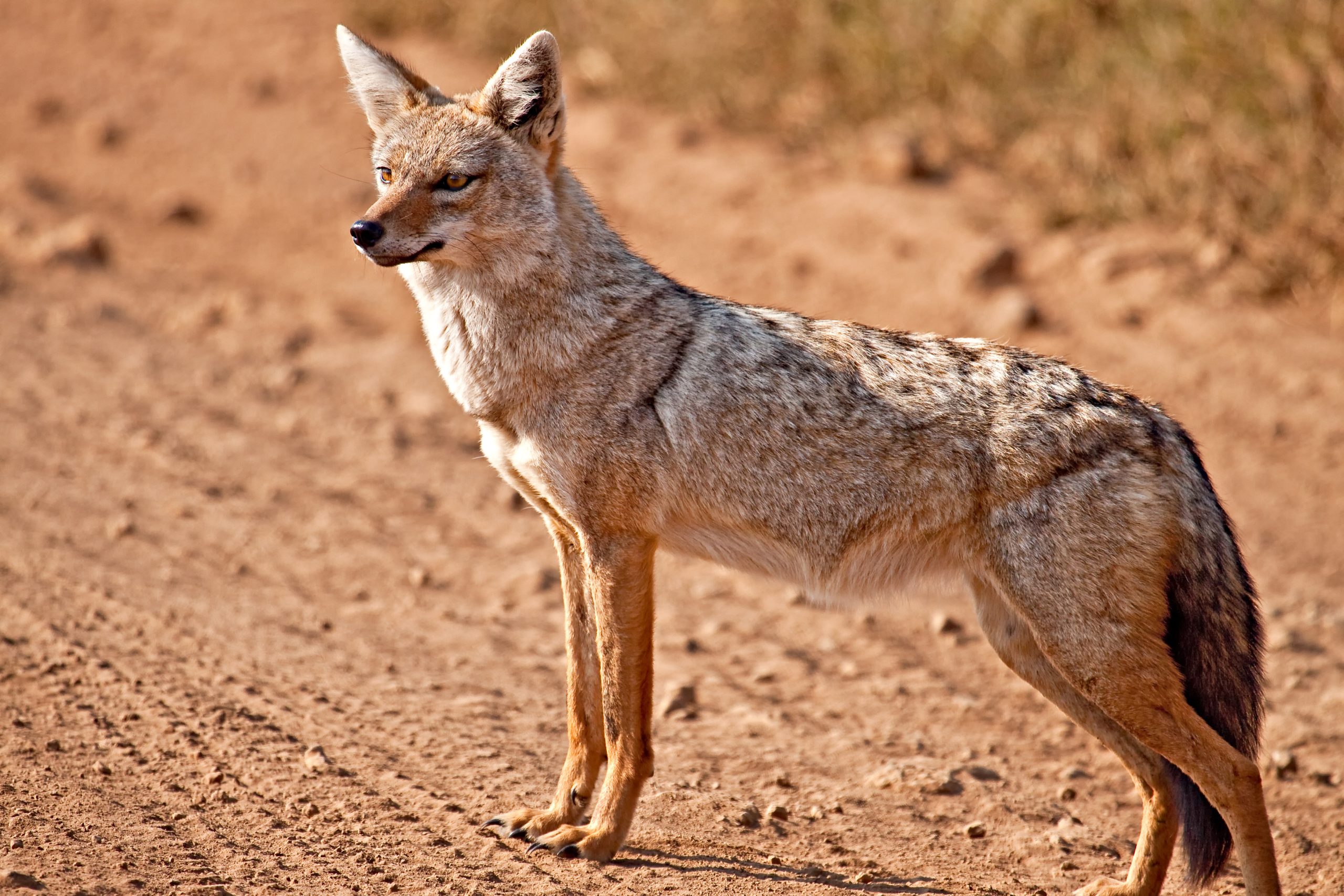
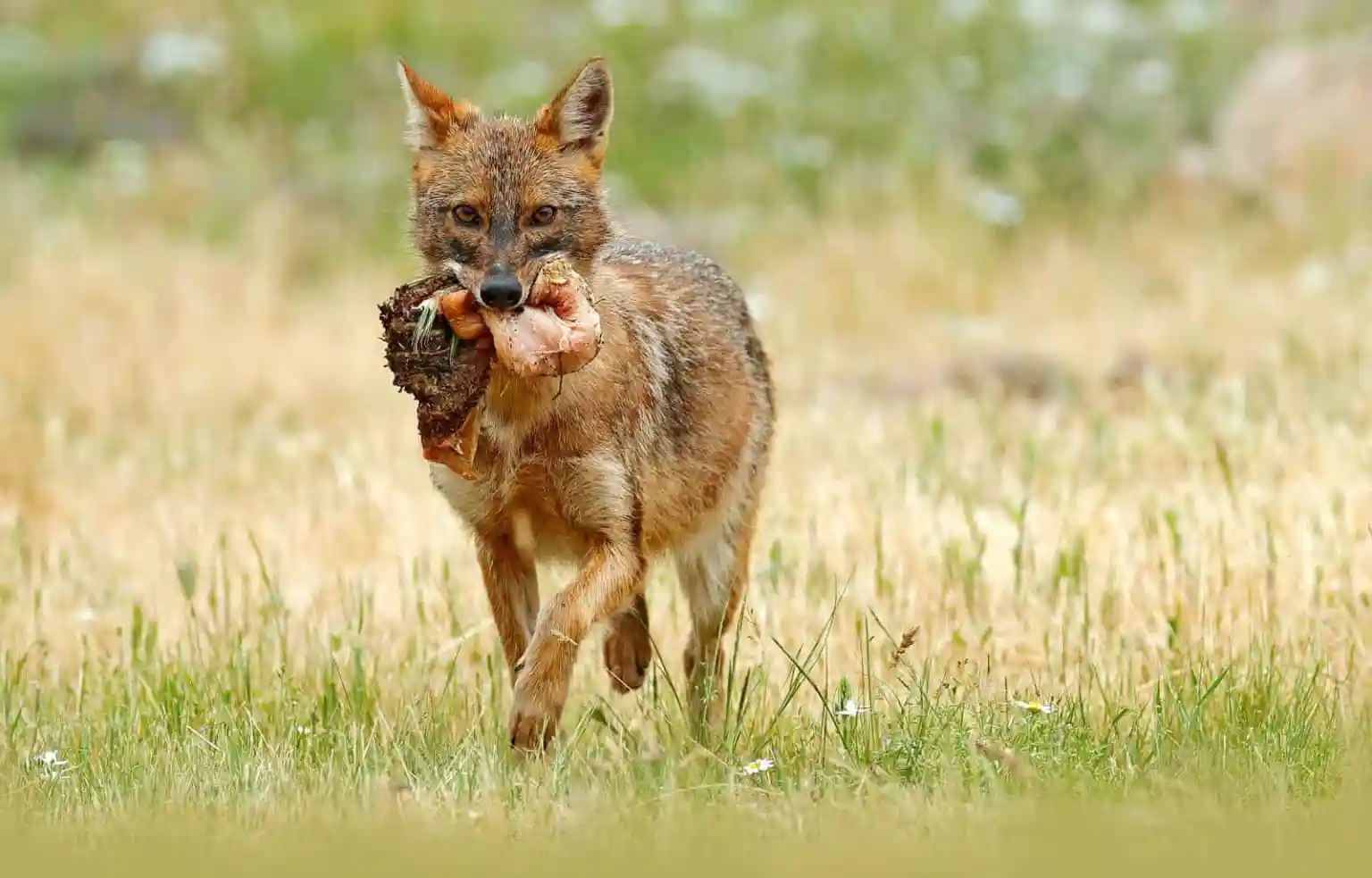
Late light sits low on the grass. A shape slips along the verge, ears sharp triangles against the glow. The Golden Jackal stops, tilts its head, then takes three neat steps as if measuring your presence with a ruler you cannot see. You stay quiet. It keeps the angle and moves on, tail level, confidence unhurried.
A francolin bursts, wings loud for a second. The jackal barely flinches. It already did the math. A minute later it reappears near a dust track, nose low, eyes forward, working the ground like a detective who has seen this case before.
You came to the plains for big stories. This is a smaller one that feels personal. A quick look. A choice. A line through the grass that says, I know what I am doing, and I see you.
Identification, quick cues you can trust
Medium canid, coyote-sized, with a narrow muzzle and upright ears
Coat ranges tawny to grizzled gold, often darker along the back and shoulders
Slim body, long legs, black tail tip in many regions
Gait changes fast, from light trot to sudden short sprint
Recommended Safaris
8 Days
Private
8 Days Murchison Falls, Gorilla, Chimpanzee & Queen Elizabeth Safari
Open savanna, scrub, river edges, farmland mosaics
Range highlights
Northeast Africa along the Nile and Horn, parts of Egypt and Sudan, into the Middle East and beyond
Social
Pairs and family groups, flexible foraging partners
Behavior you can read in minutes
Pairs hold edges like pros. One animal works the line, the other hangs back five or ten paces, then trades roles without a word. Calls stitch the space together. A high yip, a short bark, a string of notes that sounds like laughter if you are in a good mood.
The Golden Jackal likes clean ground where a quick turn has room. It follows lions at a distance, skims a vulture crowd for scraps, and checks rodent runs along the warm margin of a road. The confidence reads as calm. When a chance opens, the body switches from stealth to speed in one clean motion.
Territory is drawn with scent and routine. Border trots, quick scrapes, and a pause at well-used posts mark the map. Calmer hours hold social time. You may see grooming near a quiet thicket or a shared stretch before the night patrol.
Diet
Opportunist in the best sense. Small mammals pay the rent. Add ground birds and chicks, reptiles, beetles, fallen fruit, carrion, and human leftovers near careless camps. After rain, insects boom and hunting looks easy. In dry spells, the jackal works river lines, thorn country, and farm edges with the same tidy method.
Golden Jackal Gallery
Reproduction
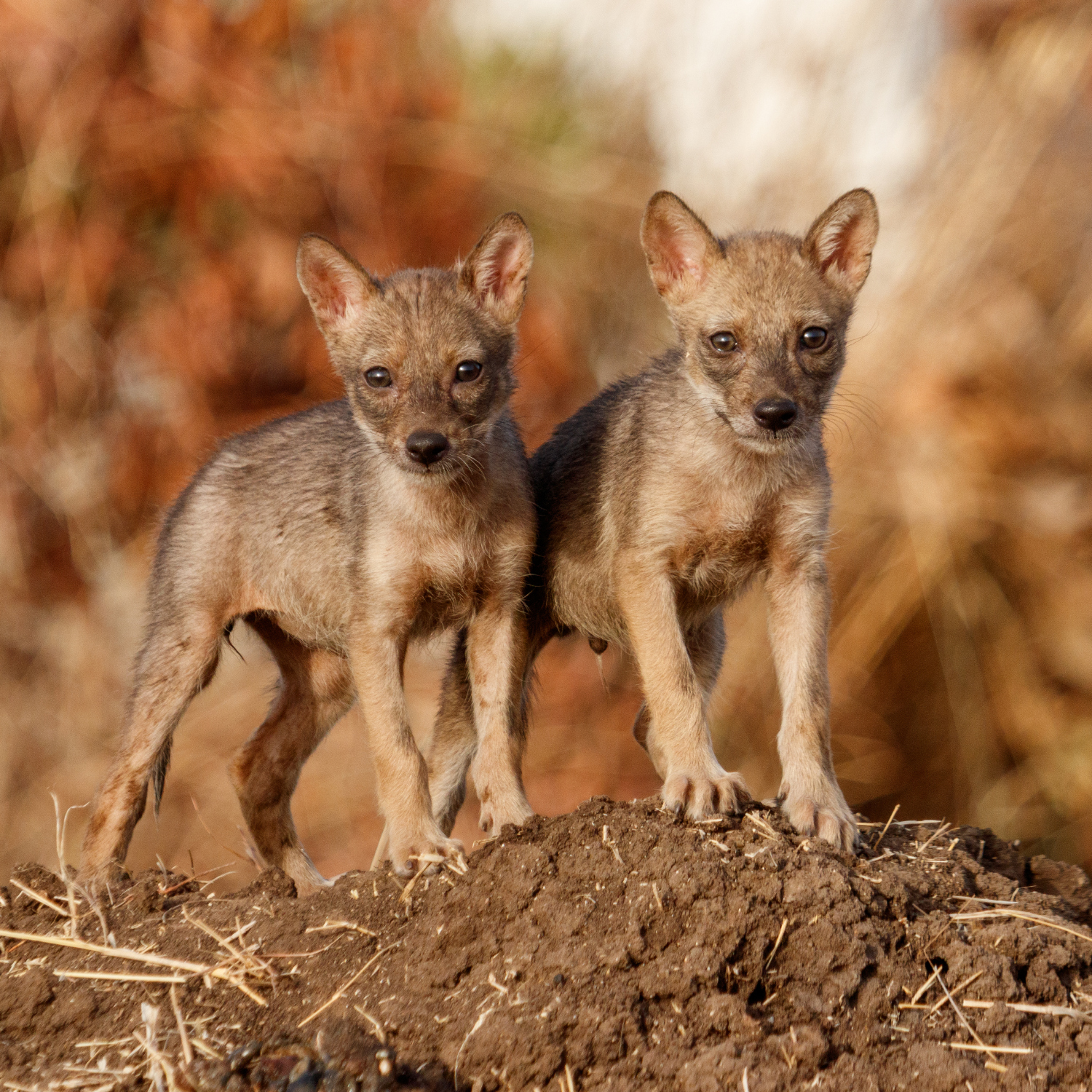
Pairs form long bonds. Breeding often tracks local rains so pups land in a season with food. After a two-month gestation, the female bears pups in a den cut into firm ground or an old aardvark hole. Both parents feed and guard. Older offspring may stick around to help. Pup play looks like fun, yet you can see the lessons, short pounces on beetles, quick checks over a shoulder, early drills for a life that rewards timing.
Where to find Golden Jackal
Egypt and Sudan. Riverine belts and farm edges along the Nile
Ethiopia and Eritrea. Highland fringes, thorn scrub, and valley floors
Somalia and Djibouti. Dry savanna, coastal scrub, and settlements’ outskirts
Eastern North Africa to the Middle East. Open country with mixed human use and wild pockets
Plan for dawn and dusk. Calm nights lift odds along dirt tracks and pan edges. Ask your guide about recent carcasses, burned patches, and rodent-rich fields.
Field tips you can use today
Scan road verges at first and last light, then pause with engines off
Watch for the ear triangle first, then the saddle shade along the back
Sit near a carcass at distance, the jackal will time runs between bigger scavengers
For photos, start at 1/1000, f/5.6 to f/8, continuous autofocus, then pan with the trot
Keep snacks sealed in camp, bold animals learn fast
Ethics
Hold distance so the animal keeps its routine
Do not call or bait, natural behavior is the point
If pups are present, stay brief and quiet, then move on
Share the track with patience, especially near carcass scenes with many species
Recommended Safaris
11 Days
Private
11 days Uganda Premium Gorilla, Wildlife & River Nile Adventure
Where are your best odds of seeing a Golden Jackal on safari?
Look along Nile riverine zones in Egypt and Sudan, thorn scrub in the Horn of Africa, and mixed farmland edges at dawn and dusk. Dirt verges and carcass sites raise odds.
What time of day works best?
Dawn, last light, and calm nights. Heat sends small mammals to cover. Cooler hours pull the jackal to open ground.
How do you tell a Golden Jackal from a black backed jackal?
Golden Jackal runs tawny to grizzled gold without the crisp black saddle. The muzzle looks narrower. The overall tone reads warmer and more uniform.
What do they eat most of the time?
Small mammals first, then birds, reptiles, insects, fruit, and carrion. Near people, scraps tempt bolder individuals. Good camps lock bins to avoid that habit.
Are Golden Jackals dangerous to people?
Healthy animals keep space. Bites tend to follow feeding or cornering. Stay calm, keep distance, and seal food, and you get clean, natural views.
Do they live alone or in groups?
Mostly pairs and small family units. You may see helpers with pups. Loose foraging groups can form at rich carcasses.
How fast are they?
Quick over short ground, with sharp turns and neat checks. Think decisive more than blistering. The sprint is enough to grab a rodent or raid a distracted bird.
Can you photo them at night without stress?
Yes, with care. Use low, steady light and brief beams. Let the animal choose the next perch or path. Do not chase. Patience gives you a second look.
Conclusion
You learn a lot from small scenes. A turn of the head. A measured step along a road you barely noticed. The Golden Jackal shows you how attention pays in open country. Say when and where you will travel. I will plan two light windows, a quiet carcass watch, and a clean route that lets this cool, careful animal write the story while you watch.