

Select Page
Spotted hyena: Facts, Classification, Reproduction, Habitat, Diet and More
The Spotted Hyena Introduction
Your first close look at a Spotted Hyena can feel slightly unsettling and strangely impressive at the same time. The Spotted Hyena stands with sloping back, thick neck, powerful shoulders, and dark spots over coarse fur, and your brain needs a moment to match this shape with all the stories you have heard. Then it walks, and you see a body designed for effort, not elegance.
If you come from a city life in America or Europe, you probably arrive thinking of hyenas as villains from films. That changes fast on safari. One night you sit near a campsite or lodge, listening to distant whoops in the dark. The next morning your vehicle finds a clan near a carcass, faces stained, bodies tense, pups playing at the edge. The Spotted Hyena stops being a cartoon and becomes a neighbour trying to eat, raise young, and stay alive.
What makes the Spotted Hyena stand out is the mix of intelligence, strength, and social complexity. You watch them approach a carcass with caution, test the air, glance at each other, then settle into feeding with powerful jaws that break bones like dry sticks. Later, you see the same animals greeting with gentle licking and soft sounds at a den, pups climbing over older bodies. The jump between those two moods feels large but real.
Many travelers later admit that the Spotted Hyena completely changed how they think about predators. Lions feel noble, leopards feel mysterious, and hyenas feel sharply practical. They clean up, they hunt, they steal, they raise pups in rough conditions, and they survive. When you remember Africa at night, that long, rising whoop of a Spotted Hyena often becomes the sound that pulls the whole picture back.
The Spotted Hyena Classifications
Class: Mammalia
Order: Carnivora
Family: Hyaenidae
Genus: Crocuta
Species: Crocuta crocuta
The Spotted Hyena Where to See Them
Spotted Hyenas live across much of sub-Saharan Africa, from open grasslands to woodland and semi desert areas. They favour regions with both prey and scavenging opportunities, so you often find them near productive savannas, river valleys, and mixed bush. Night drives, early mornings, and late afternoons offer the best chances.
You can see Spotted Hyena in many well-known parks and reserves, including:
Serengeti National Park, Tanzania
Wide open plains where hyena clans follow Wildebeest and Zebra, often seen at dawn near carcasses, lion kills and along dusty tracks after a busy night.
Ngorongoro Conservation Area, Tanzania
A rich volcanic crater where hyenas patrol grass clearings and road edges, sharing space with lions, buffalo and dense plains game in a relatively small, concentrated bowl.
Ruaha National Park, Tanzania
A wild feeling park of rocky hills and broad sand rivers, where hyenas move between riverbeds and woodland, often calling at night around remote camps.
Nyerere National Park, Tanzania
Huge woodlands and floodplains along the Rufiji River, where hyenas track herds near water channels and often appear on night drives near open pans and carcasses.
Recommended Safaris

14 Days
Private
14-Day Uganda, Congo & Rwanda Gorilla Trekking & Wildlife Safari
from
$ 4900
per personMaasai Mara National Reserve, Kenya
Rolling grassland with many predators, where Spotted Hyenas compete closely with lions, visible by day at den sites and by night around kills and river crossings.
Amboseli National Park, Kenya
Open plains beneath Kilimanjaro, with marshes and dry ground where hyenas trot across pans at first light, often working old kills left by lions and cheetahs.
Tsavo Parks and Samburu, Kenya
In Tsavo and Samburu you meet hyenas in drier country, moving between bush and riverlines, their calls carrying far across sparse trees and open red soil.
Queen Elizabeth National Park, Uganda
Mixed savanna and crater plains where hyenas share ground with lions and buffalo, sometimes seen crossing tracks at dawn or calling near the Kasenyi and Ishasha areas.
Murchison Falls and Kidepo, Uganda
In Murchison and Kidepo they patrol wide valleys and river corridors, appearing mostly in early and late hours when light is low and air still feels cool.
Akagera National Park, Rwanda
A recovering savanna and wetland park where hyenas are part of a growing predator community, often active around lakes and open plains in the cooler times of day.
Chobe and Okavango Region, Botswana
Between riverfront and delta you find hyenas using floodplains, islands and sand tracks, feeding on kills from lions and wild dogs and cleaning up after dark.
Etosha National Park, Namibia
Dry bush and a huge white pan where hyenas circle waterholes, arriving after other animals leave, their shapes and calls standing out strongly in the night.
Hwange and Mana Pools, Zimbabwe
In Hwange they focus on pumped waterholes and open clearings, while at Mana Pools they move between riverine forests and sandbanks, often calling near the Zambezi.
South Luangwa and Lower Zambezi, Zambia
Along the Luangwa and Zambezi rivers, hyenas patrol safari tracks, lagoons and river edges, sharing a busy predator scene with lions, leopards and wild dogs.
Kruger and Hluhluwe–Imfolozi, South Africa
Well known parks where hyenas visit camp fences at night, rest at roadside dens by day, and trail lions along rivers and open clearings after evening hunts.
Spotted Hyena Gallery
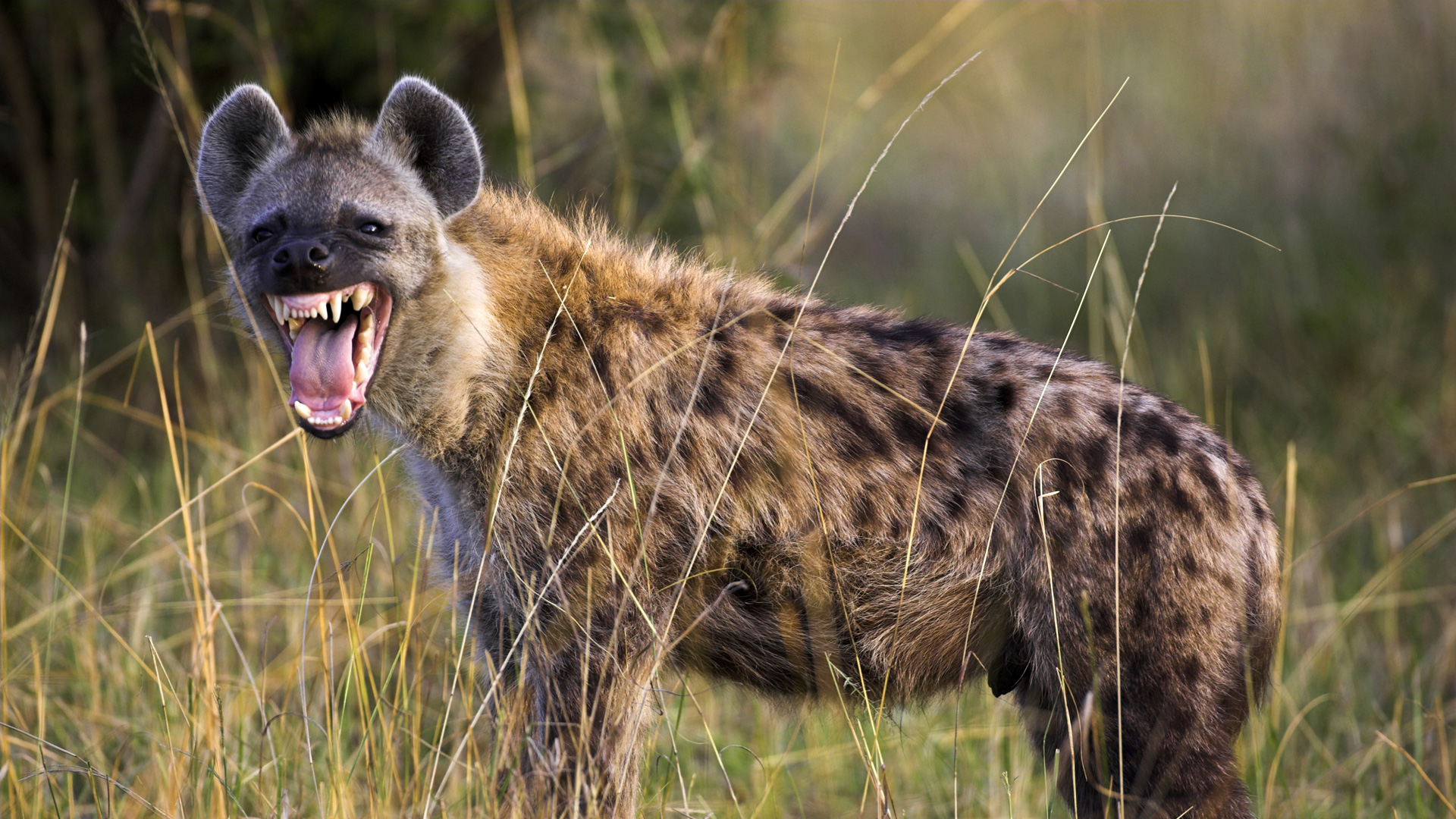
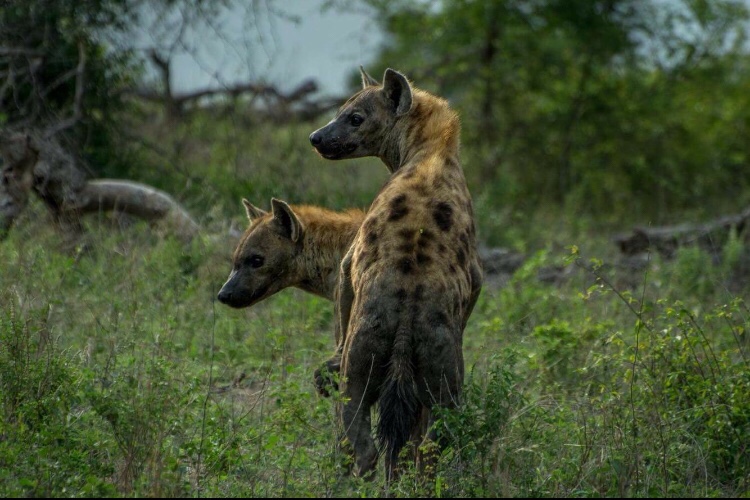
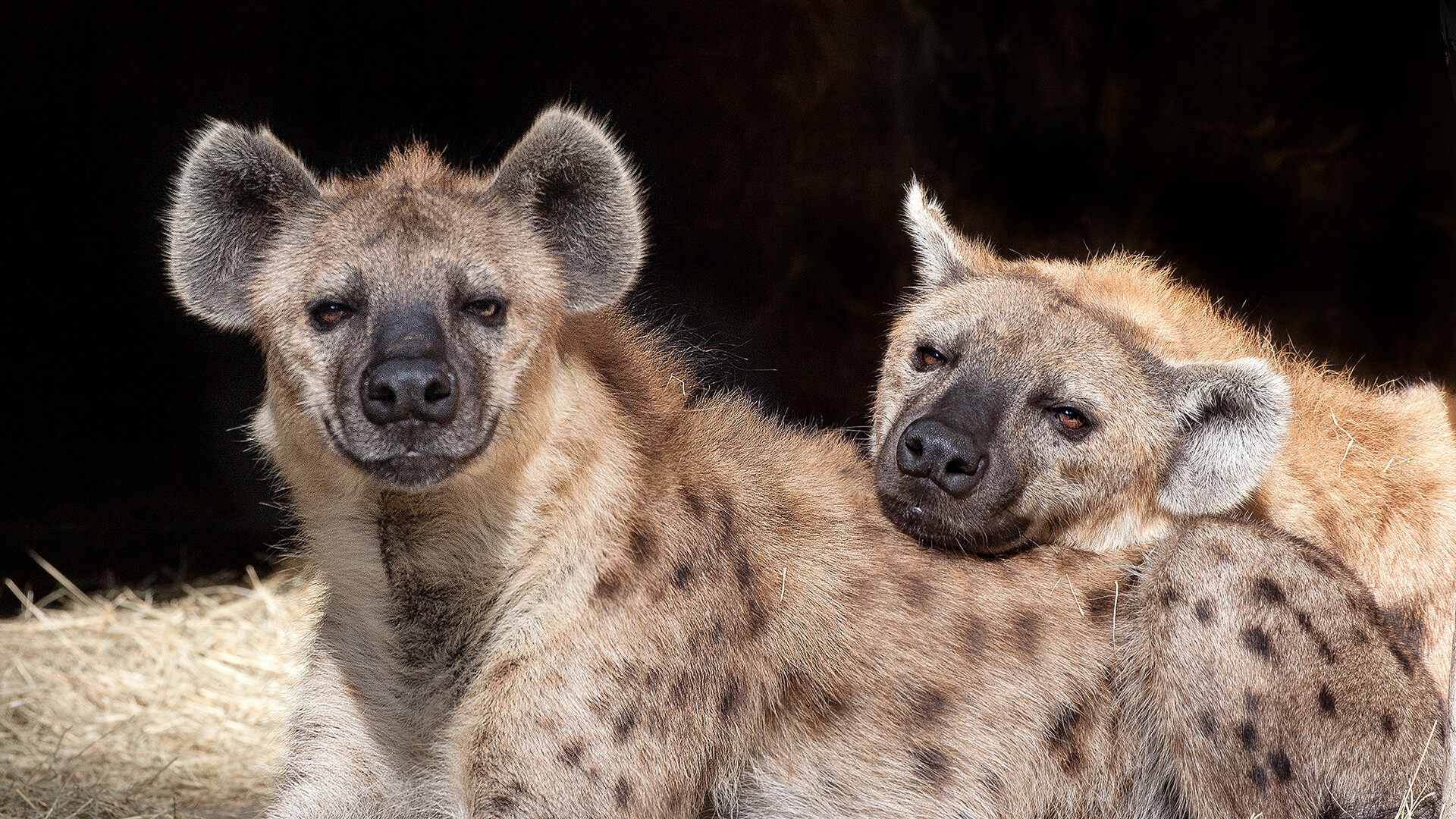
The Spotted Hyena Behaviour
Spotted Hyenas live in clans that can range from a few individuals to several dozen, depending on food and space. These clans have complex social structures led by females. You may see a group resting by a den in the morning, adults stretched out, pups playing, some individuals always alert. From your seat, it feels surprisingly similar to watching a busy, slightly chaotic family yard.
Females hold higher rank than males, and rank influences who eats first and who must wait. At a carcass, you might see a smaller high-ranking female push a larger male away from the best spots. Growls, flattened ears, raised tails, and quick bites enforce the order. It can look rough, but it keeps the group functioning without endless full fights.
Communication is rich. Spotted Hyenas produce a range of sounds, including whoops that carry far at night, giggles that signal tension or panic, low grunts, and soft contact calls near the den. They also rely on scent marking and body language. A single whoop drifting across a dark valley can tell other hyenas more than you will ever decode, yet you still feel something when you hear it.
Although many people think of them mainly as scavengers, Spotted Hyenas are also skilled hunters. Clans coordinate to run down antelope or even larger prey, using endurance and teamwork rather than quick ambush. You might see them fan out over plains at night, move with steady pace, then converge when one animal bolts. The hunt is less about elegance and more about persistence.
The Spotted Hyena Diet
The Spotted Hyena diet includes scavenged and hunted food. They feed on carcasses left by lions, leopards, and other predators, yet they also kill their own prey, especially in areas with strong hyena numbers. Medium sized antelope, young buffalo, zebra, and even smaller animals all appear on the menu when opportunity arises.
Their jaws and teeth are powerful enough to crush large bones. This allows them to eat parts of a carcass many other animals cannot use. They consume meat, cartilage, and bone, digesting material that would otherwise lie and rot. When you see a Spotted Hyena chewing calmly on a leg bone, grinding it down, you are watching a highly efficient recycling unit at work.
Hyenas also take smaller items when needed, including hares, birds, and even insects or discarded human waste near settlements. They adapt quickly to changes in the landscape, following food wherever it appears. For you as a visitor, this means they can show up almost anywhere, from wide plains to lodge edges, always searching for the next meal.
The Spotted Hyena Reproduction
Reproduction in Spotted Hyenas sits inside their matriarchal social system. High ranking females have better access to food, which supports pregnancy and lactation. Mating can be complex and sometimes tense, with females holding more control over which males succeed. You rarely see this part clearly from a vehicle, yet its results shape every den you visit.
Gestation lasts around three to four months, ending in the birth of usually two cubs in an underground den or rock cavity. The birth site is often away from the main feeding areas, in a spot with multiple tunnels and exits. Newborn cubs are dark, with eyes open and small teeth already present. Sibling rivalry can start very early, long before you ever see them above ground.
Females nurse the cubs for many months, and clan members may share some roles around the den, such as guarding and watchfulness. When cubs are old enough to appear outside, you see them explore the entrance area, chewing on sticks, climbing over adults, and retreating at any sudden alarm. That ring of worn soil around the den mouth becomes the classroom and playground where they practice being future clan members.
Recommended Safaris


8 Days
Private
8 Days River Nile, Murchison Falls & Kidepo Wilderness Safari
from
$ 2400
per person
11 Days
Private
11 days Uganda Premium Gorilla, Wildlife & River Nile Adventure
from
$ 2900
per personThe Spotted Hyena FAQs
Why do they laugh?
The “laugh” is a high, giggling call linked to stress, excitement, or conflict, not comedy. It often appears around food or tense social moments within the clan.
Are they only scavengers?
No. Spotted Hyenas hunt a significant part of their food, especially in strong populations. They use endurance and cooperation, often running prey to exhaustion before pulling it down.
Are they dangerous to people?
In wild parks, hyenas usually avoid humans and vehicles, especially in daylight. Risk rises near unprotected camps, rubbish, or habituated animals, which is why guides manage camp behaviour carefully.
When is the best time to see them?
Night drives and early mornings give the strongest chances. Hyenas are active before dawn and after sunset, patrolling roads, visiting carcasses, and socialising near their dens.
Where can I see them?
You can meet Spotted Hyenas in Serengeti, Maasai Mara, Kruger, Chobe, Etosha, Hwange, South Luangwa, Murchison Falls, Queen Elizabeth, and many other savanna parks across Africa.
Why do they follow lions?
Hyenas follow lions to steal leftovers or even challenge them at carcasses. That rivalry goes both ways, with lions sometimes killing hyenas and hyenas sometimes driving lions off.
How long do they live?
In the wild, many reach around twelve years if they avoid serious injury and manage clan politics. In protected conditions, some live longer because risks reduce.
What makes them important?
Spotted Hyenas recycle carcasses, hunt, and control herbivore numbers. They also influence lion and leopard behaviour through competition, shaping how predators share space and food.
Conclusion
Spending time with Spotted Hyenas changes how you see the word “scavenger.” You begin with an idea of sneaky thieves. You leave with a picture of complex, resilient animals that hold many parts of the system together. At a carcass they look fierce, at a den they look almost tender, and both sides belong to the same life.
For a traveler who grew up with simple predator stories, that mix can feel quietly powerful. You watch hyenas chew bones under a red sky, pups test their courage at the den, and a single animal trot along a road before dawn. Somewhere in those scenes, the villain image fades.
Don’t wait,
book this adventure safari today
Low season
Oct, Nov, Mar, Apr, may
Peak season
Jun, July, Aug, Sept, Dec

Got any questions
about traveling to Uganda?
Get in touch.
