

Select Page
Ruppell’s vulture: Facts, Classification, Reproduction, Habitat, Diet and More
Ruppell’s Vulture Introduction
Your first sight of a Ruppell’s vulture often begins high above your head, long before you notice any lions or carcasses. You see a dark shape circling in a pale sky, then another, then a loose spiral of wings slowly tightening over one point on the plains. For a few seconds you forget everything on the ground and follow that wheel of life above you.
If you are used to small city birds, Ruppell’s vulture feels almost unreal when you finally see one up close. The neck looks pale and stretched, the wings long and perfectly built for gliding, the eyes sharp in a quiet, serious face. It stands on the edge of a carcass or on a rock ledge, watching, waiting, choosing exactly when to move in. Nothing about it feels rushed, even when the scene around it looks chaotic.
What makes Ruppell’s vulture so unique is the strange mix of harsh work and essential service. This bird steps into death and keeps the system clean. While most visitors focus on predators that cause the kill, Ruppell’s vultures arrive to finish the story. You watch them sink their heads into places you would rather not think about, and at the same time you know they are stopping disease, removing rot and making space for new grass and new herds.
Many travelers remember one particular moment with these birds. Maybe it was a circle of vultures dropping, one by one, toward a wildebeest that did not survive the crossing. Maybe it was a cliff face at sunset, lined with dark shapes settling for the night. Or maybe it was that slow glide at impossible height, a single bird riding invisible air more smoothly than any aircraft you have ever seen.
Recommended Safaris

14 Days
Private
14-Day Uganda, Congo & Rwanda Gorilla Trekking & Wildlife Safari
from
$ 4900
per person
Where to See Ruppell’s Vulture
Ruppell’s vultures live across parts of East and Central Africa, especially where large herds still move and rocky cliffs or escarpments provide safe nesting sites. You usually meet them above savannas, then later on the ground near big carcasses.
- Serengeti National Park, Tanzania
Over the Serengeti plains, Ruppell’s vultures circle above wildebeest herds, then drop in tight spirals when a kill happens. You often see them sharing carcasses with other vulture species and spotted hyenas. - Ngorongoro Conservation Area, Tanzania
Along the crater rim and surrounding highlands, they nest on cliffs, then glide out over the crater floor to search for carcasses. From viewpoints, you sometimes see them almost at eye level as they ride updrafts. - Maasai Mara National Reserve, Kenya
In the Mara, they patrol river crossings and open grass, appearing quickly whenever a kill happens. On calm afternoons you can watch them rise in thermal columns, turning into dark dots against high clouds. - Mara and Rift escarpments, Kenya and Tanzania
The steep walls of the Great Rift Valley and nearby cliffs give safe nesting sites. While driving below, you may notice long lines of vultures drifting between nest ledges and feeding grounds. - Ruaha and other big Tanzanian savannas
In wilder parks like Ruaha, Ruppell’s vultures share space with lions and wild dogs, gliding over dry riverbeds and rocky hills while scanning for the smallest sign of a carcass or injured animal. - Laikipia and northern Kenya conservancies
In mixed ranch and wildlife areas, you see them circling above cattle and wildlife carcasses. They sit on distant red rocks and pylons, then launch into long glides over open bush. - Kidepo and Karamoja region, Uganda
Over Kidepo’s dramatic valleys and hills, Ruppell’s vultures follow lions and other predators, using thermals rising from hot rock to gain height quickly in the middle of the day.
When you travel through these regions, your best chance is to keep one eye on the ground and one eye on the sky. A sudden gathering of circling vultures often tells a story your guide will want to follow.
Ruppell’s Vulture Classifications
Class: Aves
Order: Accipitriformes
Family: Accipitridae
Genus: Gyps
Species: Gyps rueppelli
The Rüppells Vulture Gallery
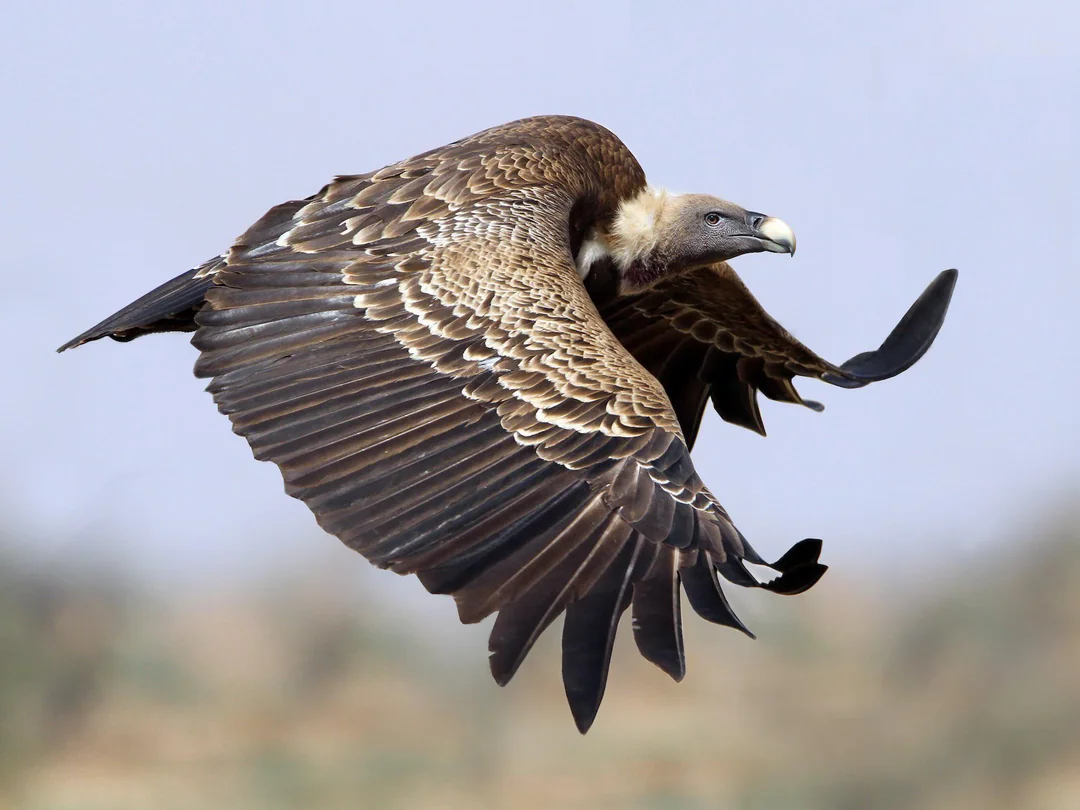

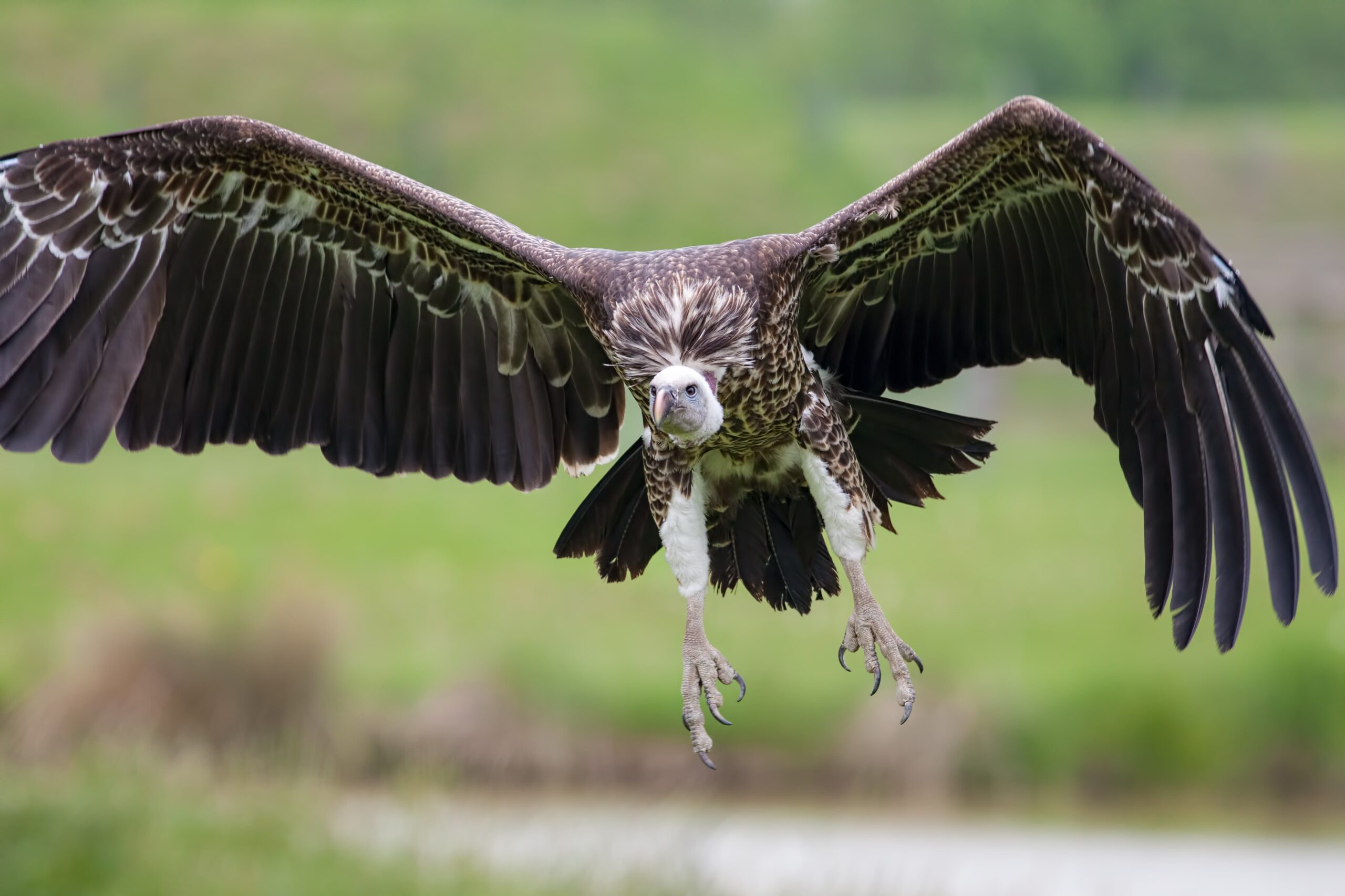
Ruppell’s Vulture’s Behaviour
If you sit quietly near a carcass and watch Ruppell’s vultures instead of only the lions or hyenas, you begin to see a very structured social behaviour. They rarely rush in first. Often, they wait at a distance while predators feed, perching on nearby rocks or standing in pale grass with wings partly open to catch the sun. Their eyes never leave the carcass, and each small shift in hyena or lion behaviour passes through the group like a silent message.
Ruppell’s vultures are highly social. They feed, roost and travel in groups, thinking in shared movements more than lonely missions. At a carcass, there is a clear pecking order. Larger, more confident birds push toward the centre, while younger or weaker individuals work on the edges, picking scraps and watching for small moments when space opens nearer the best pieces. From a distance the scene can look wild. When you look closer, you notice patterns, hesitations and quick negotiations in every wing flick and head movement.
Communication happens through body language, grunts, hisses and position. A raised wing, a sudden lunge or a sharp snap of the beak sends a strong message to neighbours. They jostle and complain, yet they rarely waste energy on full fights when there is still food available. Along cliffs and roosting sites, calls sound rough and harsh, not melodious, yet each sound keeps spacing and order in place. You sense that in a world built around scarce, unpredictable meals, information matters as much as beak strength.
In the air, behaviour shifts from rough competition to a kind of shared calm. Ruppell’s vultures use thermals with great skill, circling silently upward in rising warm air. They rarely flap once in a full loop, letting air do most of the work. Sometimes you see several species in the same spiral, yet Ruppell’s vultures often climb higher, pushing toward altitudes that would leave many birds gasping. Up there, they scan huge areas in slow, overlapping sweeps, trusting their eyes and experience to turn distance into dinner.
Ruppell’s Vulture’s Diet
Ruppell’s vultures are strict scavengers, focused almost entirely on carrion. They do not normally kill large healthy animals. Instead, they depend on carcasses from predators, disease, accidents and natural deaths. When a lion pride brings down a wildebeest or buffalo, these vultures are part of the clean-up team that arrives later. They feed on muscles, organs and any tissue still left once stronger jaws have broken the skin open.
Their strong bills cut through tough hide and sinew, while their long necks reach deep into body cavities. It is not a gentle sight, yet it is a necessary one. Without vultures, carcasses would rot slower in the sun, drawing flies, spreading disease and fouling water sources. By eating fast and in large numbers, Ruppell’s vultures help stop dangerous bacteria and toxins from moving through the system. You might feel uneasy watching them, but the grass, water and other animals benefit.
They rely on sight rather than smell to find food. From great height, they watch the behaviour of other vultures, carnivores and even herds. A small group dropping from a thermal or a strange pattern of movement near a river can trigger a response. Soon more vultures join, each bird reading the others. Sometimes they arrive to find only bones and dry skin. Sometimes they reach a carcass at the perfect moment and feed until their crops bulge, then launch back toward cliffs with heavy, satisfied wingbeats.
Ruppell’s Vulture’s Reproduction
Reproduction in Ruppell’s vultures centres on cliff colonies. They prefer steep, inaccessible rock faces, often on escarpments and highlands where predators and people struggle to reach nests. There, pairs choose ledges and small recesses, building simple nests from sticks and bits of vegetation. From a distance, the cliffs look like rough walls. When you look longer, you notice white streaks, dark shapes and small movements that reveal many lives stacked above each other.
Pairs form strong bonds. They often return to the same nesting area year after year, reinforcing their connection with calls, mutual preening and shared nest duties. Courtship flights involve tight circles, swoops and glides near the cliffs, as if they need to test their teamwork in the air as well as on the rock. The displays are not flashy in colour, yet they feel full of meaning when you watch them with the bigger picture in mind.
The female lays a single egg. Both parents share incubation, taking turns on the nest while the other bird feeds. This shared duty matters, because good carcasses may not appear close to the colony every day. One bird may travel long distances for a heavy meal, then return to relieve the partner. After hatching, the chick stays in the nest, covered in down, utterly dependent on regurgitated food. Adults stand nearby, watching for eagles and other threats, and keeping their awkward youngster safe on a narrow ledge.
Growth is slow compared with many smaller birds. The chick spends weeks on the ledge, gradually replacing down with feathers, stretching wings and learning balance. First short flights to nearby ledges follow, then longer journeys along the cliff, until finally the young vulture follows adults into thermals. That first proper glide away from the nesting wall might not look dramatic from far below, yet it marks the moment another cleaner joins the endless work above the savanna.
Recommended Safaris

11 Days
Private
11 days Uganda Premium Gorilla, Wildlife & River Nile Adventure
from
$ 2900
per person
14 Days
Private
14-Day Uganda, Congo & Rwanda Gorilla Trekking & Wildlife Safari
from
$ 4900
per personRuppell’s Vulture FAQs
Are Ruppell’s vultures dangerous to people?
Healthy people are not their normal focus. Ruppell’s vultures want carcasses, not walking tourists. On safari, you usually see them near kills or high above, with safe distance in between.
Real problems for people come more from poisoned carcasses placed for predators. These poisons kill vultures in large numbers, which later affects the health of the whole ecosystem.
Why do Ruppell’s vultures circle in the sky?
They use rising warm air to gain height. By circling inside these thermals, they climb with minimal effort, then glide long distances while searching for potential food.
The circling also acts like a signal. When one bird finds a promising area, others see the spiral and join. Soon a loose gathering forms above a possible carcass.
How can I tell Ruppell’s vultures from other vultures?
Look for mottled brown and cream body plumage, a pale head, and a slightly shaggy collar. Compared with white-backed vultures, they often look darker and a bit heavier.
In flight, their wings show pale underwing coverts with darker flight feathers, and they sometimes climb higher than others. Guides often help by pointing out key features beside similar species.
Where are the best places to see Ruppell’s vultures?
Cliff areas near big savannas give strong chances, such as Serengeti, Ngorongoro, Maasai Mara and Rift escarpments where they nest and then feed across wide plains.
You also see them over big rivers and open country with plenty of large herbivores. Watching the sky during midday can reveal their soaring shapes long before you find a kill.
Do Ruppell’s vultures help or harm other wildlife?
They help more than many visitors realise. By stripping carcasses quickly, they reduce disease risk for predators, scavengers and herbivores that share the same grass and water.
Their presence also shapes behaviour around carcasses, since predators know that once vultures gather, time is short. That pressure encourages faster feeding and quicker movement away.
Why are Ruppell’s vultures considered threatened?
Poisoned carcasses, collisions with power lines, habitat loss and declining wild herds have reduced their numbers. Even a single poisoned carcass can kill dozens of vultures at once.
Their slow breeding makes recovery harder. One egg and one chick per pair, per season, cannot replace losses quickly when multiple colonies face regular poisoning events.
Do Ruppell’s vultures always wait for predators to finish feeding?
Not always. If lions or hyenas leave or are absent, vultures may move in sooner, especially when carcasses are unguarded or predators are clearly full and resting nearby.
In more pressured situations, they hover at a distance, edging closer in small steps. A single lion lifting its head can send many birds hopping back in a wave.
What should I watch for when I see Ruppell’s vultures at a carcass?
Notice how they approach in stages, how different individuals hold ground, and how quickly order changes when a new large bird arrives or a predator shifts position.
Pay attention to the silence and the noise. There are moments of sudden chaos, then periods where everyone pauses, watches, and waits for the next chance to feed.
Conclusion
Spending time with Ruppell’s vultures changes how you feel about death on the savanna. A carcass stops being only a sad or harsh scene and becomes part of a wider, necessary cycle. You see that every wildebeest or zebra that falls feeds many more lives than the first predator that brought it down.
For a traveler who arrives hoping only for big cats and dramatic chases, these vultures become quiet teachers. You remember a sky filled with circling wings, a cliff lined with resting shapes, or a single bird rising higher and higher on invisible air. You remember that strange mix of discomfort and respect you felt watching them clean bones that might have rotted for weeks.
Don’t wait,
book this adventure safari today
Low season
Oct, Nov, Mar, Apr, may
Peak season
Jun, July, Aug, Sept, Dec

Got any questions
about traveling to Uganda?
Get in touch.
