

Select Page
Blue Monkey, Lifespan, Reproduction, Diet, Habitat and more
Blue Monkey, Facts, Lifespan, Size, Strength, Habitat, diet and More
You step into a cool strip of forest and hear a light shower of leaves. A shape pauses above you, eyes bright, a pale brow like a small crown. The blue monkey stares back, then moves with measured grace, tail balanced like a tightrope pole. You hold your breath without meaning to. It is close enough to watch you blink.
Another branch dips, then the canopy settles. You realize the troop already mapped you, decided you are boring, and went back to figs. That small shrug from the trees feels personal. A minute ago you were a tourist, now you are part of their morning, a background extra who wandered onto the set.
There is nothing loud about this sighting. No sprint, no chase, no dust. Your reward is detail. A quick hand, a soft cough, the quiet fall of fruit skins, the way light hits the pale brow and turns it into a signal. The blue monkey is easy to miss until it is the only thing you can see.
Classifications of Blue Monkeys
- Class: Mammalia
- Order: Primates
- Family: Cercopithecidae
- Genus: Cercopithecus
- Species: Cercopithecus mitis
- Common names: Blue monkey, diademed monkey
Blue Monkey Behaviour
You will notice that groups move like careful teams. Females with young sit near the center, an adult male works the edges, and subadults patrol loose gaps. Progress is measured, never rushed. A branch, a pause, a glance, then another branch. The rhythm looks simple from below, though every step is a calculation that keeps bodies safe above open ground.
Communication travels through leaves long before you spot a face. A short bark freezes the troop, a series of softer notes pulls them back into motion. Tail flicks and head turns carry meaning too. If a crowned eagle crosses high sky, you will see heads tilt as one. The forest holds its breath. Then life returns in a small wave. It feels like someone pressed pause, then pressed play.
Social ties show in quiet ways. Grooming lines form on warm perches, hands neat and busy. Juveniles wrestle, then sit shoulder to shoulder and stare at you with frank interest, as if you might pass a test or fail one. Tensions flare now and then. A quick rush, a chased youngster, a scolded adult. Nothing dramatic, though the message lands. This is a community, and communities have rules.
Travel patterns ride food and season. When figs are heavy, the troop stays on a single tree for a long stretch. In lean pockets they range farther, sifting leaves and flowers, testing pods, pausing at streams for new growth. You may walk a trail for an hour, hear them ahead the whole time, and never quite catch up. That is part of the game.
Recommended Safaris

14 Days
Private
14-Day Uganda, Congo & Rwanda Gorilla Trekking & Wildlife Safari
from
$ 4900
per person
Blue Monkey Diet
Fruit sets the day. Figs lead, then berries, drupes, and seasonal fruiting events that flip a troop from one corridor to the next. When fruit dips, blue monkeys switch to young leaves and flowers, then seeds and pods that ask more from their gut. Insects fill gaps, beetles and caterpillars, plus an occasional small vertebrate taken with quick precision. Watch the hand work on a ripe fig, one clean pull, a fast bite, then small scraps falling to ground birds that shadow the tree like polite janitors.
Reproduction Of Blue Monkeys
Breeding often tracks local rains, since food pulses make parenting easier. A single infant arrives after about five months. Newborns cling to the belly, faces pushed into fur while the mother moves with the troop. Weeks later you will see a back rider, ears tall and eyes brave. Females remain in their birth group across years, building that web of aunts and cousins that keeps infants safe. Males usually leave as they mature and try their luck in new ranges. Older females sometimes carry, groom, or babysit an infant that is not their own for a short spell, which reads like practice and community insurance at the same time.
Identification, quick cues you can trust
- Dark face with a pale, yellowish brow patch that looks like a small diadem.
- Olive to grey coat with lighter underparts, tone varies by region.
- Neat white moustache beside the nose.
- Long tail for balance, not for gripping.
- Large, steady eyes and quiet feet, all built for closed canopy.
Fast reference table
| Feature | What you notice |
| Size | Body 50–65 cm, tail near body length |
| Weight | Females a little over 4 kg, males up to about 8 kg |
| Build | Medium primate, lean and agile |
| Group type | Multi-female groups, typically one adult male at the core |
| Prime habitat | Moist lowland to montane forest, bamboo and fig corridors |
| Best windows | Drier months for trails, first light for feeding trees |
Blue monkey Gallery
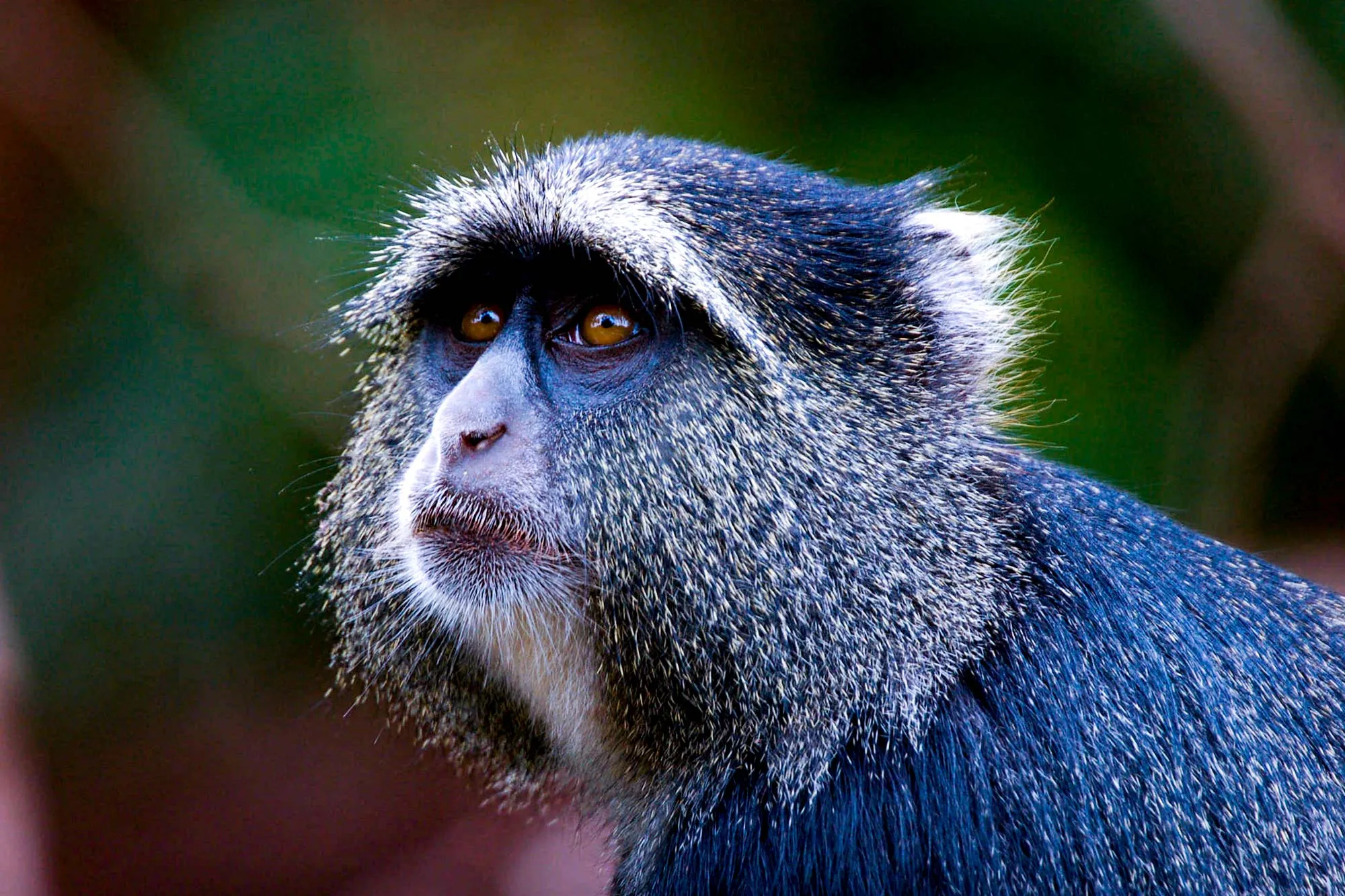
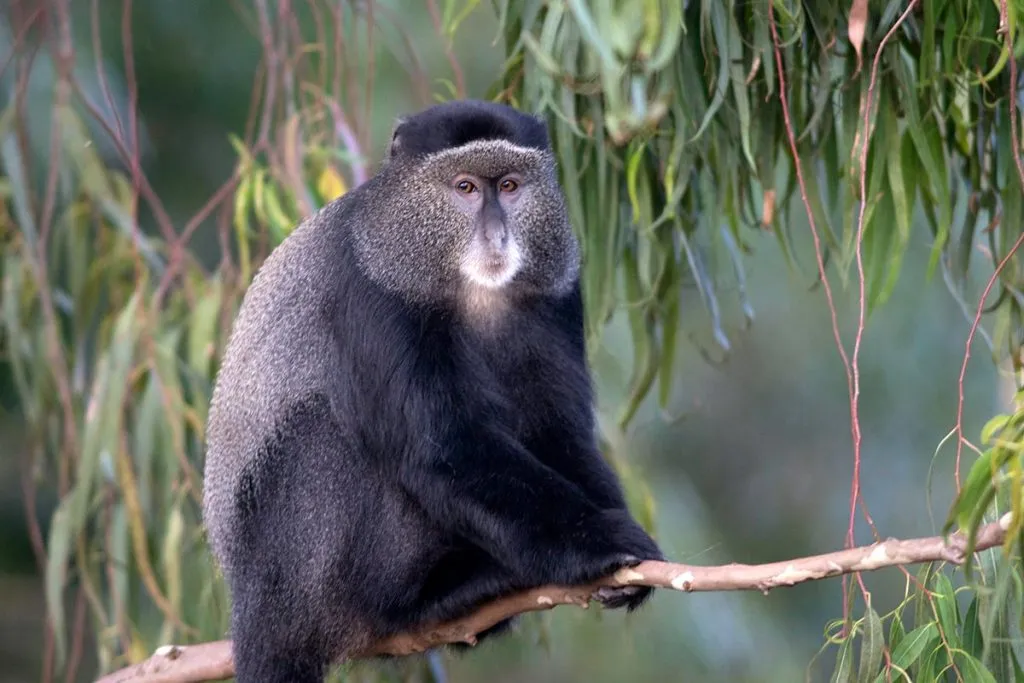
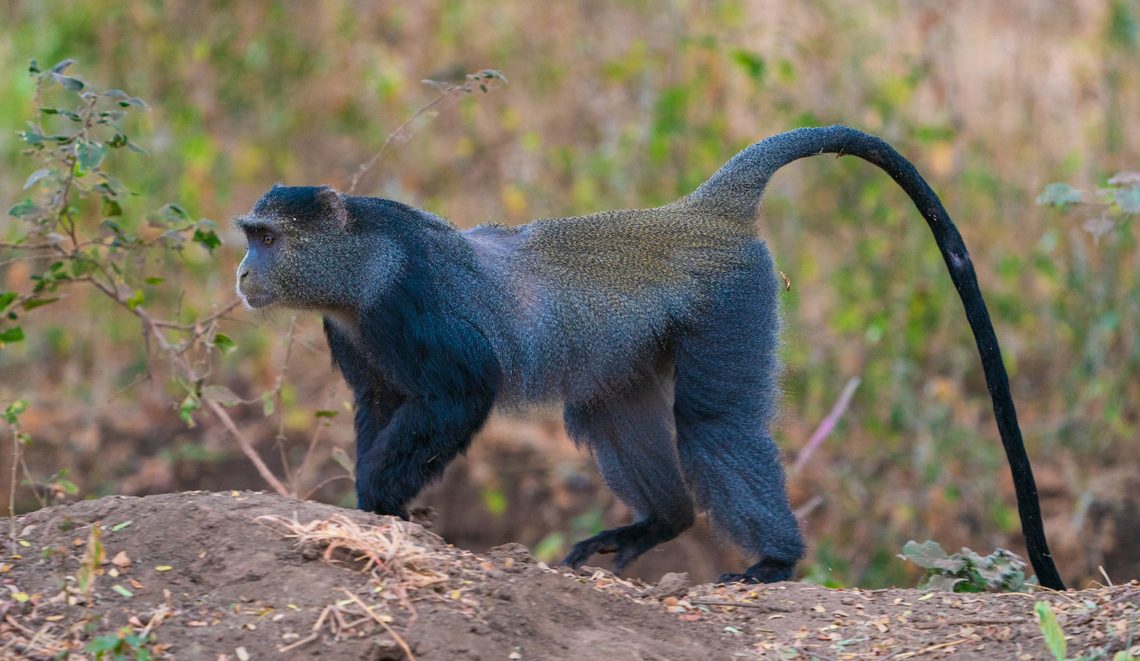
Where to find the
- Uganda, Kibale, Budongo, Maramagambo, Semuliki, Bwindi edges, Mabira, Mount Elgon
- Tanzania, lower Kilimanjaro Forest, Mount Meru, Lake Manyara
- Kenya, Mount Kenya forest belt, Kakamega
- Rwanda and Burundi, forest belts linked to Congo basin edges
- DR Congo, upper Congo basin forests
- Northern Zambia and northern Angola, suitable moist forest patches
Dry months give you simpler trails and steady viewing. Right after local rains, fruit spikes on certain trees and troops hold a single crown longer, which helps your photos.
How a sighting feels from the trail
You stop under a fig and hear a light rain of debris. A juvenile drops upside down, snatches the fruit you were tracking, and stares with serious eyebrows, like a tiny coach judging your footwork. An adult slide along a limb with one hand on bark and one eye on you, then goes right back to work. The troop accepts you, then forgets you. That is the finest compliment a wild animal can give.
Your guide whispers and points to a gap in the leaves. A pale brow glows for a second, then vanishes. You catch yourself smiling at a branch. Later, at the camp sink, a few seeds fall from your sleeve. You kept souvenirs without meaning to.
Field tips you can use today
- Start at first light and check fruiting figs along edges and streams.
- Listen for soft leaf falls. Follow sound rather than guesswork.
- Count tails. One tail means more tails. Do not rush away after a single sighting.
- For photos, meter for dark fur, lock focus on the eye and brow line, then wait for the turn of the head.
- Keep voices low and snacks sealed. Respect buys you time.
Examples you can picture
- A family of four on a short walk near Kibale gates, two kids whispering questions while a juvenile blue monkey steals a fig right above them and drops a peel on the path like a tiny prank.
- A solo traveler in Kilimanjaro’s lower forest, camera ready, waiting fifteen minutes under one tree and getting three clean portraits rather than thirty rushed shots of empty branches.
- A couple in Budongo’s Royal Mile, watching a grooming line form on a warm perch, learning that patience often pays more than distance covered.
- A small group in Kakamega, eyes up and ears open, following leaf sounds to a quiet troop, then stepping back when an alarm bark rolls across the canopy.
Ethical viewing
Do not feed. Human food changes behavior and harms health. Stay on marked trails, since roots and soil hold these paths together. Give infants space and move on after a short look. Ask your guide about current fruiting trees instead of pushing closer through off-trail shortcuts. Good forest etiquette buys you trust and time.
Recommended Safaris

8 Days
Private
8 Days River Nile, Murchison Falls & Kidepo Wilderness Safari
from
$ 2400
per person
11 Days
Private
11 days Uganda Premium Gorilla, Wildlife & River Nile Adventure
from
$ 2900
per person
5 Days
Private
5 Day Rwanda Gorilla Trekking with Musanze Caves Exploration
from
$ 3299
per personTop 8 Blue Monkey FAQs
Where can you see blue monkeys on a first trip to Africa?
Start with Kilimanjaro’s lower forest, Lake Manyara, or Mount Meru in Tanzania. In Uganda, try Kibale and Budongo. In Kenya, Mount Kenya and Kakamega work well. Ask your guide about current fruiting figs.
What time of day gives you the best chance?
Early morning. Troops feed at first light and hold a single tree for long stretches. Late afternoon can be good if figs are heavy and the air is calm.
How do you identify a blue monkey quickly?
Look for the dark face with a pale brow patch, the diadem. Note the olive grey coat, long balancing tail, and the neat white moustache beside the nose. Movements are quiet and precise high in the canopy.
Are blue monkeys dangerous to people?
Wild groups avoid close contact. Problems start when people feed them or crowd infants. Keep snacks sealed, move slowly, and give the troop space. You will get better views and natural behavior.
What do blue monkeys eat, and can you see it clearly?
Fruit leads the menu, especially figs. They add young leaves, flowers, seeds, insects, and the occasional small vertebrate. Stand under a fruiting tree and watch small scraps fall while hands work fast above you.
How do they communicate in dense forest?
Short barks for alarms, softer notes for contact, plus tail flicks and head turns. When a raptor passes, heads tilt up in unison and the whole canopy pauses. Then a quiet restart rolls through the leaves.
What should you bring for a clean sighting and good photos?
Light binoculars, a camera with a fast lens, and quiet shoes. Meter for dark fur and focus on the eye. Pick one fruiting tree and wait. Patience often beats distance covered.
Are blue monkeys important to the forest?
Yes. They move seeds far from parent trees, which helps new growth. Your sighting is part of a bigger story, fruit in, seeds out, forest renewed in small steps you may only notice months later.
Conclusion
You came for big scenes and found a small one that stayed with you longer. The blue monkey does not perform for crowds. It carries on with its day while you learn to stand still, listen for soft debris, and read a brow that glows when the light hits it right. That might be the point. You get a careful, unhurried lesson in how a forest works when you are quiet enough to be ignored.
If you want a plan that suits your dates and your pace, say where you are heading and how much time you have. I will map a clean route with reliable fig corridors, a few patient stops, and ethical viewing built in. Bring your curiosity. The canopy already has the rest.
Don’t wait,
book this adventure safari today
Low season
Oct, Nov, Mar, Apr, may
Peak season
Jun, July, Aug, Sept, Dec

Got any questions
about traveling to Uganda?
Get in touch.
