Top 8 FAQs
How many days do you need for the Rwenzori?
For a full summit attempt on Margherita, plan 7 to 9 days including a weather buffer. For a high-valley trek with lakes and giant lobelia zones, 3 to 5 days works well.
Which route should you choose, Central Circuit or Kilembe?
Central Circuit is the classic loop with historic huts and a direct line to Margherita. Kilembe offers long valley views, more boardwalk, and strong options for Baker or Weismann’s. Both reach the same high basin. Choose by schedule, hut style, and your operator’s strengths.
Do you need technical gear for Margherita Peak?
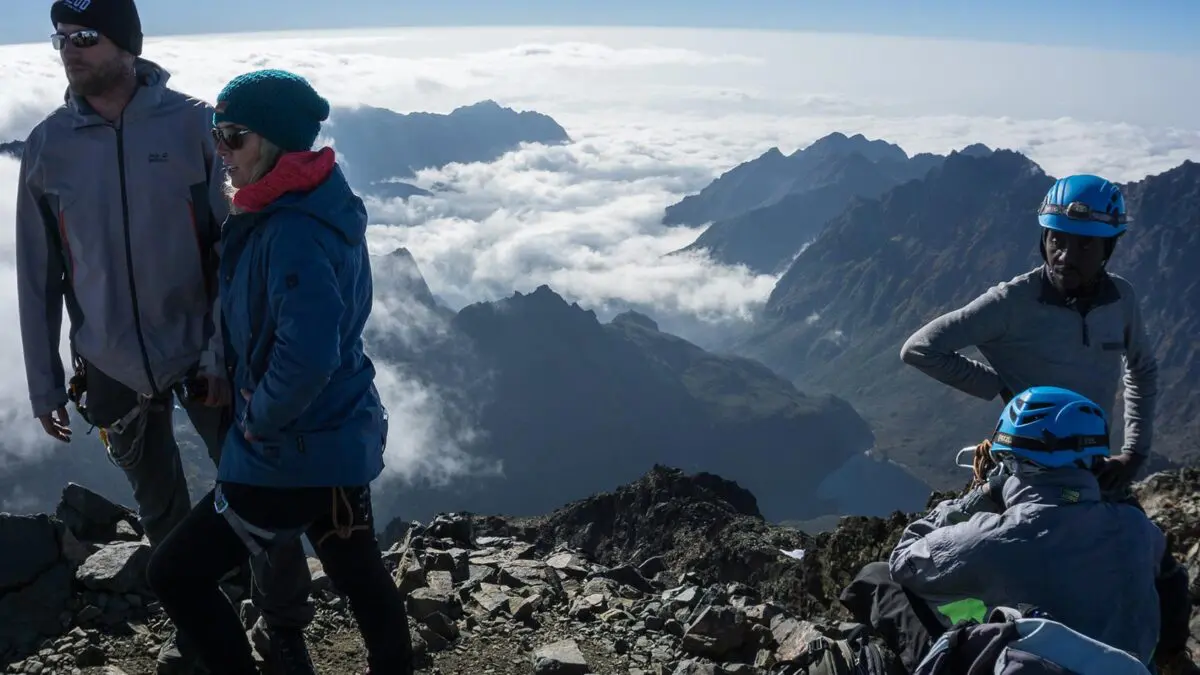
Yes for current conditions. Expect rope, harness, helmet, crampons, and an ice axe when ice is present. Your guide supplies group gear. If ice is thin or rock sections dominate, plans adapt on the day.
How hard is the terrain really?
Harder than a dry mountain of the same height. Bog sections, ladders, wet rock, and long days make it serious. With guides, porters, and a steady pace, fit hikers manage it well.
What about rain and mud?
Count on both. Even in drier months you will meet wet trail. Boardwalks help, but gaiters, poles, and waterproof layers are your friends. Keep one dry set for huts.
Can you go without aiming for the summit?
Absolutely. Many trekkers hike to Bujuku or Kitandara valleys for giant groundsels, hanging moss, and big views, then loop back. You still get the heart of the range without ropes.
Are there altitude risks?
Yes. The route gains height fast. Guides watch for symptoms. Hydrate, eat, and move slowly. If signs worsen, descend. A flexible plan beats a forced push.
What should you pack that people often forget?
Warm camp shoes, extra gloves, a small quick-dry towel, spare laces, blister kit, and enough dry bags. Add a power bank for headlamp and phone. A hot drink sachet can turn a wet hour into a decent evening.
Conclusion
The Rwenzori Mountains give you green silence, patient climbs, and the kind of light that makes every ridge look like a promise. Go for a summit or stop at the valleys that feel like another planet. Share your dates, your fitness level, and how many days you want on trail. I will shape a clean plan with the right route, huts, gear list, and a pace that lets the range do its work.