

Select Page
Grey crown crane: Facts, Classifications, Habitat, Diet and More
The Grey Crowned Crane Introduction
Your first sight of a Grey Crowned Crane feels a bit like walking into an art gallery. The soft grey body catches your eye, then the golden crown lifts as the bird raises its head. Red and white cheeks, long dark legs, and that floating white wing patch finish the picture before you even reach for your camera.
If you grew up with ducks on city lakes or geese on short grass, the Grey Crowned Crane feels surprisingly elegant. It walks with a slow, measured step, neck slightly curved, as if it is both cautious and quietly pleased with itself. When two birds start to call together, voices deep and musical, you realise this is not a background bird. It is a full character.
During your visit, the one thing you will not forget is the way Grey Crowned Cranes mix grace and normal daily work. One moment they dance, leaping and bowing with wings half open. The next moment they poke calmly in the mud for insects, like any focused farm worker. You sit in the vehicle or stand on a wetland bank and slowly feel your own pace matching theirs.
Many travelers remember their first crane at sunrise. Mist over a swamp, a faint chorus of frogs, then a tall shape appears on a small mound. The crown catches the early light. For a few seconds you stop thinking about anything else.
The Grey Crowned Crane Classifications
Class: Aves
Order: Gruiformes
Family: Gruidae
Genus: Balearica
Species: Balearica regulorum
Recommended Safaris

5 Days
Private
5-Day Kahuzi Biega Congo Gorilla Trekking & Chimp Safari in Rwanda
from
$ 2500
per person
14 Days
Private
14-Day Uganda, Congo & Rwanda Gorilla Trekking & Wildlife Safari
from
$ 4900
per personWhere to See Grey Crowned Cranes
Grey Crowned Cranes live across parts of Eastern and Southern Africa, mainly in wetlands, floodplains and nearby farmland. You often see them where open water, short grass and gentle human activity meet.
Queen Elizabeth National Park, Uganda
Along the Kazinga Channel and on open Kasenyi plains, cranes feed in shallow pools, walking between hippo tracks and cattle footprints while fishing boats move quietly in the distance.
Murchison Falls National Park, Uganda
On the Nile’s calm stretches and surrounding floodplains, pairs and small groups pick through damp grass, sometimes flying low across the river with their legs stretched behind them.
Lake Mburo National Park, Uganda
Around the lakeshores and seasonally flooded valleys, Grey Crowned Cranes share space with zebra and impala, often seen in pairs near small pools where they like to feed and rest.
Akagera National Park, Rwanda
In Akagera’s mosaic of lakes and savanna, cranes stand in shallow water near papyrus, then step out to feed on short grass where antelope graze a few metres away.
Serengeti and Ngorongoro, Tanzania
On wetter plains and around seasonal pans, you find them in loose groups, picking insects from churned soil after Wildebeest and zebra herds pass through.
Tarangire and Manyara, Tanzania
In Tarangire’s floodplains and around Lake Manyara’s shoreline, cranes mix with storks and herons, moving between muddy edges and open patches where they can display and feed.
Maasai Mara and surrounding conservancies, Kenya
In the Mara, Grey Crowned Cranes walk in pairs across swampy patches and damp grasslands, calling in the evening while hot air balloons drift somewhere behind them.
Okavango Delta and Chobe region, Botswana
In the Okavango and around Chobe’s wetlands, cranes feed on floodplain invertebrates, their crowns glowing against bright water and dark hippo paths cutting through the marsh.
Wherever you go, your chances rise when you spend unhurried time near shallow water, floodplains and damp grass, especially in the early morning and late afternoon.
Grey crown cranes Gallery

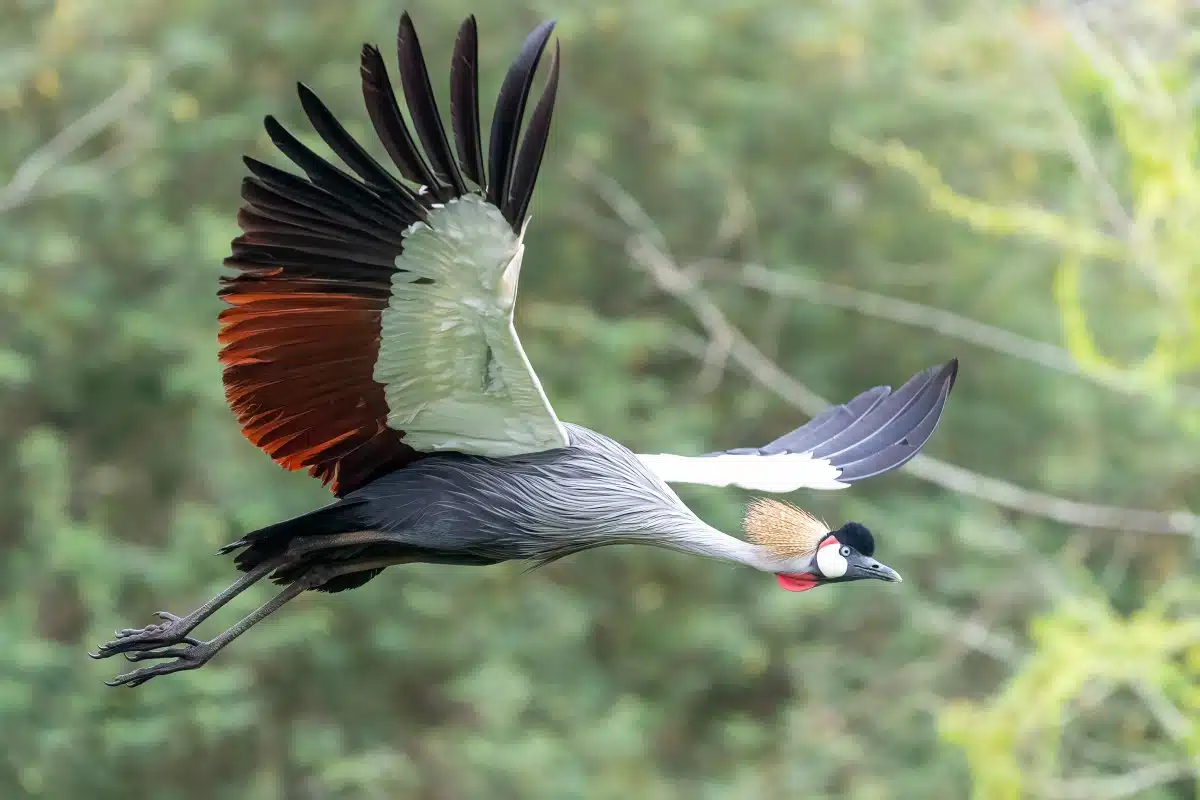
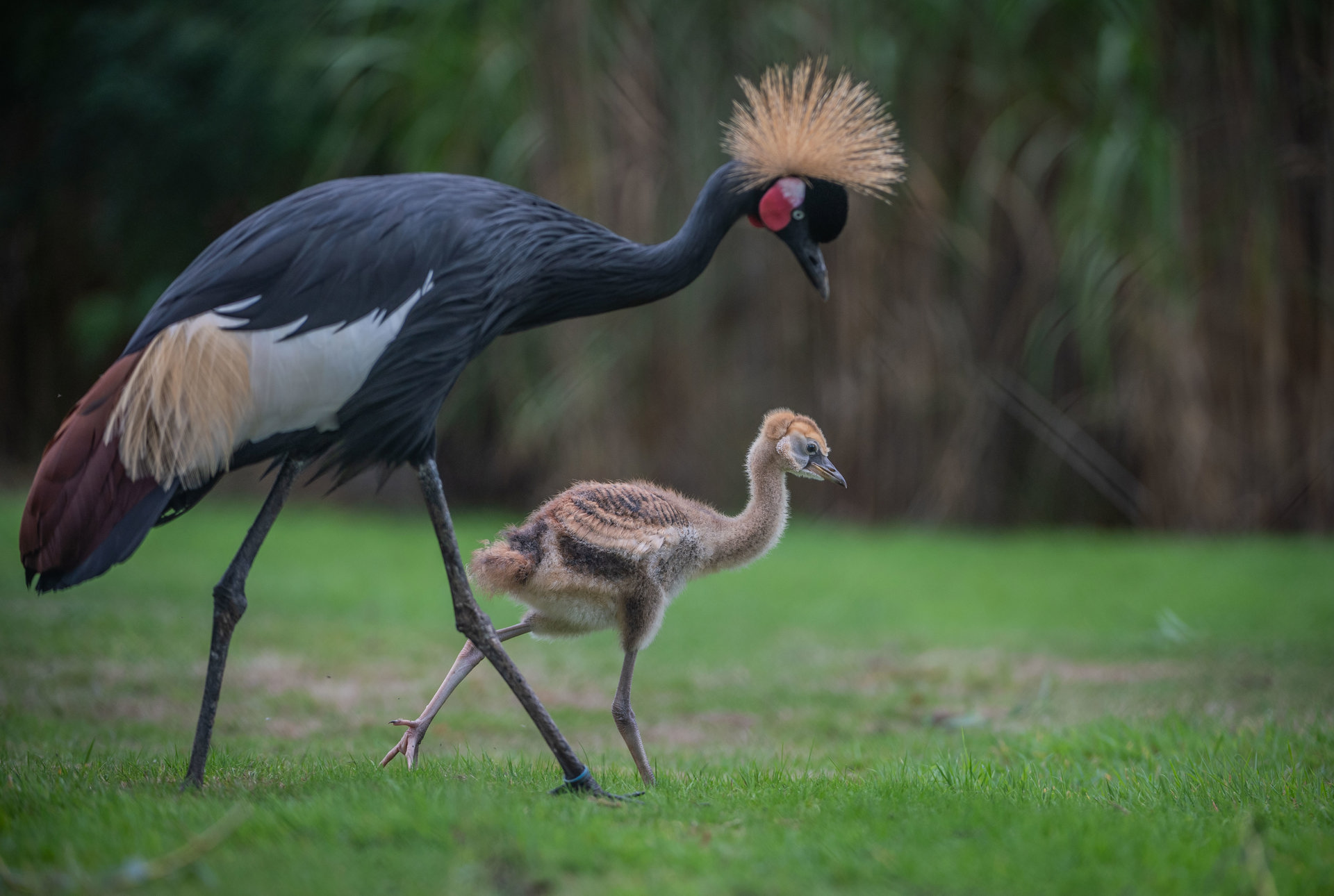
The Grey Crowned Crane Behaviour
If you sit quietly near a wetland with Grey Crowned Cranes, you notice how their behaviour uses space and time carefully. They walk slowly through shallow water, toes spreading with each step to grip soft mud. Heads dip to pick insects, seeds and small creatures, then lift high as the birds scan for danger or new feeding spots. Every movement looks deliberate, as if they refuse to rush any decision.
Socially, they lean toward strong pairs and small family groups. Many birds you see in twos are long term partners that stay together through seasons, nesting and feeding side by side. When they meet other pairs, you sometimes watch a gentle mix of distance, display and calling. They may walk toward each other, bowing, lifting wings slightly, then drift apart again without direct conflict. It feels almost like polite negotiation.
Their most striking behaviour is the dance. During courtship, or sometimes simply when they feel stirred by weather and mood, cranes leap into the air, toss their heads, and half open their wings. They bow toward each other, jump again, and run a short distance before stopping suddenly. Young birds copy these moves in play. Watching a group dancing on damp grass can make you smile without quite knowing why. It feels joyful and slightly mysterious at the same time.
Grey Crowned Cranes roost in trees, which surprises many people. At evening, they fly up to strong branches above water or open ground, using height as protection against predators. Seeing such tall birds balanced on a tree at dusk looks almost improbable, yet they handle it with calm assurance. Their calls, deep and trumpeting, roll out across the darkening plains as families settle for the night.
The Grey Crowned Crane Diet
The Grey Crowned Crane has a broad diet that changes with habitat, season and daily opportunity. In wetlands, they feed on insects, worms, snails and small aquatic creatures found in shallow water and soft mud. You see them probe with their beaks, making short, quick strikes whenever something moves just beneath the surface.
On damp grasslands and farmland edges, they take grass seeds, small grains, insects and other invertebrates exposed by ploughing or grazing. They walk behind cattle or large herbivores, picking at disturbed soil where beetles, larvae and other small animals suddenly become available. For farmers, this can mean helpful pest control, although opinions vary depending on crop and timing.
They also eat small vertebrates such as frogs, lizards and occasionally young rodents when chances appear. Slightly larger items are grabbed, shaken and swallowed whole with a quick tilt of the head. The mix of plant and animal food gives cranes flexibility when one source declines. After heavy rain they may focus more on invertebrates; in drier periods they may rely more on seeds and leftover grain.
The Grey Crowned Crane Reproduction
Reproduction in Grey Crowned Cranes feels closely tied to water and grass. Pairs choose nesting areas in or near wetlands, often where shallow water, reeds and small islands combine safety and access to food. Before nesting, you may see dancing increase, with more frequent calls and stronger pair displays as partners reinforce their bond.
The nest itself is usually a raised platform of grasses and reeds, built in shallow water, marsh or very damp ground. The pair works together, carrying plant material in their beaks, arranging it into a solid, slightly messy mound that rises above the surrounding wetness. From a distance, the nest can look like a small floating island with a tall, watchful bird on top.
Females lay a small clutch, often two or three eggs. Both parents share incubation, taking turns while the other feeds nearby. During this period, they become more cautious, keeping a close eye on predators, people and any animals that stray too close. Their calls around the nest sound sharper and more focused than during normal feeding.
When the chicks hatch, they are covered in soft down and able to move and swim quickly. Parents lead them from the nest to safer feeding areas, guarding them carefully. You might see a tiny chick standing in the shadow of tall legs, pecking clumsily at the ground. For several months the family stays close, with parents guiding and defending the young until they can fly and feed with more confidence.
Recommended Safaris


5 Days
Private
5-Day Kahuzi Biega Congo Gorilla Trekking & Chimp Safari in Rwanda
from
$ 2500
per personThe Grey Crowned Crane FAQs
What makes the Grey Crowned Crane special?
The Grey Crowned Crane combines a striking look with calm, gentle behaviour. That golden crown, grey body and red cheek patch create a shape you recognise instantly.
Then you add the dance, the deep calls and the habit of roosting in trees. Together, these traits give the species a personality many visitors remember clearly.
Where can I see Grey Crowned Cranes in Africa?
You can see them in wetlands and grasslands of Eastern and Southern Africa, especially in Uganda, Rwanda, Kenya, Tanzania, Botswana and parts of southern wetlands.
National parks such as Queen Elizabeth, Murchison Falls, Akagera, Serengeti, Maasai Mara and the Okavango region all give realistic chances when you look in the right places.
Are Grey Crowned Cranes endangered?
Grey Crowned Cranes face pressure from habitat loss, wetland drainage, disturbance and trade in live birds. Their global status reflects concern, not yet total collapse, which still feels serious.
In some regions they remain quite visible. In others they have declined sharply. When you see them on safari, you are looking at a species that needs support, not a guaranteed fixture.
Why do Grey Crowned Cranes dance so much?
Their dance helps with courtship, pair bonding and probably general social communication. Leaps, bows and wing displays reinforce the connection between partners across seasons.
Young birds also dance while playing and learning movement. Even outside breeding periods, a sudden shower or change in weather can trigger short, energetic dance sessions.
What sound does a Grey Crowned Crane make?
Grey Crowned Cranes produce deep, resonant calls that carry far across wetlands. The sound is more of a rolling, trumpeting note than a simple squawk or honk.
When a pair calls together, the voices overlap into a rich duet. Hearing that at sunrise over a swamp can give you a small shiver, in a good way.
Do Grey Crowned Cranes migrate?
They do not usually migrate over huge distances like some geese or storks. Instead, they move more locally, tracking water levels and food across seasons.
In many areas, families remain linked to particular wetlands and surrounding fields, shifting focus between feeding spots as conditions change rather than leaving the region entirely.
Can I keep a Grey Crowned Crane as a pet?
Keeping Grey Crowned Cranes as pets or ornaments removes birds from breeding populations and often leads to poor welfare, especially when wings are clipped or space is limited.
Many countries protect them by law, so capture and trade can be illegal. Encountering them in the wild or in serious conservation settings offers a far better experience.
When is the best time of day to see Grey Crowned Cranes?
Early morning and late afternoon usually work best. At those times cranes feed actively, call more, and often stand in open places with soft, attractive light.
Midday sightings still happen, especially around water, yet heat and glare can make colours flatter and behaviour less active compared with the cooler edges of the day.
Conclusion
Spending time with Grey Crowned Cranes changes how you feel about wetlands. The watery edges of lakes and rivers stop being “in-between space” and start feeling like a stage for tall, careful birds. You realise that each clump of grass and shallow pool holds stories of feeding, nesting and dancing that you had never thought about before.
For a traveler who arrives focused on big mammals, the crane becomes a quiet surprise. You remember a pair walking through soft mud, crowns bright in the evening light. You remember hearing their calls echo over distant hippos. You remember a chick standing between those long legs, still finding its balance.
Don’t wait,
book this adventure safari today
Low season
Oct, Nov, Mar, Apr, may
Peak season
Jun, July, Aug, Sept, Dec

Got any questions
about traveling to Uganda?
Get in touch.
