
Gorilla Penis: What Silverback Gorilla Genitalia Tells Us About Biology, Size, and Reproduction
Introduction
As you may know, the silverback gorilla is one of the strongest and most impressive animals in the primate world. His huge chest, thick arms, broad back, heavy skull, and calm authority make him stand out in any gorilla family. So when people learn about silverback gorilla genitalia, many feel surprised.
The gorilla penis is surprising. Why? Because the silverback’s reproductive anatomy does not match what most people expect from such a large animal. Man, this shit is small.
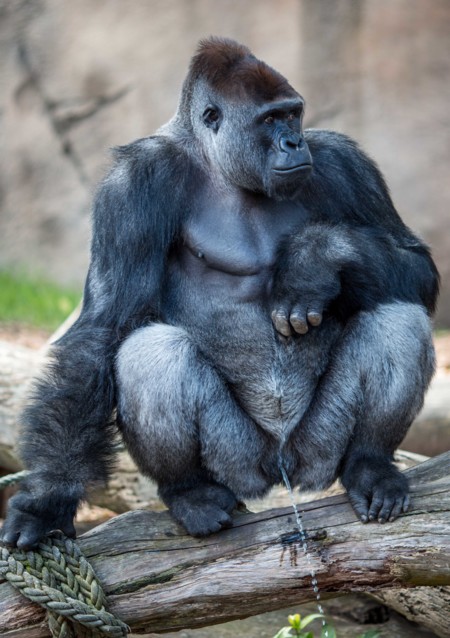
A mature male gorilla can weigh around 140 to 200 kilograms in the wild, sometimes more in captivity. He can stand with great power, defend his group, and dominate other males through size, strength, and confidence. Yet his external genitalia are relatively small compared with his body size. That fact often surprises readers, but it makes sense when you understand gorilla social life.
Their reproductive anatomy connects closely to their mating system, family structure, competition style, and social behavior. In gorilla society, the silverback does not rely on large genital size to compete. He relies on body size, leadership, protection, dominance, and his ability to keep a stable family group.

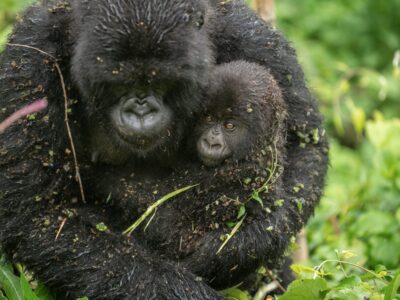
Silverback mountain gorillas
It goes without saying that this topic should be handled as wildlife education, not as shock content. When you understand gorilla genitalia in the right context, you learn more about evolution, reproduction, and how different primates solve different survival problems.
Silverback Gorilla Genitalia in Simple Terms
A silverback gorilla is an adult male gorilla, usually over about 12 years old, with a silver-gray saddle of hair across his back. By this stage, he has reached full maturity or is close to it. His body becomes larger, his head develops a stronger crest, his muscles thicken, and his role in the group becomes more important.
Just like humans, male gorillas have external reproductive organs, including a penis and testes, like other male mammals. They also have a baculum, often called a penis bone, which exists in many non-human primates and many other mammals. Humans do not have a baculum, but gorillas and chimpanzees do.
Scientific sources explain that the baculum varies widely among mammals and does not always match body size. Across primates, a larger body does not automatically mean a larger baculum or larger external genitalia.
Many people assume a huge animal must have equally large reproductive anatomy. Nature does not always work that way. In gorillas, reproductive success depends more on social dominance and group control than on reproductive organ size.


Silverback Gorilla Genitalia and Dominance
Dominance in gorillas is not only about fighting. A good silverback leads. He watches. He protects. He calms tension inside the group. He decides movement and feeding patterns. He responds when danger appears.
His reproductive success depends on this leadership. Females are more likely to stay with a male who offers safety and group stability. A silverback who loses control may lose females to another male. A younger male may challenge him, or females may transfer to a different group.
This means the silverback’s most important reproductive traits are visible across his whole body and behavior. His strength, confidence, age, experience, and ability to defend the group all matter.
The genitalia are only one part of the reproductive system. In gorillas, they do not tell the full story. The real story sits in the group structure.
Do Gorillas Have Large Testes?
Compared with their body size, male gorillas have relatively small testes. This connects directly with low sperm competition. When one dominant silverback has primary access to females, there is less pressure for males to produce huge amounts of sperm to compete with other males.
This contrasts with chimpanzees, where females may mate with multiple males during fertile periods. In chimpanzees, sperm competition is much higher, and males have larger testes relative to body size.
Gorillas solved the reproductive challenge in another way. They evolved larger bodies and stronger dominance traits. Chimpanzees evolved more toward sperm competition. Different species, different strategies.
What This Teaches Us About Evolution
The silverback gorilla teaches a simple but important lesson: bigger animals do not always have bigger reproductive organs in proportion to their body. Evolution does not reward size for its own sake. It rewards traits that help an animal survive and reproduce in its own environment.
For gorillas, the winning traits include strength, leadership, group protection, and social control. Their reproductive anatomy reflects that system.
As you may know, this is why comparing animals only by size often leads to weak conclusions. You need to look at behavior, habitat, mating patterns, group structure, and evolutionary history.
In gorillas, genital size is not a sign of weakness or strength. It is a result of how gorillas live.
 Why This Topic Matters for Gorilla Education
Some readers arrive at this topic out of curiosity. That is fine. But the better value comes from understanding gorillas as complex animals, not turning them into internet trivia.
Silverbacks are not only strong males. They are fathers, protectors, leaders, and key figures in gorilla society. Their bodies reflect millions of years of adaptation to forest life, social groups, and reproductive strategy.
Learning about gorilla anatomy also helps people respect wildlife more. It reminds us that animals do not exist to match human assumptions. They have their own biology, their own pressures, and their own way of surviving.
This matters for conservation too. Gorillas need protected forests, responsible tourism, veterinary monitoring, and strong local support. Understanding their biology helps people value them beyond their appearance.
Conclusion
Silverback gorilla genitalia often surprise people because the size seems small compared with the animal’s huge body. But once you understand gorilla social life, habitat and food, it makes sense.
Gorillas do not rely on large genitalia for reproductive success. A silverback’s success depends more on strength, dominance, leadership, group protection, and female choice. His body has evolved for social power, not high sperm competition.
The silverback’s reproductive anatomy includes a penis, testes, and a baculum, but these features are only part of the bigger biological picture. His real reproductive advantage comes from his role in the group.
So, the next time you come across a gorilla, spot its genitalia and witness how small it is. Start planning today!


Ready for your ultimate wildlife experience?
Chat with us, our team is always here to help!


Got any questions
about traveling to Uganda?
Get in touch.
