

Introduction
What if your gorilla encounter begins where the road ends? There is something different about searching for an animal that you cannot simply drive towards and expect to find it waiting for you.
Imagine leaving the vehicle behind as the morning mist settles over the mountains, following a trained guide into a forest where thick vegetation surrounds the narrow trail and every unfamiliar sound makes you wonder whether the gorillas are somewhere nearby.
You have travelled thousands of kilometers for this moment, but nobody can tell you exactly when it will happen because the gorillas are not waiting at a particular viewpoint. They are moving through their natural habitat, feeding, resting and travelling with their families, while your guide and trackers follow the signs that eventually lead you to them.
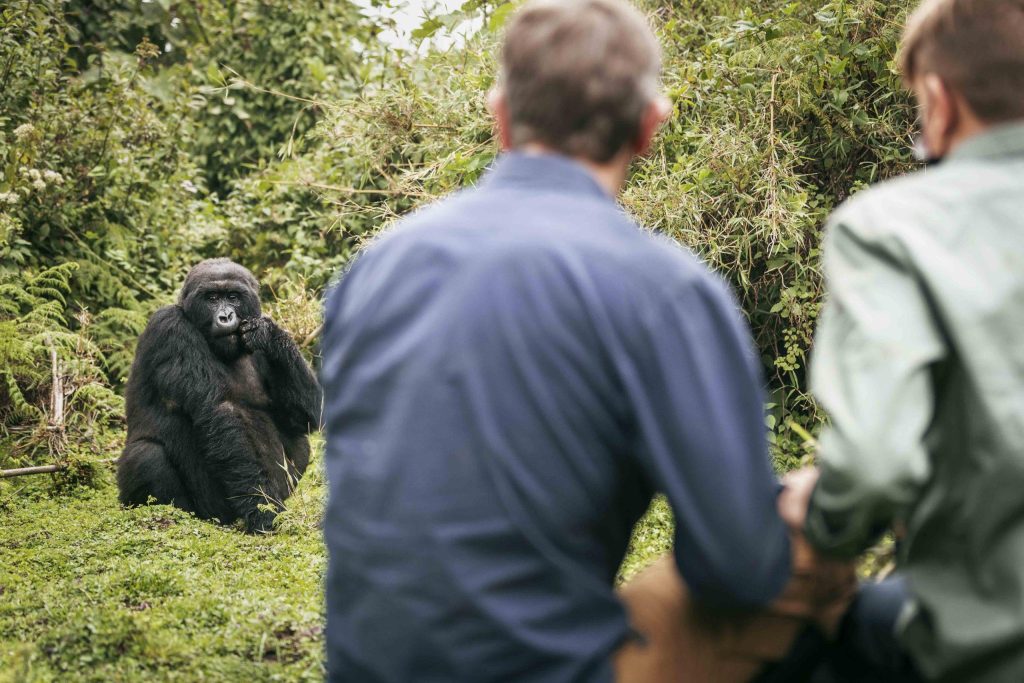
Then, after hours of anticipation, your guide slows down and points towards the vegetation, and suddenly the search becomes an encounter as a mountain gorilla looks back at you from the forest.
This is what makes gorilla trekking in Africa so different from an ordinary wildlife safari. You are not simply travelling to a viewing point to observe an animal from a distance; you are entering the mountain environment where gorillas live and allowing the forest itself to become part of your experience.
But before planning such an adventure, one important question needs to be answered: where can you actually see gorillas in Africa, and which destination offers the experience that best matches the adventure you have in mind?
So where can you see gorillas in Africa?
When travelers talk about seeing gorillas in Africa, they are usually referring to the mountain gorilla trekking experience found in Uganda, Rwanda and the Democratic Republic of the Congo.
Uganda protects mountain gorillas in Bwindi Impenetrable National Park and Mgahinga Gorilla National Park, Rwanda offers gorilla trekking in Volcanoes National Park, while the Democratic Republic of the Congo is home to mountain gorillas in Virunga National Park.
Although these countries share the same remarkable species, they should not be treated as identical destinations. Each offers a different landscape, trekking environment and range of activities around the gorilla experience.
You might find yourself deep inside the dense forests of Bwindi, surrounded by volcanic peaks in Mgahinga, walking through Rwanda’s Volcanoes National Park or planning a more adventurous experience in the Democratic Republic of the Congo.
So instead of simply asking “Where are gorillas found?”, it is worth asking a more interesting question: “Which African forest would I actually like to disappear into in search of gorillas?” For that case therefore, here are some of the destinations in Africa where you can go for gorilla trekking
Uganda
If your idea of gorilla trekking involves walking beneath a thick forest canopy, climbing through steep green terrain and gradually getting closer to a gorilla family hidden somewhere in the vegetation, Uganda may be the destination you have been imagining.
The country has two national parks where visitors can trek mountain gorillas, giving it a particularly interesting position among Africa’s gorilla destinations.
Bwindi Impenetrable National Park
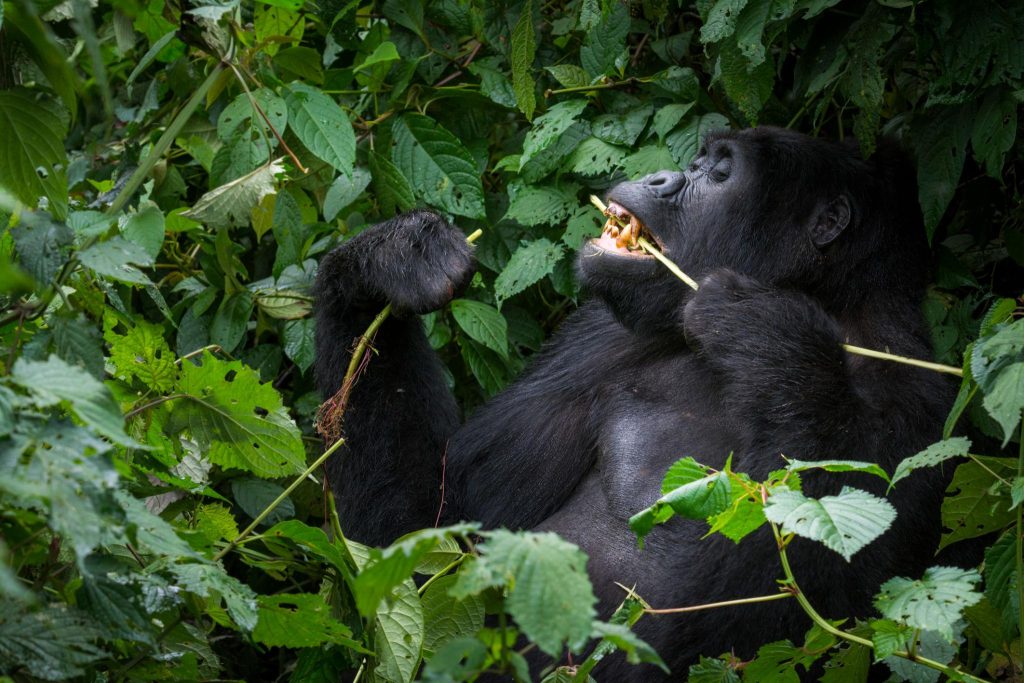
There is a reason the word “impenetrable” is part of Bwindi’s name. As you move deeper into the forest, the vegetation can become dense enough to make the outside world feel remarkably distant, while the steep terrain reminds you that this is not an ordinary woodland walk.
Bwindi is located in southwestern Uganda and is one of the country’s most important destinations for mountain gorilla trekking, with four main trekking sectors: Buhoma, Ruhija, Rushaga and Nkuringo.
Each sector contributes something different to the overall Bwindi experience, which is one reason the destination appeals to a wide range of travelers.
Some visitors are drawn by the forest itself, others want to combine gorilla trekking with birdwatching and community experiences, while some are interested in the longer Gorilla Habituation Experience available in the southern part of the park. The sector you choose, the terrain you encounter and the activities you combine with your trek can therefore shape your safari.
Then comes the moment you have been waiting for. After following your guide through the forest and searching for signs of the gorilla family, you finally hear movement somewhere ahead.
The vegetation shifts, your group becomes quieter and you realize that the animal you travelled to Uganda to see could be just beyond the next few meters of forest. That anticipation is a major part of what makes Bwindi special.

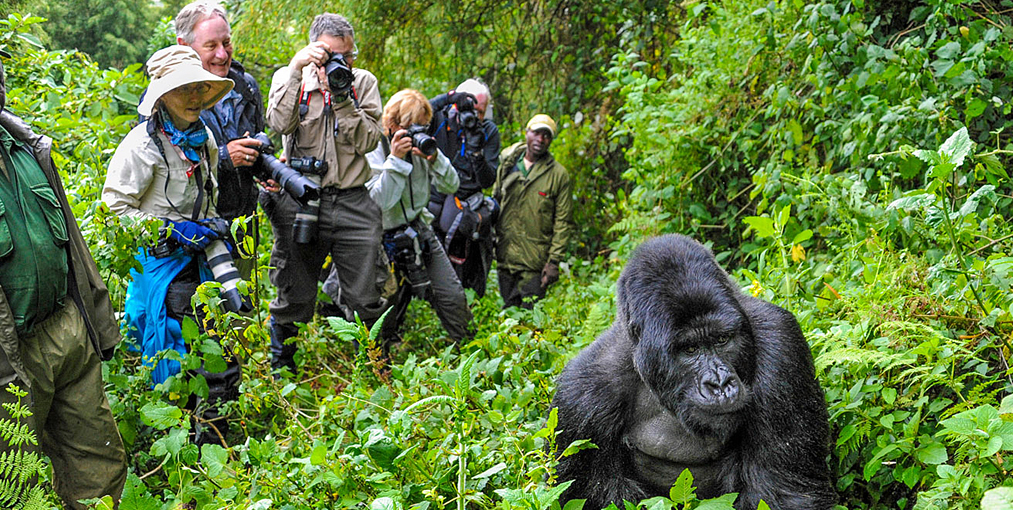
Visitors coming face to face with a gorilla at Bwindi impenetrable National park
Mgahinga Gorilla National Park
Now imagine that the forest begins to open into a landscape where enormous volcanic mountains rise above the trees, giving your gorilla trekking experience a completely different visual character. Mgahinga Gorilla National Park is Uganda’s smallest national park and part of the Virunga mountain region.
Mgahinga is dominated by three major volcanic peaks that is to say Mount Muhabura, Mount Gahinga and Mount Sabyinyo. These mountains give the park an atmosphere noticeably different from the dense forest environment for which Bwindi is famous.
The park also offers opportunities for golden monkey tracking and volcano hiking, meaning your visit does not necessarily have to begin and end with the gorillas.

Mgahinga’s lush forests and volcanic peaks create a remarkable setting for gorilla trekking.
If you’re a traveler who enjoys mountain scenery as much as wildlife, this combination can be particularly appealing. You can spend part of your trip searching through the forest for a gorilla family and then look towards the volcanic landscape surrounding you, creating an experience that combines primates, forests and mountains in one destination.
This is why Bwindi vs Mgahinga is not really about deciding which park is universally better. It is about deciding whether you are more attracted to the feeling of being surrounded by dense rainforest or the dramatic combination of forest and volcanoes.
Rwanda
Cross the border into Rwanda and the setting changes again, although the connection between the landscapes remains clear because Rwanda’s Volcanoes National Park forms part of the broader Virunga ecosystem associated with mountain gorillas. The park is located in the country’s northwest and has become one of Africa’s best-known destinations for gorilla trekking.
What makes the experience particularly memorable is the relationship between the gorilla habitat and the volcanic mountains. The forested slopes rise towards dramatic peaks, while mist can settle around the mountains and create an atmosphere that feels almost unreal.
For many travelers, the opportunity to combine that landscape with an encounter with a mountain gorilla is precisely what makes Rwanda attractive. The gorilla experience still requires patience and preparation because the animals are wild and move through their natural environment.
You may spend considerable time walking through the forest before reaching the gorilla family, and the terrain can be demanding depending on where the animals have moved. Once you find them, however, the effort often becomes secondary to watching a family interact naturally in the forest.
Rwanda can also appeal to travelers who want to combine gorilla trekking with other parts of the country, particularly because of its compact geography and developed tourism infrastructure.

Trekking taking place at Volcanoes National Park


Ready for your ultimate wildlife experience?
Chat with us, our team is always here to help!


Got any questions
about traveling to Uganda?
Get in touch.
