
Introduction
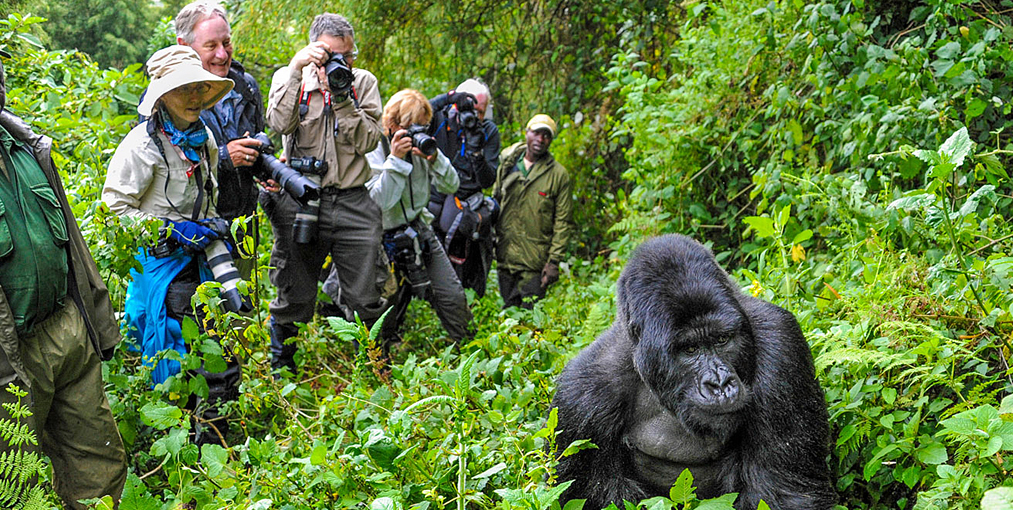
The forest becomes quiet. Your guide stops walking. Somewhere ahead, leaves begin to move. Then, through the thick green vegetation, a massive silverback steps into view. He looks at you. You look at him. For a few seconds, nobody moves.
Would you be afraid? That is one of the first questions many travelers ask before booking a gorilla trek in Uganda. After all, you are not watching these animals from behind a fence or through the window of a safari vehicle. You are walking into their forest, following their trails and eventually standing close enough to hear them breathe.
You are entering a place where the animals decide when to appear, where they move and how close they want to come. That thought can be thrilling, but it can also make you who is a first-time traveler wonder whether the experience is genuinely safe.
So, is gorilla trekking safe in Uganda?
Yes—but the real story behind that answer is more interesting than a simple yes or no. Gorilla trekking in Uganda is a carefully managed wildlife experience conducted within protected national parks under the guidance and regulations of the Uganda Wildlife Authority (UWA).
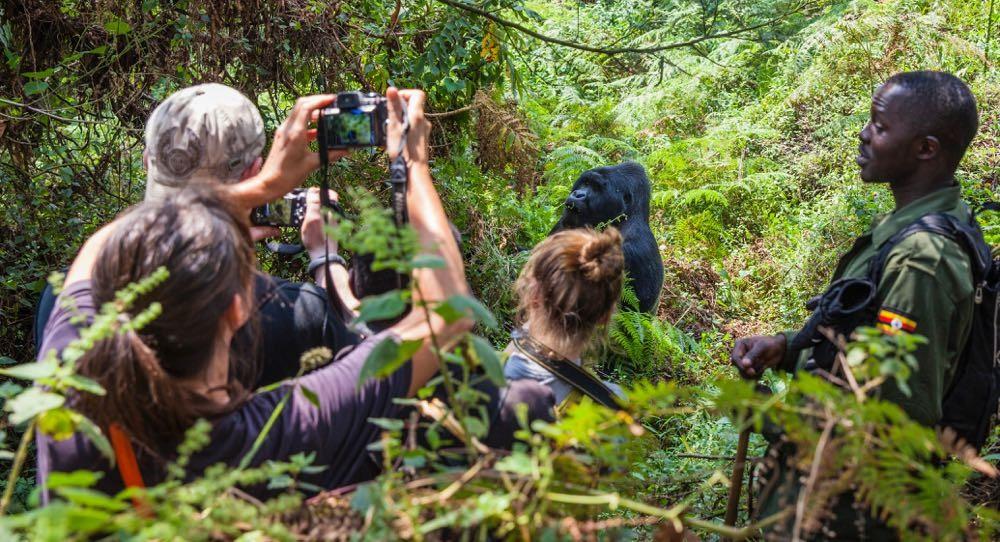
Usually as a visitor, you do not simply walk into the forest alone looking for gorillas. They use authorized permits, receive a briefing before entering the forest and are accompanied by trained guides and trackers throughout the experience. There are also specific rules governing how visitors behave around the animals, where they can trek and how close they can get to the gorillas.

A Uganda Wildlife Authority ranger briefs visitors before their gorilla trekking experience in Bwindi Impenetrable National Park
Uganda’s two official gorilla trekking destinations are Bwindi Impenetrable National Park and Mgahinga Gorilla National Park. This means that although the encounter feels wonderfully wild, there is an established system behind it that manages how visitors enter the forest and how they interact with the gorillas. But there is something important to understand from the beginning. Safe does not mean artificial.
The forest is still wild. The gorillas are still wild. The terrain can still be challenging. Weather can change, and the animals do not perform according to a tourist’s timetable. That is precisely what makes the experience so extraordinary.
The wildness is what makes the experience so special
It may sound strange to say that the wild nature of gorilla trekking is part of what makes it safe, but that is precisely what responsible wildlife tourism is designed around.
The objective is not to make the gorillas behave like domestic animals or remove every element of unpredictability from the encounter. Instead, the experience is structured so that you can observe wild gorillas while minimizing unnecessary risks and disturbance.
The gorilla families visited by tourists have been habituated to controlled human presence, allowing them to tolerate regulated encounters without becoming domesticated.
They remain wild animals, however, and that distinction is extremely important. A silverback is not trained to perform for visitors, and a gorilla family does not follow a tourist itinerary.
They feed, rest, move, communicate and interact according to their own natural behavior. This is why the safest way to experience gorillas is not to expect them to behave like animals in captivity but to understand that you are a guest in their environment.
The Uganda Wildlife Authority has established procedures governing gorilla tracking, including designated entry points, authorized guides and valid permits.
Your always briefed before tracking and accompanied by UWA guides and trackers throughout the activity. These measures help regulate the experience and ensure that visitors understand the rules before they enter the forest. The forest may feel unpredictable but the trekking experience is not.
So, What Actually Makes Gorilla Trekking Safe?
Imagine being told simply, “Don’t worry, gorilla trekking is safe.” That answer may be reassuring, but it does not tell you anything.
The real answer is found in the layers of protection surrounding the experience. Visitors use valid permits and authorized tracking arrangements, receive a briefing before entering the forest and trek with trained guides and trackers.
In most cases your expected to remain with your group and follow instructions throughout the encounter. These measures are important because you are not entering an unfamiliar rainforest and being left to make decisions on your own.
There are people whose responsibility is to understand the environment, locate the gorilla group, manage the encounter and ensure that visitors follow the established rules. But there are also specific precautions that protect you and the animals once you are inside the forest.

A ranger guides visitors through Bwindi, helping maintain a safe and well-managed gorilla trekking experience
The Safety Precautions That Protect You and the Gorillas
So, what happens behind the scenes to make this extraordinary encounter safe? Quite a lot. Gorilla trekking in Uganda is surrounded by precautions designed to reduce risks before you enter the forest, while you are tracking the gorillas and during the actual encounter.
Before a trek begins, you’re briefed about the rules they are expected to follow, while trained guides and trackers accompany them into the forest. You’re expected to remain with your group rather than moving independently, while the tracking team manages the encounter and provides instructions when necessary.
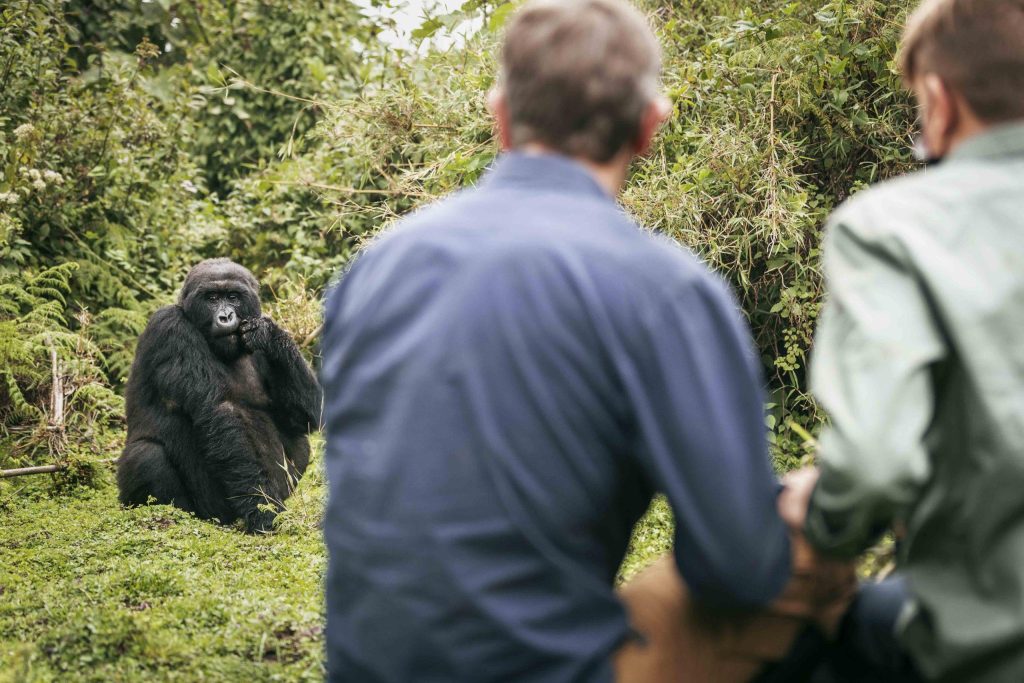
One of the most important precautions is maintaining an appropriate distance from the gorillas. UWA has historically applied a seven-meter minimum distance during gorilla tracking, although travelers should always follow the current instructions given by their ranger or guide on the day of the trek.
The distance protects visitors from unnecessary proximity to powerful wild animals while also reducing the possibility of transmitting human illnesses to gorillas.
Another important precaution concerns illness. You may have travelled thousands of kilometers and waited months for the opportunity to see mountain gorillas, but if you show signs of illness before tracking, you may not be allowed to enter the forest.
This may seem disappointing, but it is one of the most important protections for the animals because some human illnesses can potentially affect gorillas. Gorilla trekking safety is therefore not only about protecting the you from the wildlife but it is also about protecting the wildlife from you as well.
There are also precautions surrounding how visitors behave once they find the gorilla family. You should not touch, feed, chase or deliberately provoke the gorillas, and you should avoid sudden movements and unnecessary noise.
If a gorilla approaches you, the appropriate response is not to panic or attempt to move closer for a photograph. Instead, remain calm and listen to your guide. The gorilla may simply be moving through its habitat, and your responsibility is to allow it to move naturally.
Staying with the group is another important safety precaution. The forest may tempt you to wander when you hear an unfamiliar sound or notice movement in the vegetation, but gorilla trekking is not an independent hiking activity. Your guide knows the routes, communicates with trackers and understands the environment far better than a first-time visitor.
Staying together allows the trekking team to manage the encounter more effectively while ensuring that visitors are not unnecessarily exposed to unfamiliar terrain or wildlife.
Physical preparation also matters. Gorilla trekking can involve several hours of walking through challenging terrain, so wearing proper hiking footwear, carrying drinking water, dressing appropriately for a wet forest environment and maintaining a manageable pace can make a significant difference.
if you’re concerned about the physical demands can also consider using a porter to assist with belongings during the trek.
When all these precautions come together, the experience becomes much more reassuring.
The guide manages the movement, the trackers understand the forest, the authorities establish the rules, health precautions reduce disease risks, distance guidelines protect both people and gorillas, and visitors play their own part by behaving responsibly.
But Aren’t Mountain Gorillas Powerful Animals?
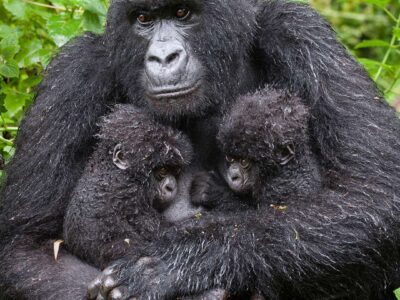
They certainly are, and pretending otherwise would give travelers the wrong impression. A mature silverback is an immensely powerful animal, and standing in its presence can be an overwhelming experience. The broad chest, muscular arms and silver hair across its back can suddenly remind you that you are sharing a small part of the forest with an animal considerably stronger than any human traveler.
Yet strength should not automatically be confused with aggression. Mountain gorillas are generally peaceful animals when they are treated appropriately, and the gorilla families visited by tourists have become accustomed to controlled human presence through habituation.
This is where your guide becomes extremely important. A traveler seeing a gorilla for the first time may only see a large animal sitting in the vegetation, but an experienced guide understands the context of the encounter and knows how visitors should respond.
If a gorilla moves closer, your guide can instruct you to remain calm. If the group needs to reposition, you follow the guide. If you are told to remain where you are, you remain there.
The safest traveler is not the person who tries to prove that they are fearless; it is the person who understands that the forest belongs to the gorillas and respects the instructions of those responsible for managing the encounter.
What happens if a gorilla walks towards you?
This is probably one of the first things you will wonder about after seeing photographs of tourists standing near gorillas.
What happens if you are carefully maintaining your distance and the gorilla decides to walk towards you? The answer is surprisingly simple: you do not try to control the animal.
You remain calm, avoid sudden movements and listen to your guide. The gorilla may simply be moving through its habitat, passing from one feeding area to another or approaching another member of its family. It may come closer because the animal is not following a human-made boundary. That is why your guide is there.
In most cases you are responsible for your own behavior, while the gorillas are allowed to move naturally through the forest. The goal is not to create a dramatic confrontation but to allow the animal to continue behaving naturally while the tracking team manages the situation.
Where can you go gorilla trekking in Uganda?
If you have decided that you want to experience this adventure, the next question becomes just as important: where should you go? Uganda has two official destinations for mountain gorilla trekking, and although both offer the opportunity to encounter gorillas in their natural habitat, they provide distinctly different settings.
The first and most famous is Bwindi Impenetrable National Park, a vast mountainous forest in southwestern Uganda that is home to more than half of the world’s mountain gorillas according to UWA. Bwindi has several trekking sectors, including Buhoma, Ruhija, Rushaga and Nkuringo, and choosing between these sectors can influence your accommodation, transport arrangements and wider itinerary.
Buhoma is the historic gorilla trekking sector and one of the most recognized gateways into Bwindi. Ruhija provides another important access point on the eastern side of the forest, while Rushaga and Nkuringo serve the southern part of the park.
There is no single sector that is automatically the best for every traveler because the right choice depends on your route through Uganda, accommodation preferences, permit availability and the type of experience you want to build around your trek.
Then there is Mgahinga Gorilla National Park, a smaller but spectacular destination situated within the Virunga Mountains. Here the experience combines gorilla trekking with dramatic volcanic scenery, creating a setting that feels quite different from Bwindi.
If you wants to combine gorillas with mountain scenery and a distinctive high-altitude environment, Mgahinga can be an excellent choice.
Gorilla Trekking in Bwindi impenetrable Forest National Park
Did you know that sometimes the forest is more challenging than the gorillas?
Here is something you may not realize as a first-time visitor until you begin preparing for your trek: the gorillas may not be the most physically demanding part of the experience. The forest can be.
Bwindi is mountainous, dense and sometimes muddy, while Mgahinga’s volcanic landscape brings its own physical challenges. The gorillas are free to move through their habitat, which means trackers cannot guarantee that you will find them a short distance from the trailhead.
This does not mean that you need to be an athlete to trek gorillas. It means you should prepare realistically. Comfortable hiking boots with good grip can make a significant difference on muddy and uneven ground, while long trousers and long-sleeved clothing can protect you from vegetation and insects.
A waterproof jacket is sensible because rainforest weather can change quickly, and drinking water is essential during a long trek. If you are concerned about the physical demands, speak to your safari operator before travelling. Porters can also provide valuable assistance with carrying belongings and navigating difficult terrain.
What if you are sick before your trek?
There is another part of gorilla trekking safety that you may not think about until you learn how closely humans and gorillas are connected: your health can affect the animals.
You may feel that a mild cough or cold is not serious enough to interfere with a long-awaited holiday, but the consequences for a gorilla population can be much more serious.
Because gorillas can be susceptible to human illnesses, Uganda has procedures intended to reduce disease transmission. Visitors who show signs of illness may be prevented from tracking until they have been assessed.
This may be disappointing if you have travelled a long distance, but it is an important part of responsible tourism. Sometimes protecting the gorillas means accepting that a planned trek may need to be postponed.
Gorilla trekking safety is also about conservation
Perhaps the most important thing to understand is that the rules protecting visitors are closely connected to the rules protecting gorillas.
Maintaining distance protects you from unnecessary proximity to a powerful wild animal, but it also reduces potential disease transmission for the gorillas. Managing visitor activity helps prevent excessive human pressure on the animals and their habitat, while trained guides keep encounters organized.
This is why gorilla trekking in Uganda should never be viewed simply as an adventure activity. It is a conservation experience. Tourism contributes to the wider economy surrounding the protected areas, while community benefit-sharing mechanisms help connect tourism with communities living around these important forests.
When you choose to trek responsibly, therefore, your journey has an impact beyond the photographs you take. The guide walking beside you, the porter helping you on a steep trail, the driver taking you to the park and the community surrounding the forest can all form part of the wider tourism economy created around gorilla conservation.
So, is gorilla trekking really safe?
After all the questions, the answer becomes much clearer. Yes, gorilla trekking in Uganda is a professionally managed wildlife experience, and the systems surrounding it are designed to make the encounter as safe and responsible as possible.
But it is important to understand what makes it safe. It is not because gorillas have become harmless, and it is not because the forest has been transformed into a controlled tourist attraction. It is safe because the encounter is carefully managed around the reality that you are entering a wild environment to observe wild animals.
You have trained guides. You have designated trekking areas. You have conservation rules. You have permit systems. You have health requirements. You have distance guidelines. You have people whose job is to understand the forest and manage the encounter. Most importantly, you have a responsibility to cooperate with that system.
The safest traveler is therefore not the one who arrives determined to get as close as possible to a silverback. It is the traveler who understands that the privilege of seeing mountain gorillas comes with a responsibility to respect their space.


Ready for your ultimate wildlife experience?
Chat with us, our team is always here to help!


Got any questions
about traveling to Uganda?
Get in touch.
