

Select Page
- Written by: Anthony
- September 17, 2026
Do Gorillas Sweat? How Gorillas Stay Cool in the Forest?
Do Gorillas Sweat? How Gorillas Stay Cool in the Forest
Introduction
Gorillas live in forests where the air can feel warm, damp, and heavy. They climb, feed, walk, rest, play, build nests, and sometimes move through thick vegetation for hours. When you think about a large animal with dark hair and a powerful body, it is fair to wonder how it stays cool.
So, do gorillas sweat?
Yes, gorillas can sweat, but they do not rely on sweating in the same obvious way humans do. You will not usually see a gorilla dripping with sweat after walking through the forest. Their bodies manage heat through a mix of sweating, resting, shade, movement choices, breathing, and behavior. They are built for life in forest habitats, not open desert or extreme heat.
For travelers planning gorilla trekking in Uganda, Rwanda, or the Democratic Republic of Congo, this question also helps explain why gorillas spend so much time in cooler forest areas. Their daily routine is not random. They feed when conditions suit them, rest during warmer hours, and use the forest around them to stay comfortable.
Do Gorillas Sweat Like Humans?
Gorillas have sweat glands, so they can sweat. Like humans, they belong to the great ape family, and their bodies share many features with ours. That includes the ability to release moisture through the skin.
But humans are unusual because we sweat heavily across much of our body. Sweating is one of our strongest cooling tools. When sweat evaporates, it helps lower body temperature. That is why you may sweat a lot when hiking, running, or walking under the sun.
Gorillas do not sweat as heavily or as visibly as humans. Their bodies are covered with thick hair, which changes how heat moves from the skin into the air. Sweat trapped under hair does not evaporate as freely as sweat on bare skin. This means gorillas cannot depend on full-body sweating the way people do.
Instead, gorillas use a wider set of cooling habits. They choose shaded places, rest often, move slowly during warm periods, and stay close to cooler forest zones. Their behavior does much of the work.
Why Don’t Gorillas Sweat Much?
Gorillas do not need to sweat as much as humans because their lifestyle and environment are different. They have lived outside for a very long time and therefore, they have adapted to that nature.
Humans evolved to move long distances in open landscapes. Our skin has less hair, and our bodies became good at releasing heat through sweating. This helped early humans walk, run, hunt, and gather food in hotter open environments.
Gorillas, on the other hand, live mostly in forests. Mountain gorillas live in cooler highland forests. Lowland gorillas live in warmer forests, but they still spend much of their time under shade. Forest cover protects them from direct sun and helps keep temperatures more stable.
Gorillas also do not run long distances the way humans do. They move through their habitat while feeding, but they usually do not spend hours chasing prey or traveling fast across open land. They eat mostly plants, rest for long periods, and pace their day around food and comfort.
Because of this, heavy sweating is not their main survival tool. Their daily habits reduce the need for it.
Suggested Safari Itineraries

How Do Gorillas Stay Cool?
Gorillas stay cool by using the forest wisely. A silverback does not need to think about heat the way a human traveler does, but his instincts guide him toward comfort and safety.
One of the main ways gorillas cool down is by resting in shade. During warmer parts of the day, gorilla families often slow down. They may sit, feed gently, groom, or rest in areas with thick vegetation. This helps them avoid overheating.
They also adjust their movement. Gorillas may be more active during cooler hours, especially in the morning and later in the afternoon. In warmer conditions, they often reduce unnecessary movement. This saves energy and keeps body temperature under control.
Their feeding habits also help. Gorillas eat water-rich plants, leaves, stems, shoots, and fruits depending on their habitat and season. Some of this food adds moisture to their diet. They may also drink water directly in some situations, though mountain gorillas often get much of their moisture from plants.
Breathing also helps release heat. Gorillas can lose some body heat through breathing, though this is not as dramatic as sweating. If a gorilla feels warm or stressed, you may notice heavier breathing, especially after movement or tension.
Do Mountain Gorillas Sweat?
Mountain gorillas can sweat, but they live in cooler environments than many people expect. Their home ranges in Uganda, Rwanda, and Congo sit in high-altitude forests. These areas can be misty, cool, and wet, especially in the morning.
This cooler habitat reduces the need for heavy sweating. A mountain gorilla’s thick hair helps keep it warm in cold, damp conditions. In fact, for mountain gorillas, staying warm can be as important as staying cool.
When the sun comes out or the group moves through steeper terrain, they may still need to manage heat. They do this by resting, choosing shade, and pacing their movement. Their forest home gives them many natural cooling options.
This is one reason gorilla trekking can feel cooler than expected. You may begin your trek in a misty forest, walk through damp vegetation, and find the gorillas resting in shaded areas. The climate suits them well.
Do Lowland Gorillas Sweat More?
Lowland gorillas live in warmer and more humid forests across parts of Central and West Africa. Their environment can feel hotter than mountain gorilla habitats, so heat management becomes more important.
They still do not sweat like humans. Instead, they rely on shade, slower movement, food moisture, and forest cover. The dense forest protects them from direct sun, even when the air feels humid.
Lowland gorillas may move through swampy areas, forest clearings, and thick vegetation. They often adapt their activity to the day’s conditions. When temperatures rise, they rest more. When conditions are cooler, they may feed and travel more actively.
Their bodies and behavior work together. Sweating plays a part, but it is not the main story.
Do Gorillas Smell When They Sweat?
Gorillas have a natural body smell, and adult males can have a stronger scent than females or young gorillas. A silverback’s smell can become noticeable, especially when he is stressed, excited, alert, or displaying dominance.
This scent does not come only from sweat. It also comes from natural body oils, glands, hormones, hair, and the forest environment. A silverback may smell stronger when he feels threatened or when he wants to communicate presence and power.
In the wild, scent matters. Animals use smell to understand identity, mood, territory, and reproductive condition. For gorillas, smell can be part of social communication.
If you go gorilla trekking, you may notice a musky scent before or during the encounter. This is normal. It is one of those small details that reminds you these are wild animals living in their natural home.
Can Gorillas Overheat?
Yes, gorillas can overheat under the wrong conditions, though their normal forest lifestyle helps protect them. Heat stress becomes more likely when temperatures rise, shade reduces, water becomes limited, or humans disturb their natural behavior.
Climate change can also affect gorilla habitats over time. Changes in rainfall, food availability, disease patterns, and forest conditions may create more pressure on gorilla populations. Gorillas depend on stable, healthy forests. When those forests change, their comfort and survival can change too.
Human disturbance can also affect heat stress. If gorillas move away from people, lose access to shade, or face pressure from habitat loss, they may spend more energy and face more risk.
This is why conservation is not only about protecting gorillas from poaching. It is also about protecting the full habitat that helps them feed, rest, cool down, and raise their young.
Why Do Gorillas Rest So Much?
Gorillas spend a large part of their day resting. This is not laziness. It is smart survival, and one way they avoid over-sweating.
A gorilla diet contains majorly of plant material. Leaves, stems, shoots, bark, and other vegetation take time to process. Resting gives the body time to digest food. It also helps gorillas save energy and avoid overheating.
A typical gorilla day includes feeding, moving, resting, grooming, social interaction, and nest building. The group may feed in the morning, rest around midday, then feed again later. This rhythm helps them balance energy, digestion, safety, and temperature.
For a large silverback, resting is even more important. His body is heavy and muscular. Moving too much in warm conditions would waste energy. By resting in shade and moving with purpose, he stays strong without overheating.
Recommended Safaris


11 Days
Private
11 days Uganda Premium Gorilla, Wildlife & River Nile Adventure
from
$ 2900
per personWhat Happens When Gorillas Get Too Hot?
When gorillas feel too warm, they usually change their behavior. They may rest, seek shade, reduce movement, spread out slightly, or choose cooler vegetation. They may also breathe more heavily after effort.
You are unlikely to see dramatic signs unless the gorilla faces unusual stress. In healthy conditions, gorillas manage heat quietly and naturally. Their forest gives them shade, moisture, and food. Their group routine also helps them avoid the hottest and most stressful situations.
This is another reason guides control gorilla trekking encounters carefully. Visitors must keep distance, limit time with the group, and follow instructions. These rules reduce stress and allow gorillas to continue their normal behavior.
Do Gorillas Pant Like Dogs?
Gorillas do not use panting as their main cooling method in the same way dogs do. Dogs pant because they have limited sweating ability and rely heavily on evaporation from the mouth and tongue.
Gorillas can breathe more heavily after effort, stress, or heat, but panting is not their main cooling system. They rely more on shade, rest, movement control, forest habitat, and some sweating.
If a gorilla appears to breathe heavily, it may have moved recently, climbed, displayed, felt stressed, or experienced warm conditions. Trained guides and researchers understand these signs better than visitors, which is why you should always follow their directions during gorilla encounters.
What This Means for Gorilla Trekking
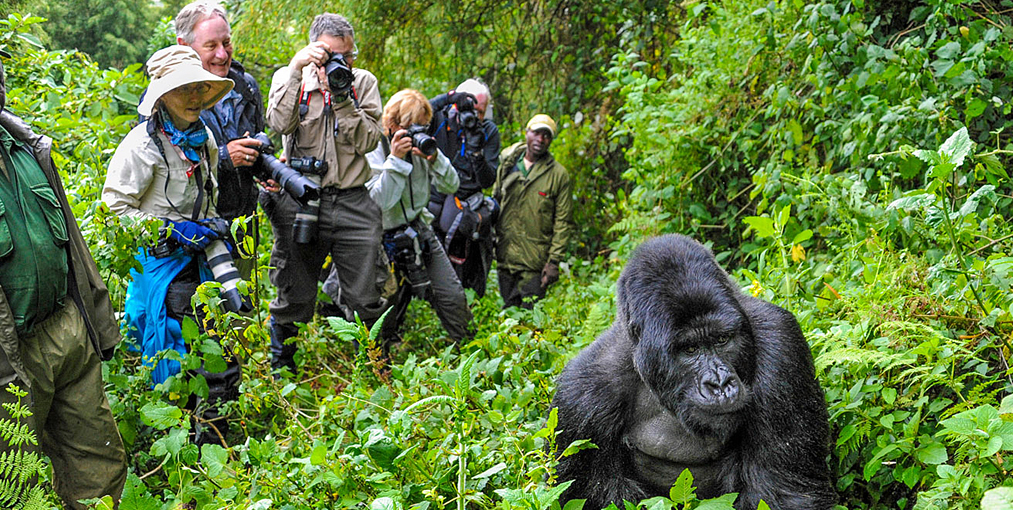
When you go gorilla trekking, you are entering the gorillas’ home. Their comfort matters. They may look relaxed, but they still respond to heat, noise, movement, and human presence.
You should keep the recommended distance, avoid sudden movements, and stay quiet. If you feel sick, you should not trek. Gorillas share enough biological similarity with humans that disease transmission is a serious concern.
You should also prepare for the forest climate. Wear breathable clothing, carry water, and expect humidity, mud, mist, or sun depending on the day. The gorillas may be resting in shade while you feel hot from the trek. That is normal. You are working harder than they are at that moment.
A good guide will manage the pace, explain gorilla behavior, and help you enjoy the encounter without disturbing the group.
Conclusion
Gorillas do sweat, but they do not sweat like humans. Their thick hair, forest habitat, and slower lifestyle mean they rely less on visible sweating and more on behavior. They stay cool by resting in shade, moving wisely, feeding on moisture-rich plants, using cooler forest zones, and reducing activity during warmer periods.
Mountain gorillas live in cooler highland forests, so they rarely need heavy sweating. Lowland gorillas face warmer conditions, but forest shade still helps them manage heat.
The next time you picture a silverback gorilla, do not only think of strength. Think of adaptation. His body, habits, and forest home work together. He knows when to move, when to rest, where to feed, and where to stay cool.
That quiet balance is part of what makes gorillas so fascinating. They are powerful, but they also live by patience, rhythm, and deep connection to the forest.

Anthony
Anthony is a former Software Engineer tuned Safari Curator Enthusiast.
Combining technical expertise with creativity, he excels in crafting destination guides, cultural insights, and tech-enhanced travel content.
Believing in the transformative power of travel, Anthony inspires responsible travel and sustainability.
Featured in top travel publications and known for his workshops, he mentors aspiring creators while guiding audiences on authentic and meaningful journeys.
All Posts
Ready for your ultimate wildlife experience?
Chat with us, our team is always here to help!
You may also like …

- Friendly Gorillas Editor
Best Months for Gorilla Trekking in Uganda: When Should You Go?

Got any questions
about traveling to Uganda?
Get in touch.
