

Introduction
The survival of an elephant herd may depend on something more powerful than its size: the experience of its oldest female.
The African savannah does not announce when trouble is coming. A waterhole slowly shrinks, the grass turns brittle beneath the sun, and familiar feeding grounds become increasingly difficult to reach.
For a young elephant, these changes may present an unfamiliar challenge. For an older female leading her family, they may be reminders of a crisis she has faced before.
She does not carry a map, and she cannot explain her decisions in words. Yet her choices can influence whether her family finds food, responds to danger or continues towards a place where survival becomes uncertain.
This is the remarkable role of the elephant matriarch. But what makes her so important, and what happens when the herd loses the experience she has spent decades gathering?
But wait, what makes the Oldest Elephant in the Herd so important
An elephant family is not simply a collection of animals travelling together. It is a close social unit built around relationships between females and their young.
Daughters often remain with their family, helping create generations of mothers, sisters, aunts and calves that depend on one another.
At the center of this family is often the matriarch, usually its the oldest and the most experienced female. Her authority does not come from age alone.
It is supported by the knowledge she has accumulated through years of navigating changing landscapes, encountering predators and raising young.
When the family must decide where to travel or how to respond to an unfamiliar situation, her behavior can influence the group’s response.
Researchers studying African elephants have found that older matriarchs can make more effective decisions when assessing certain threats, demonstrating that experience can offer a genuine survival advantage.
In elephant society, then, growing older can mean gaining something the rest of the family cannot quickly replace: a deeper understanding of the world around them.
Did you know that when water disappears, experience becomes essential
Picture a dry season stretching across the savannah. Small pools have vanished, vegetation is thinning, and the remaining water sources are attracting animals from increasingly wide areas. For a herd with dependent calves, choosing where to go next is no small decision.
Should the family remain near a familiar feeding ground, or travel farther in search of better conditions? Is a distant water source worth the journey? Could remaining in one place leave the herd with too little food?
These are not decisions an elephant can make with certainty, but experience can improve the chances of making the right ones. An older matriarch may have encountered previous dry seasons and learned which areas offer resources when conditions deteriorate.
Her knowledge can help guide the family through a landscape where food and water are no longer easy to find. Research on African elephants has linked maternal experience and family circumstances to calf survival during severe drought.
A study examining the 1993 drought in Tanzania found that calf losses were higher among younger mothers than among more experienced mothers. Research in other elephant populations has also highlighted the consequences that can follow the loss of experienced matriarchs.
The lesson is not that older females can always prevent disaster. Drought can overwhelm even experienced herds. Rather, their accumulated knowledge may give the family a valuable advantage when the environment becomes unforgiving.

African elephant herd gathering at a waterhole during the dry season.

Now how does a matriarch help protect the herd from predators?
Water and food are not the only challenges an elephant family must navigate. Lions can pose a serious threat to young calves, making the herd’s ability to recognize danger particularly important.
Here, too, the matriarch’s experience matters. In a study published in Proceedings of the Royal Society B, researchers played lion roars to African elephant families to investigate how they assessed potential danger.
Families led by older matriarchs responded more appropriately to the greater threat posed by the roars of male lions. Those led by younger matriarchs were more likely to underestimate that particular danger.
The finding offers a striking insight into elephant leadership: experience can influence not only where a family travels, but also how it judges a threat.
A matriarch’s response may encourage the family to become more alert, gather closer together or prepare to defend vulnerable calves. The other elephants do not need to understand the danger in precisely the same way she does. Her reaction can help shape theirs.
For a calf still learning about the world, the presence of an experienced female may therefore provide more than protection. It offers an opportunity to learn when caution matters.
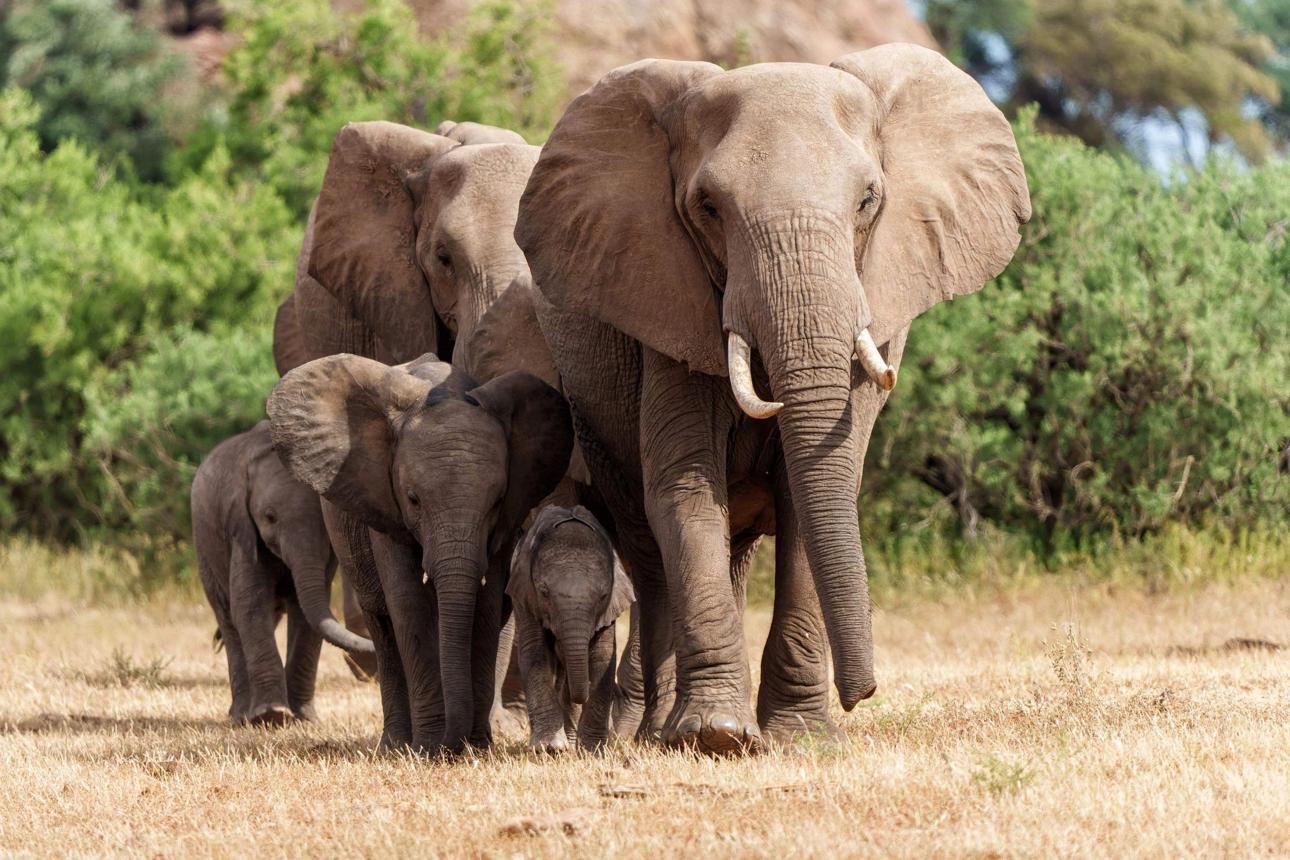
Adult female African elephant standing beside a young calf within its family herd.
What happens when the Matriarch dies?
The death of an older elephant is a natural part of life. But when the animal is the family’s matriarch, the loss can extend beyond the immediate grief of separation.
The herd may lose a leader whose knowledge helped guide its movements and whose presence contributed to family relationships. Another female may eventually take over, but she may not possess the same experience or familiarity with the challenges the group faces.
Long-term research in Amboseli, Kenya, has documented social disruption following the loss of older female leaders. Studies have also associated matriarch loss during difficult environmental periods with increased risks for young calves.
This does not mean every family breaks apart when its matriarch dies. Elephant families can adapt, and another female may gradually assume leadership. However, the transition can leave the group facing uncertainty at a time when sound decisions are especially important.
Consider what that means for a young calf. Its survival depends on its mother, but its wider family also provides protection, social support and opportunities to learn. The loss of an experienced leader can affect the conditions in which the next generation grows.
The consequences of losing a matriarch, therefore, may continue long after the herd has moved on.

Ready for your ultimate wildlife experience?
Chat with us, our team is always here to help!


Got any questions
about traveling to Uganda?
Get in touch.
