

Wählen Sie Seite aus
Community tourism Safaris & Experiences
Community tourism is a travel model where local people own, manage, and directly benefit from visitor activities. Instead of money going to large foreign companies, tourism funds go straight to villages for homestays, guides, crafts, and food. This protects local nature and keeps traditions alive
Uganda is famous for its wildlife, but its truest treasures are its people and the vibrant communities that make up the “Pearl of Africa.” At Friendly Gorillas, we are passionate about promoting a form of travel that goes beyond the usual tourist trail to create genuine connections
Privatreisen • Lokale Reiseführer • Benutzerdefinierte Reiserouten • Safari-Erweiterungen
Typische Dauer
3 hours
Ziel
Uganda
Am besten für
Paare, Singles, Gruppen
Beste Saison
Juni-Oktober, Jan.-Feb
Reisestil
Privat
Gemeinschaftstourismus
Eine reichhaltigere Art, Ostafrika zu erleben
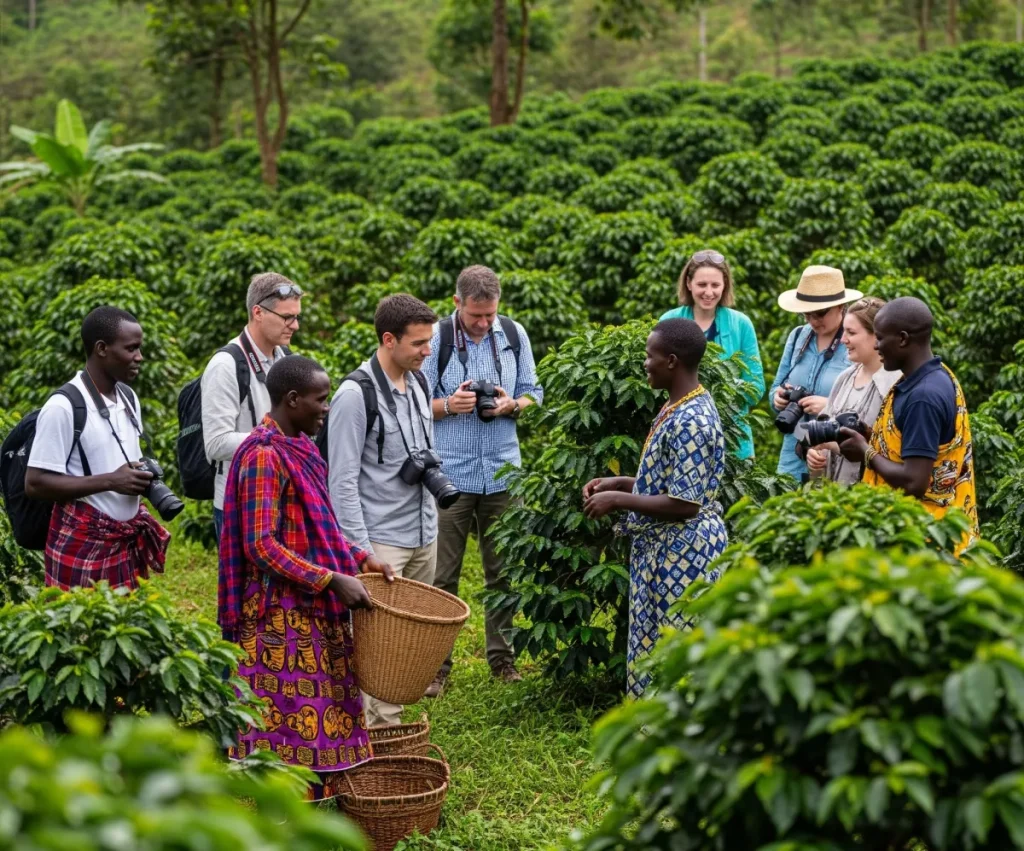
Community tourism in details
How does it benefit you?
It brings out an authentic Immersion where you get to experience life as it truly is, far from a contrived tourist bubble. You might share a meal with a local family, learn a few words of their language, and hear their stories firsthand. These are the moments that create lasting memories.
They provide meaningful connections where community tourism breaks down the barriers between visitor and host, allowing for genuine human connections. You are no longer just a spectator but a welcome guest, and the relationships you form can be the highlight of your trip.
It brings a positive Impact of knowing that your travel budget is directly and ethically benefiting the people you meet, adding a profound sense of purpose to your journey. It turns your vacation into an act of solidarity and support.
It provides a Unique Learning experience where you will gain a richer, more nuanced understanding of Uganda’s diverse cultures and traditions, learning things you could never find in a guidebook.
Best places for community tourism
The Western Region of Uganda, with the communities surrounding the Bwindi Impenetrable Nationalpark, is a prime example. After a thrilling gorilla trek, visitors can engage in village walks, learning about the medicinal uses of plants, witnessing traditional Batwa dances, or participating in basket weaving and cooking lessons.
The Bigodi Wetland Sanctuary near Kibale National Park is a community-run eco-tourism project that protects a diverse ecosystem and provides livelihoods for hundreds of local people. Visitors can enjoy guided nature walks and spot primates and a wide array of bird species.
Other places in western Uganda include the Bakonzo experience, the cultural trails in Fort Portal, the Amabere ga Nyinamwiru caves walk, the Buniga Forest walk, the Igongo cultural centre, among others
In the Eastern Region of Uganda, within the foothills of Mount Elgon, communities have developed various tourism products. Travelers can stay in community-run guesthouses, participate in traditional coffee tours from bean to cup, and learn about the local culture from a community guide.
The Nyero Rock Paintings are a historical and cultural gem, with tours led by local guides who share the stories and significance of these ancient artworks.
Other areas of community tourism in Eastern Uganda include the Manyatta Manyattas, the Kapchorwa community walk, the Mount Elgon hike, the Sipi Falls, Moroto town, among others
In the Northern Region of Uganda, in the remote Karamoja region, communities have opened their homes and culture to visitors. Guests can stay in traditional huts, learn about the unique pastoralist lifestyle of the Karamojong people, and experience their vibrant songs and dances. The tours provide a direct and unfiltered look into a way of life that is rapidly changing.
Some other areas important for community tourism include Fort Patiko for Acholi historical walks, the Aruu Falls for community-guided nature walks, the Ajai Wildlife Reserve for West Nile interactions, and the Ik community
The Central Region of Uganda has communities along the shores of Viktoriasee that offer unique experiences. Visitors can take part in fishing trips, visit local markets like Nakasero or Owino, and learn about the Buganda kingdom’s traditions. Community-led tours around historical sites and craft workshops provide a rich cultural immersion right at the heart of the country.
It also has some other areas of community tourism that include the Bombo Village Initiative, the Ndere cultural centre, Ewaffe cultural village, Naggalabi Buddo coronation site, and the Buganda Heritage and Tourism Board, among others
VERGLEICHEN SIE IHRE MÖGLICHKEITEN
Best ways to experience Community tourism
Much as all our itineraries and safari packages can be customized to deliver unforgettable and more satisfaction, below are some of our top picks when it comes to Community tourism , feel free to customize and tailor to match your specific interests and needs.

4 Tage
Privat
4-tägige Bwindi-Gorilla-Gewöhnungssafari ab Kigali
aus
$ 800
pro Person
SIGNATUR-ERFAHRUNG
Community tourism in short.
Community tourism in Uganda suits cultural explorers, budget-conscious travelers, and responsible tourists looking for authentic local immersion rather than luxury resort experiences
Cultural and Immersive Travelers and people who want to learn indigenous ways of life, taste traditional foods like matooke, and participate in local dances, storytelling, and craft workshops
Responsible and Ethical Tourists and visitors who want their travel money to directly support grassroots development, such as village schools, women’s craft cooperatives, and conservation projects
Typische Dauer
3 hours
Einstellung
Uganda
Aktivitätsstil
PRIVAT / GEFÜHRT
Am besten für
Solo, Paare, Gruppe
WAS SIE ERWARTEN KÖNNEN
Wie sich das Erlebnis entfaltet
How does it benefit you?
It brings out an authentic Immersion where you get to experience life as it truly is, far from a contrived tourist bubble. You might share a meal with a local family, learn a few words of their language, and hear their stories firsthand. These are the moments that create lasting memories.
They provide meaningful connections where community tourism breaks down the barriers between visitor and host, allowing for genuine human connections. You are no longer just a spectator but a welcome guest, and the relationships you form can be the highlight of your trip.
It brings a positive Impact of knowing that your travel budget is directly and ethically benefiting the people you meet, adding a profound sense of purpose to your journey. It turns your vacation into an act of solidarity and support.
It provides a Unique Learning experience where you will gain a richer, more nuanced understanding of Uganda’s diverse cultures and traditions, learning things you could never find in a guidebook.
Planen Sie mit Vertrauen
Community tourism planning Guide
Community tourism, often referred to as Community-Based Tourism, is an approach to travel that puts local communities at the forefront. Unlike conventional tourism, where profits often go to large, foreign-owned companies, here it is planned, owned, and managed by the residents themselves. The primary goal is to ensure that the economic, social, and cultural benefits of tourism are directly invested back into the community. This model is all about empowerment, authenticity, and sustainability.
WANN GEHEN
Best time for Community tourism
The best time for community tourism in Uganda is during the dry seasons from June to August and December to February, when dry paths and reliable rural roads make outdoor village walks, farm visits, and homestays much easier to access.
In the dry Seasons from June to August and December to February, Rural dirt roads and walking trails stay firm and clear, and there is outdoor comfort. Ideal for coffee farm tours, foot walks, and storytelling around evening fires, and easy to combine, perfect for pairing community visits with major park treks like gorilla or chimpanzee tracking.
In the wet seasons from March to May and September to November, there is lush Scenery where landscapes turn intensely green and vibrant for photography.
Bereiten Sie sich gut vor
Was Sie vor Ihrer Reise wissen sollten
Travel with the best modest wear, including long pants, loose trousers, and skirts or dresses that cover your knees and shoulders.
Always wear neutral colors with muted tones that blend in well and avoid attracting unwanted insects.
Carry a Scarf or shawl for women to cover shoulders when entering sacred or traditional village spaces quickly
Walking shoes that are comfortable closed-toe shoes or lightweight boots for uneven village paths and dirt tracks.
For Sun protection, carry a wide-brimmed hat, sunglasses, and high-SPF sunscreen, and for rain protection, carry a compact, lightweight rain jacket or poncho for sudden tropical showers.
For health reasons, carry Insect repellent, hand sanitizer, and a small personal first-aid kit with wet wipes
Carrying some cash (UGX) is essential with small denomination Ugandan Shilling notes are essential for buying local crafts, basketry, or tipping community guides directly.
School or community supplies: if you wish to give back, bring notebooks, pens, or soccer balls to hand over through a school or project leader rather than giving money directly to children on the street.
REISEN SIE MIT FREUNDLICHEN GORILLAS-SAFARIS
Wir organisieren mehr als nur die Aktivität
In den letzten zehn Jahren haben wir für Hunderttausende Gäste spannende und unvergessliche Reisen organisiert.
Wir werden Ihren Besuch in Ostafrika durch unsere einfachen und ansprechenden Schritte auf jeden Fall lohnenswert machen.
01
Reisegestaltung
Wir passen die Aktivität, das Ziel, die Reiselänge und die weitere Safari an Ihre Prioritäten an.
02
Genehmigungen
Wir buchen alle Ihre Genehmigungen und Eintritte zum richtigen Zeitpunkt, sodass Sie keine Überraschungen erleben.
03
Privater Transport
Alle unsere Touren beinhalten kostenlose Abholung und Rückgabe vom Flughafen. Dafür gibt es zu keinem Zeitpunkt zusätzliche Zahlungen.
04
Führer
Alle unsere Guides sind erfahren, ruhig und ortskundig. Sie werden Ihren Aufenthalt auf jeden Fall lohnenswert machen.
05
Unterkunft
Wir nutzen nur Lodges, in denen wir schon waren, und alle Unterkünfte, die wir nutzen, sind perfekt gelegen, um Ihnen mehr Spaß zu bieten
06
Safari-Erweiterungen
Fühlen Sie sich frei, Ihrem Besuch weitere Aktivitäten und Ziele hinzuzufügen. Für eine bessere Planung geben Sie uns einfach vorab Bescheid.
ERSTELLEN SIE EINE KOMPLETTE REISE
Combine Community tourism with more of East Africa
KOMBINIEREN 01
KOMBINIEREN 01
Gorilla-Gewöhnungserlebnis
Erhalten Sie die Gelegenheit, etwas zu erleben und beobachten Sie 4 Stunden lang Gorillas in einigen Parks, jedoch nur in Rushaga.
KOMBINIEREN 01
Tansania Große Migration
Erleben Sie mit uns die größte Tierwanderung aller Zeiten
AKTIVITÄTS-FAQ
Fragen, die Reisende vor der Buchung stellen
Where does it happen?
It is done in almost all parts of Uganda, including western Uganda, eastern Uganda, central Uganda, northern areas around Jinja, Bwindi Impenetrable Forest National Park, Kampala, among other areas
Do I need an operator?
You can book directly with the community camps, or you can use an operator, but using an operator is very easy and avoids risks of delays along your trips
Where does the money go?
Funds go directly to the local communities, local guides, the cooks, the dancers, or to support village schools, water projects, toilet and sanitation projects, among others
Is it safe to have community tourism in the villages?
Yes, it is good to have community tours in those villages. This is because all the cultures are preserved in their original places, and therefore it is very safe to have them in the villages and communities
Beginnen Sie mit der Planung
Build your Community tourism safari
Tell us your dates, number of travellers, preferred activity, comfort level and the other destinations you want to include. We will use those details to recommend a practical itinerary.
Sie müssen die genaue Route nicht kennen, bevor Sie uns kontaktieren.

Habe Fragen
über die Reise nach Uganda
Nehmen Sie Kontakt auf.
