For many travelers, seeing Uganda’s 山地大猩猩 is already a dream come true, but there is a question that often comes after the excitement of planning the trek: what if you could have more time to understand what you are actually seeing?
Rather than following a trail into 布温迪, locating a fully habituated gorilla family, spending a precious hour with them and then beginning the journey back, Uganda offers a more immersive opportunity for you that wants to go deeper into the world of mountain gorillas.
Now this is where the gorilla habituation experience becomes particularly interesting. Taking place in Bwindi Impenetrable National Park, the experience gives a small number of visitors the opportunity to spend considerably more time observing a gorilla family that is still undergoing habituation, under the guidance of the ranger and research teams involved in the process.
Current Uganda Wildlife Authority guidelines allow up to four hours of viewing during the habituation experience, compared with a maximum of one hour during ordinary gorilla tracking.
The difference is not simply the number of hours you spend in the forest. It is the opportunity to slow down, observe behavior for longer and gain a better understanding of the relationship between mountain gorillas, researchers, conservation and responsible tourism.
If ordinary gorilla trekking gives you a remarkable glimpse into the world of these animals, the gorilla habituation experience gives you more time to appreciate that world.
这 gorilla habituation experience is a specialized wildlife experience in Uganda that allows visitors to spend extended time with a gorilla group that is still becoming accustomed to the presence of humans.
It is important to understand that habituation does not mean taming the gorillas or turning them into animals that depend on people. The gorillas remain wild, and the process is carefully managed so that they gradually become comfortable with the controlled presence of researchers, rangers and, eventually, tourists.
This is what makes the experience different from ordinary gorilla trekking. Standard trekking takes visitors to gorilla families that have already completed the habituation process, whereas the habituation experience allows visitors to witness part of the process itself.
According to current UWA guidelines, gorilla habituation tracking begins from 6:30 a.m., while ordinary gorilla tracking begins from 8:00 a.m., and the maximum viewing period for the habituation experience is four hours.
That additional time creates a completely different rhythm. Instead of feeling that you have to understand everything about a gorilla family within a short encounter, you have more opportunity to observe how the animals behave naturally as the morning progresses.
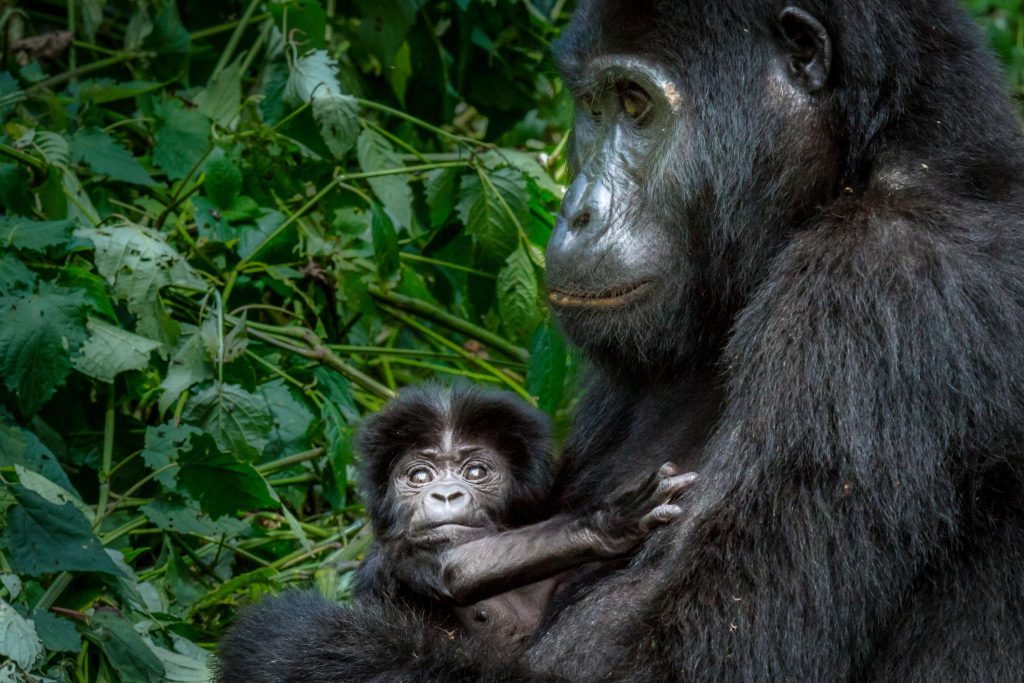
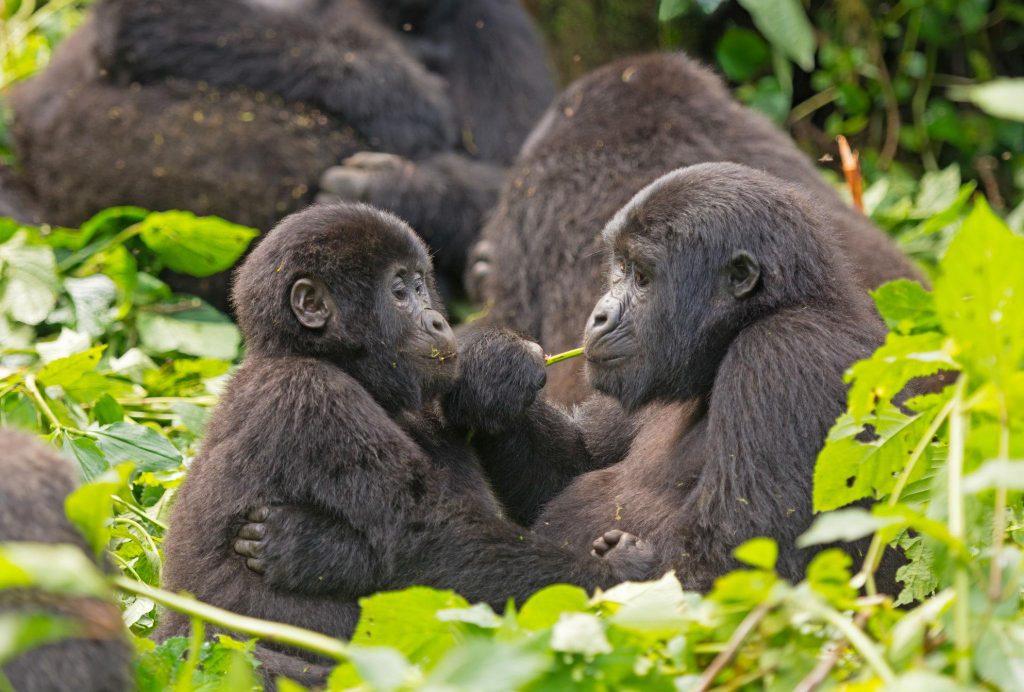
Visitors observe a semi-habituated gorilla family under the guidance of experienced trackers and rangers.
布温迪难以穿越的国家公园 is the heart of Uganda’s gorilla tourism, and the gorilla habituation experience is associated with the southern part of the park, particularly the Rushaga area.
Bwindi itself is an important part of the experience because the forest is not simply a backdrop for gorilla trekking. It is the habitat in which the gorillas live, feed, move and raise their young, making the journey through the forest an important part of understanding why their protection matters.
The park is divided into several gorilla trekking sectors, including 布霍马、鲁希亚、鲁沙加 和 恩库林戈, but travellers interested specifically in habituation need to ensure that their itinerary and permit correspond to the appropriate habituation programme rather than assuming that every sector offers the same activity.
This distinction is important when planning your trip because gorilla tourism activities are carefully managed, and the available experience can depend on the gorilla groups and programs operating at a particular time.
Rushaga, in southern Bwindi, is the principal area associated with Uganda’s Gorilla Habituation Experience.
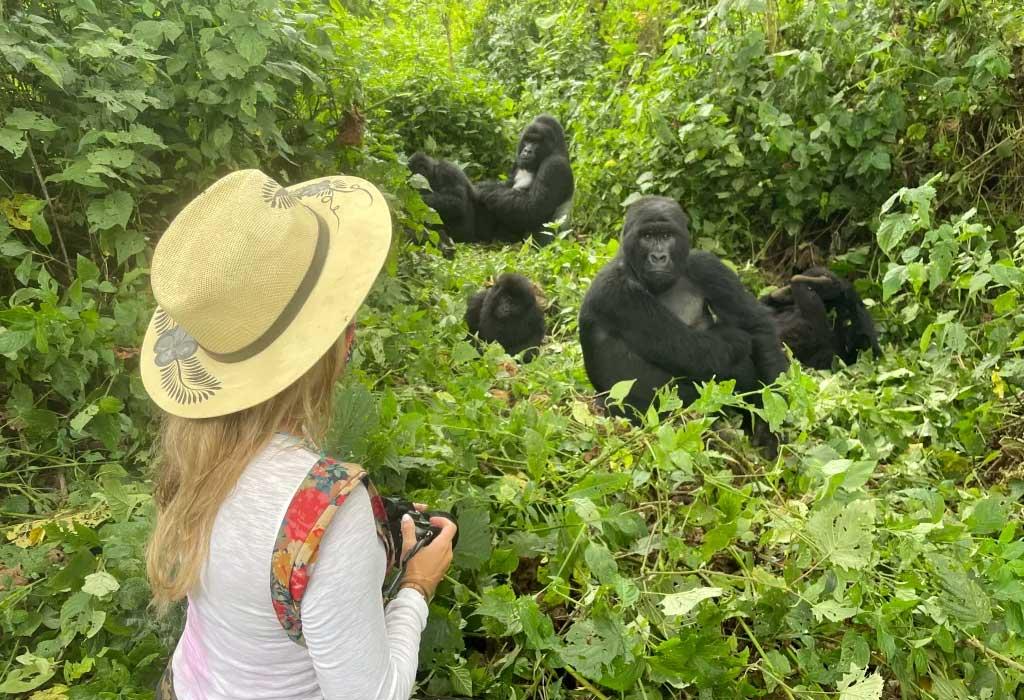
The gorilla habituation experience begins much earlier than an ordinary 大猩猩跋涉, and that early start reflects the nature of the activity. After arriving at the designated briefing point, you receive guidance about the experience, the forest conditions, safety requirements and appropriate behavior around the gorillas before entering the forest with the ranger and tracking team.
这 walking can be physically demanding because Bwindi is a dense and mountainous forest rather than a flat wildlife viewing area. Depending on where the gorilla family is located, you may walk through steep sections, thick vegetation, muddy ground 和 uneven terrain before reaching the group.
This is where patience becomes important because the gorillas do not follow a schedule designed around tourists. Their movements determine where the tracking team goes, and the group may change position as it feeds, rests or moves through the forest.
Once the gorillas are located, the character of the experience changes. You settle into a period of observation in which the focus is not simply on finding the animals but on understanding their behavior and allowing the habituation team to continue its work without unnecessary disturbance.
One of the strongest reasons to choose the gorilla habituation experience is the opportunity to spend considerably more time observing the gorillas.
During an ordinary trek, one hour can pass remarkably quickly because there is so much to take in. You may be watching a silverback, following the movements of a juvenile, photographing an infant or simply trying to understand the social interactions taking place around you. With more time available, your attention can gradually move beyond the excitement of simply seeing the gorillas.
You may begin noticing how individuals interact, how the group moves together, when they feed and rest, how young gorillas behave around adults and how the dominant members of the group respond to their surroundings.
This is particularly rewarding if you’re interested in wildlife photography and animal behavior because you are not relying on a few minutes to capture the perfect moment. You have more time to observe the animals and allow interesting moments to happen naturally.
The real value of the extra time is therefore not simply getting more photographs; it is having more opportunity to understand what you are witnessing.
这 gorilla habituation experience is most rewarding when you remember that the gorillas are not there to entertain you.
They may continue feeding while you watch them, move through the vegetation, rest beneath the trees or interact with other members of the family without paying much attention to your presence. Their behavior is not scripted, and that unpredictability is one of the reasons the experience feels so authentic.
A young gorilla may suddenly become active while the adults remain focused on feeding, or the family may move to another part of the forest while the tracking team carefully adjusts its position.
These moments remind you that you are visiting their environment rather than entering a wildlife attraction where animals are expected to perform.
Your responsibility is therefore to follow the instructions of the ranger and tracking team, maintain the required distance and avoid behavior that could disturb the animals.
The clearest difference between ordinary gorilla trekking and the gorilla habituation experience is the nature and duration of the encounter. During standard gorilla trekking, visitors track a fully habituated family and have a maximum of one hour of viewing once the gorillas are located.
The habituation experience allows up to four hours of viewing and begins earlier in the morning under current UWA guidelines. The two experiences therefore appeal to slightly different types of travelers.
if you’re someone visiting Uganda for the first time who wants to experience mountain gorillas may be perfectly satisfied with standard trekking, particularly because fully habituated families are accustomed to controlled human presence.
However, if you want greater immersion, more observation time and a closer understanding of the habituation process may find the gorilla habituation experience much more rewarding.
The longer encounter also means that you need to be prepared for a more extended day in the forest and should approach the activity with patience rather than expecting a predictable wildlife viewing session.
The gorilla habituation experience is particularly suited to travelers who are genuinely interested in wildlife, conservation and primate behavior and who want more than a brief encounter with mountain gorillas.
It can be an excellent choice for photographers because the extended viewing period gives you more time to observe natural behavior rather than rushing to capture as many photographs as possible.
It can also appeal to conservation enthusiasts who want to understand how gorilla tourism connects with the wider effort to protect these endangered primates.
At the same time, you should be honest about your physical ability because the experience involves walking through challenging forest terrain and potentially spending a longer period on your feet than you would during a standard trek.
The reward is that the physical journey becomes part of the story, particularly when you realize that reaching the gorillas is not simply a matter of following a prepared path but involves tracking animals whose movements determine the direction of the day.
The gorilla habituation experience is priced higher than ordinary gorilla trekking because it provides a longer and more specialized encounter.
UWA’s published 2024–2026 conservation tariff lists the habituation permit at US$1,800 for foreign non-residents, US$1,000 for foreign residents and UGX 750,000 for East African citizens.
Because wildlife tariffs and operational arrangements can change, it is important to confirm the applicable price and availability when booking your trip rather than relying on an old travel article.
The higher cost will not necessarily make sense for every traveler, but if your priority is spending more time observing gorillas and experiencing a deeper side of Uganda’s primate tourism, the additional investment may be worthwhile.
Preparing properly for the gorilla habituation experience can make a considerable difference because the activity combines long hours in the forest with unpredictable terrain and changing weather.
Sturdy, comfortable hiking boots are particularly important because the ground can become muddy and slippery, while long trousers and long-sleeved clothing can protect you from vegetation and insects.
A waterproof jacket is useful because Bwindi can experience changing weather conditions, and sufficient drinking water should be part of your day pack.
If photography is important to you, carry equipment that you can use comfortably in forest conditions and remember that flash photography should not be used around the gorillas.
You should also avoid overpacking because you may be carrying your belongings for several hours, which is another reason a porter can be helpful.
The gorilla habituation experience offers a deeper and more immersive way to discover Uganda’s mountain gorillas, giving you more time to observe their behavior and appreciate the remarkable forest they call home.
If you are ready to experience Bwindi beyond ordinary trekking, feel free to 书 your gorilla adventure with 友好的大猩猩狩猎之旅 and let us help you create a memorable journey.