Viagens privadas • Guias locais • Itinerários personalizados • Extensões Safari
Duração típica
Destino
Melhor para
Melhor temporada
Estilo de viagem
During observation, gorilla trekking permits allow exactly one hour with a fully habituated family. Habituation permits allow up to four hours, and therefore there is a difference between the two
Trekking groups include up to 8 tourists. Habituation groups are restricted to 4 to 6 tourists per family, making it very different.
Regarding group size, the Gorilla behaviour for habituated gorillas is to ignore humans and go about their routine. Semi-habituated gorillas are more unpredictable, vocal, and may move away or hide.
While on the focus, trekking is purely for viewing, and in habituation focuses on scientific research, tracking, and learning primate mock calls
![]()
It’s done on a daily basis and can take up to 3 years or less, depending on how naturally gorillas adjust to ignoring tourists as threats and ultimately become fully habituated for normal gorilla trekking.
The best times to visit Bwindi are during the two dry seasons from June to August and December to February. During these months, the weather is typically pleasant, with temperatures ranging between 20-25°C. However, showers can happen at any time of year, so visitors should always be prepared for rain.
The wet season from March to May sees the heaviest rainfall, which can make trekking more challenging but also offers clearer air for photography, with mist and rain creating a moody atmosphere around the park.
The minimum age for participating in the gorilla habituation experience is 15 years old. This age limit ensures that visitors are physically capable of trekking through the forest and can respect the safety and rules around interacting with the gorillas
Gorilla habituation in Uganda suits patient, physically fit wildlife enthusiasts aged 15 and older who have a bigger budget and a deep interest in conservation
You need good stamina and endurance to navigate steep, slippery, and dense forest terrain for hours
Habituation takes a full-day commitment, allowing you to spend four hours with semi-habituated gorillas instead of the standard one-hour trek
Anyone with communicable illnesses like a cold or flu is strictly barred to protect the vulnerable apes from human diseases
Duração típica
Contexto
Estilo de atividade
Melhor para
During observation, gorilla trekking permits allow exactly one hour with a fully habituated family. Habituation permits allow up to four hours, and therefore there is a difference between the two
Trekking groups include up to 8 tourists. Habituation groups are restricted to 4 to 6 tourists per family, making it very different.
Regarding group size, the Gorilla behaviour for habituated gorillas is to ignore humans and go about their routine. Semi-habituated gorillas are more unpredictable, vocal, and may move away or hide.
While on the focus, trekking is purely for viewing, and in habituation focuses on scientific research, tracking, and learning primate mock calls
Uganda Wildlife Authority has two gorilla families under the habituation process, which include Bikingi and Bushaho, located in the Ruhija gorilla tourism sector south of Bwindi Impenetrable Forest National Park.
The number of tourists is limited to 4 only, who can spend four hours observing gorillas, excluding time spent searching for them. Gorillas are still wild or semi-habituated and unpredictable. Viewing them depends on the mood they are found in that very day; however, researchers, guides and trackers are experienced with the ethics of gorilla behaviour to give you a memorable gorilla habituation experience.
It begins with a briefing from the guides at Ruhija Gorilla Centre, and then you are led by rangers on a hike through the forests. Once gorillas are located, tourists are helped and involved in the habituation process by researchers, guides and trackers. You will spend four hours observing, photographing and learning how gorilla behaviour adapts to human presence. Upon return from the forest, you are rewarded with a gorilla habituation experience certificate for your lifetime memories.
Gorilla habituation involves researchers, a few tourists and trackers who repeatedly train wild gorillas without any threat or reinforcement, but with neutral actions directed not at altering their natural wild status, including imitating their behaviours by chewing on vegetação, mimicking their vocalisations, and walking on their knuckles, leading to a reduction in fear of human presence.
The best time to visit Uganda for a gorilla habituation experience is during the dry seasons from June to August and December to February
During these months, Bwindi Impenetrable National Park—specifically the Rushaga sector where habituation takes place—has drier trails, less slippery slopes, and more comfortable hiking conditions
The dry Seasons that is the Peak from June to August and December to February- offers clearer weather and easier navigation through dense rainforest paths.
The wet season, March to May and October to November, brings heavier rainfall. Trails become very muddy and challenging, but the forest is lush, photography has a moody, clear-aired atmosphere, and securing permits or lodging can be easier on short notice
Always carry and have some insect repellent because there are mosquitoes, wasps and other insects in the jungles. You will need to carry it on the gorilla trek so that you keep smearing it on your skin or hands to keep insects away. These insects, if left untreated, cause severe skin infections and allergies.
Ensure you have a first aid kit; the chances are high that you never know what might happen to you while trekking to see gorillas. A small cut, bruise or injury in the middle of the forest can easily be infected, so it’s advisable to have bandages and cotton, which can be wrapped around any cut or injury.
Do not forget to pack sunscreen in case you are not comfortable with too much sunlight during the dry season. Likewise, a hat will also protect you from direct sun rays.
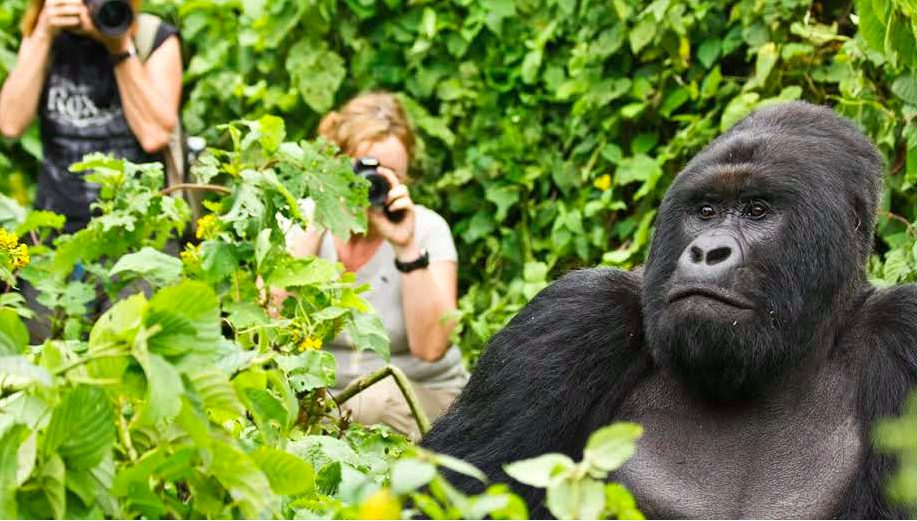
You definitely need a camera to photograph gorillas, so take extra batteries, lenses and their waterproof cover. This will help you to capture your memories in case you need to reflect on them
Pack enough drinking water, energy drinks and food. Once you have set off from the trekking de gorila centres, you have no place to get eats and drinks. Usually your lodge prepares lunch boxes. Gorillas also move frequently in the forest, and it can take 30 minutes or more than 8 hours to locate them.
We recommend tourists speak to their guides at the start of the gorilla trek about their trekking capacity and fitness levels. Once you do that, you will be allocated to gorilla families that are easy to reach and avoid disappointment.
Hiking boots are essential over steep mountainous terrain between 2400 and 4500 meters above sea level in Volcanoes National Park and Mgahinga Gorilla Park. The Bwindi Mountains have thick vegetation.
Boots should cover up your ankles; add long wool stockings and gaiters for protection, since you go through deep muddy trenches and rivers, and sharp, thorny bushes can be harmful without protection
Ao longo dos últimos dez anos, organizamos viagens emocionantes e inesquecíveis para centenas de milhares de hóspedes.
Definitivamente faremos com que sua visita à África Oriental valha a pena por meio de nossas etapas simples e envolventes.
Combinamos a atividade, o destino, a duração da viagem e o safari mais amplo com as suas prioridades.
Reservamos todas as suas licenças e entradas nos momentos certos para que você nunca tenha surpresas.
Todos os nossos passeios incluem embarque e desembarque gratuitos no aeroporto. Nenhum pagamento extra em qualquer momento pelo mesmo.
Todos os nossos guias são experientes, calmos e locais. Eles definitivamente farão com que sua estadia valha a pena.
Usamos apenas alojamentos onde já estivemos e todas as acomodações que usamos estão perfeitamente localizadas para lhe proporcionar mais diversão
Sinta-se à vontade para adicionar mais atividades e destinos à sua visita. Basta nos avisar com antecedência para um melhor planejamento.
What are the main rules when around the gorillas?
Maintain a minimum safety distance of 7 to 10 meters; no flash photography under any circumstances; never eat, drink, smoke, or spit near the animals; if a gorilla charges, crouch down slowly and look away
Where does Gorilla Habituation take place in Uganda?
The experience takes place exclusively in the southern region of Bwindi Impenetrable National Park. Activities are restricted to the Rushaga sector and the neighbouring Nkuringo sector. It is not offered in any other sectors or at Mgahinga Gorilla National Park.
This is because it is a more serious activity that is always taking place, and if the remaining gorillas are not properly managed, it may lead to the extinction of the gorillas from those areas; therefore a reason why it is not in every sector
Tell us your dates, number of travellers, preferred activity, comfort level and the other destinations you want to include. We will use those details to recommend a practical itinerary.
Você não precisa saber a rota exata antes de entrar em contato conosco.

